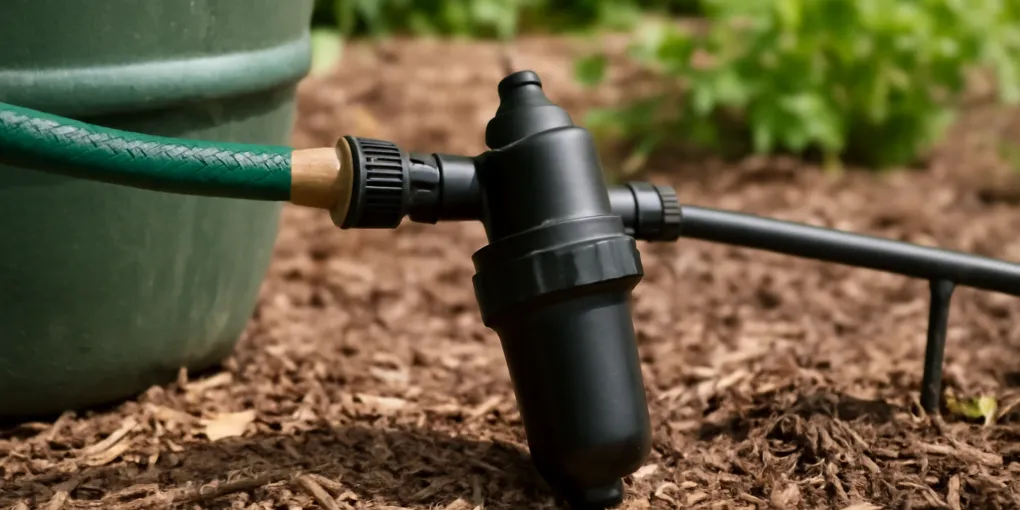
150 mesh Y filter drip irrigation rain barrel
Drip protectionUse Case: Drip emitter protection
Varies
Quick picks
| Product | Key Specs |
|---|---|
| See price on Amazon |
|
| See price on Amazon |
|
| See price on Amazon |
|
| See price on Amazon |
|
Product availability, certifications, and retailer details can change; check the current Amazon page before buying.
A rain barrel filter is not one part; it is a debris-control chain. The best setup blocks leaves before the barrel, catches grit before drip tubing, and remains easy to rinse after storms.
What to compare before you buy
Match the filter to the debris size and the water path. A coarse top screen stops leaves and insects but lets fine roof grit through. A drip Y-filter catches smaller debris but can clog fast if it is asked to do the whole job. Pump intake screens protect impellers but do not replace an outlet filter for emitters.
Cleanability beats fine mesh when maintenance is realistic. Very fine mesh can reduce flow in gravity systems and may need rinsing after every storm. Choose a filter you can open without cutting tubing, and place it where muddy rinse water will not run back into the barrel.
Buying criteria
| Criterion | What to prefer | What to avoid |
|---|---|---|
| Mesh purpose | Coarse inlet screen plus finer outlet filter when needed | One mystery mesh expected to solve every clog |
| Service access | Clear bowl, removable screen, or tool-free rinse path | Buried filter that requires tubing cuts |
| Flow impact | Large enough body for gravity or pump flow | Tiny filter body that starves the line |
| Debris source | Product matches leaves, grit, algae, or pump intake risk | Fine filter added without fixing gutter debris |
A strong listing gives enough detail to disqualify it before you order. That is useful. Rain barrel parts fail at the fit points: threads, hose slope, debris access, seal surfaces, and pressure assumptions. Favor products with diagrams, measurements, install photos, and replacement parts over listings that lean on garden lifestyle images.
Installation and setup checks
Inspect the barrel after the next rain before buying more filters. Leaf chunks point upstream to gutters or inlet screens. Sand-like grit points to roof wash-off. Green slime points to light, warmth, and stagnant water. Put the coarsest practical screen upstream and the finer cleanable filter close to the drip or pump component it protects.
After delivery, dry-fit every washer, gasket, clamp, barb, and threaded connection before making permanent cuts. Run a controlled hose or bucket test and watch for slow weeping. Hand-tight plastic threads with the right washer usually beat wrench-tight parts that distort under load.
Matching mesh to maintenance reality
The best filter is the one you will actually clean at the right interval. A very fine mesh can protect drip emitters, but it can also become the bottleneck in a gravity system after a pollen-heavy storm. If your barrel feeds open hose watering, a coarse inlet screen plus a pump or outlet screen may be enough. If it feeds drip tubing, add a cleanable Y-filter where you can unscrew it without crawling behind the barrel.
Think in layers. The downspout or rain head should remove leaves before they break down. The barrel screen should block insects and larger debris from entering storage. The outlet or Y-filter should catch grit before emitters. Pump users need an intake screen because impellers dislike leaves and algae strands. Place each filter where dirty rinse water can drain away from the barrel opening. Buy spare mesh or replacement screens when the part is inexpensive; a torn lid screen or missing filter gasket can undo the rest of the system during one storm.
How we score this decision
| Criterion | Weight | How to apply it here |
|---|---|---|
| Research | 30% | Compare manuals, dimensions, included fittings, installation diagrams, and brand support before relying on star ratings. |
| Evidence Quality | 25% | Prefer listings with clear part photos, measured compatibility, manufacturer instructions, and owner reviews that match rain-barrel use. |
| Value | 20% | Reward serviceable fittings, standard replacement parts, and kits that reduce adapter purchases. |
| User Signals | 15% | Read recent low-star reviews for leaks, missing parts, brittle plastic, clogging, unclear instructions, and support problems. |
| Transparency | 10% | Penalize vague universal-fit claims, hidden pressure requirements, and listings that omit the one dimension your install needs. |
Common mistakes to avoid
- Using a fine drip filter as the first defense against leaves.
- Installing a filter where it cannot be rinsed easily.
- Ignoring algae growth in a sun-warmed barrel.
- Replacing emitters before opening the filter bowl.
Final pre-order checklist
Confirm the measured site conditions one more time before buying: downspout shape, barrel height, outlet thread, hose route, cleaning access, freeze-season plan, and where unwanted water will go during a storm or malfunction. If a part touches the house envelope or a walking surface, give safety and routing more weight than accessory count.
Check replacement-part availability too. Washers, hose clamps, screens, barbed fittings, and standard tubing are cheap when they are common sizes. Proprietary pieces can still be worth buying, but only when the kit clearly solves your specific problem and the listing explains how to maintain it.
Product notes by debris problem
Leaf-heavy roofs need coarse interception before water reaches the barrel. A top screen or rain-head style prefilter keeps leaves, seed pods, and insects from becoming sludge. Grit-heavy roofs need a cleanable outlet filter because shingle granules and dust can pass through a coarse screen and later plug emitters. Algae-prone barrels need light control, closed lids, and sediment cleanup as much as finer mesh. Choose a 150-mesh Y-filter search when drip emitters are clogging, a barrel-screen replacement search when debris enters at the top, a pump-intake prefilter search when a submersible pump is at risk, and a rain-head prefilter search when gutters shed heavy debris. Many systems need two layers, not every filter available. Create a rinse routine after hard storms, during pollen season, and whenever flow drops. If a filter clogs every day, solve the upstream debris source instead of buying an even finer outlet screen.
Field scenarios to think through
Tree-covered roof: focus on upstream screening. Leaves and seed pods should be stopped before they enter the barrel, because once they decompose they create sludge that no small drip filter can handle gracefully. A rain-head prefilter or better top screen may solve more than a finer outlet mesh.
Open roof with shingle grit: expect fine sediment even when leaves are not a problem. Let the first dirty roof wash bypass when possible, keep the outlet above the bottom sludge layer, and use a serviceable Y-filter before emitters. The goal is to rinse grit out, not trap it permanently in hidden tubing.
Warm sunny barrel: algae control matters. Keep light out, clean the lid and screen, and draw water often enough that it does not stagnate for weeks. If algae strands repeatedly clog the filter, shade and cleaning may help more than changing mesh size.
Pump-fed system: protect both the pump and the downstream emitters. A pump prefilter keeps debris away from the impeller, while an inline filter after the pump can protect drip parts. Put both where you can reach them without disassembling the whole barrel area.
Troubleshooting after the first week
If flow drops suddenly, open the filter before changing emitters, pumps, or tubing. The debris inside tells you what to fix upstream. Brown grit points to roof wash-off or barrel sediment; green strands point to algae; leaf pieces point to inlet screening; black rubber bits may come from aging washers or hose interiors. If the filter is clean but emitters clog, flush the line from the far end because debris may already be downstream. If the filter clogs after every storm, add coarser screening before the barrel rather than making the outlet filter finer. If the pump loses prime or sounds strained, inspect the intake prefilter and raise the pump above bottom sludge. Keep a maintenance note for the first month: rain date, debris type, and flow symptoms. That record helps you choose the next part intelligently instead of guessing. The best filter is not the finest one; it is the one that catches the debris your system actually produces while still allowing enough flow for the watering job.
Buyer fit questions
- What debris do you actually see: leaves, grit, algae, insects, or pump sludge?
- Is the first screen coarse enough to keep flow moving during a storm?
- Can the finer filter be opened without tools in the garden?
- Will rinsed debris fall away from the barrel instead of back into it?
- Do you have spare washers or screens for the part most likely to clog? Use these questions to slow the purchase down before you compare prices. A rain-barrel product can look inexpensive until it needs extra adapters, a replacement hose, a new filter, or a second trip to the hardware store. It can also look overbuilt until it prevents one wet foundation corner or one failed irrigation week. Write the answers beside the product listing and reject any option that leaves the critical fit question unanswered. If two products both fit, choose the one with clearer instructions, easier cleaning, and more standard replacement parts. If neither product fits, change the system plan before ordering rather than trying to fix a mismatch with sealant and improvised fittings.
This step is especially useful for marketplace buying because photos, bundles, and seller descriptions can change. The product name may stay familiar while the included hose, fitting, or adapter set changes. A current listing check protects you from buying yesterday’s version of the kit.
A final sanity check is to read the lowest-rated current reviews for the exact pattern you are about to install. Repeated complaints about missing washers, confusing instructions, brittle fittings, or poor seller support matter more than a polished hero photo. Save the manual and order page until the part survives a storm and a normal watering cycle.
FAQ
What mesh size should I use before drip emitters?
Many drip systems use fine screens such as 120 to 150 mesh, but gravity barrels may lose flow. Follow the emitter maker guidance and choose the largest cleanable filter that prevents clogs.
Do I need both an inlet screen and an inline filter?
For drip irrigation, usually yes. The inlet screen handles large debris and insects; the inline filter protects small emitters from grit that settles in the barrel.
Where should a pump prefilter go?
Place it on or around the pump intake so debris does not reach the impeller. Keep it accessible because sponge-style guards can load up quickly.
How often should I clean rain barrel filters?
Check after the first few storms, after pollen season, and whenever flow drops. The right interval depends on tree cover, roof grit, algae, and how much water you pull through the system.
Bottom line
Choose filters by debris source, cleaning access, and flow impact. A layered setup with a coarse inlet screen and a serviceable outlet filter prevents more clogs than one ultra-fine screen hidden in the wrong place.
Before purchasing, confirm the live listing details against your barrel size, outlet height, tubing layout, and maintenance needs.