Raindrip R560DP Automatic Watering Kit
Raised-bed starterUse Case: One short raised-bed zone near a barrel
Varies
Quick picks
| Product | Key Specs |
|---|---|
| See price on Amazon |
|
| See price on Amazon |
|
| See price on Amazon |
|
| See price on Amazon |
|
Product availability, certifications, and retailer details can change; check the current Amazon page before buying.
A gravity-fed barrel drip kit has to work with weak, falling pressure. The best setup keeps runs short, uses cleanable filtration, avoids high-pressure sprayers, and lets you tune a few outlets before expanding to the whole garden.
What to compare before you buy
Pressure is the deciding constraint. A barrel raised two feet above the bed produces less than one psi at the outlet before tubing losses. Long 1/4-inch runs, misters, pressure-compensating emitters, and too many outlets can stop flowing even though the parts look compatible. Prefer simple emitters, short zones, larger mainline, and a flushable end.
Filtration matters more with drip than with open-hose watering. Roof grit, pollen, and algae can plug small emitters quickly. Put a screen at the barrel inlet and a cleanable Y-filter before the drip line. If a kit does not show how to flush the line, plan to add a flush cap or removable end fitting.
Buying criteria
| Criterion | What to prefer | What to avoid |
|---|---|---|
| Gravity tolerance | Mentions low pressure, gravity, or simple non-compensating outlets | Sprayers, misters, or high minimum-pressure emitters |
| Tubing layout | Short 1/2-inch mainline with limited 1/4-inch branches | Long skinny tubing runs from the barrel |
| Cleaning access | Y-filter, removable end cap, and easy emitter inspection | Sealed emitters with no flushing path |
| Zone control | Small zones and valves you can test separately | One huge network that hides the weak section |
A strong listing gives enough detail to disqualify it before you order. That is useful. Rain barrel parts fail at the fit points: threads, hose slope, debris access, seal surfaces, and pressure assumptions. Favor products with diagrams, measurements, install photos, and replacement parts over listings that lean on garden lifestyle images.
Installation and setup checks
Start with one bed or six to ten emitters, not the full kit. Put the barrel on a stable stand, fill it halfway, and time how long a bucket or emitter line takes to deliver water. Add outlets only after the first zone works at half-barrel height.
After delivery, dry-fit every washer, gasket, clamp, barb, and threaded connection before making permanent cuts. Run a controlled hose or bucket test and watch for slow weeping. Hand-tight plastic threads with the right washer usually beat wrench-tight parts that distort under load.
Field-fit checks for low-pressure kits
Before buying, sketch the barrel, bed, and tubing path on paper. Count every elbow, tee, and emitter because each part adds friction that a gravity system has little pressure to overcome. A kit that works from a hose bib may underperform when the barrel is half empty, so the safest plan is to build one short zone first and duplicate it only after you see steady flow.
For raised beds, prioritize 1/2-inch mainline, simple adjustable drippers, and a flush point at the far end. For containers, look for stakes or drippers that can be moved when pots shift during the season. If you grow seedlings, include shutoff valves so a thirsty tomato container does not steal flow from shallow herbs. Keep spare goof plugs, tees, and washers in the same bin as the kit; the small parts determine whether a Saturday repair takes five minutes or requires another order. Test at the lowest barrel level you expect to use, because a kit that looks fine when full can slow noticeably during the final third of storage.
How we score this decision
| Criterion | Weight | How to apply it here |
|---|---|---|
| Research | 30% | Compare manuals, dimensions, included fittings, installation diagrams, and brand support before relying on star ratings. |
| Evidence Quality | 25% | Prefer listings with clear part photos, measured compatibility, manufacturer instructions, and owner reviews that match rain-barrel use. |
| Value | 20% | Reward serviceable fittings, standard replacement parts, and kits that reduce adapter purchases. |
| User Signals | 15% | Read recent low-star reviews for leaks, missing parts, brittle plastic, clogging, unclear instructions, and support problems. |
| Transparency | 10% | Penalize vague universal-fit claims, hidden pressure requirements, and listings that omit the one dimension your install needs. |
Common mistakes to avoid
- Expecting faucet-pressure spray patterns from a barrel.
- Skipping the filter because the top screen looks clean.
- Running too many 1/4-inch branches before testing flow.
- Punching permanent holes before grouping plants by water demand.
Final pre-order checklist
Confirm the measured site conditions one more time before buying: downspout shape, barrel height, outlet thread, hose route, cleaning access, freeze-season plan, and where unwanted water will go during a storm or malfunction. If a part touches the house envelope or a walking surface, give safety and routing more weight than accessory count.
Check replacement-part availability too. Washers, hose clamps, screens, barbed fittings, and standard tubing are cheap when they are common sizes. Proprietary pieces can still be worth buying, but only when the kit clearly solves your specific problem and the listing explains how to maintain it.
Product notes by garden layout
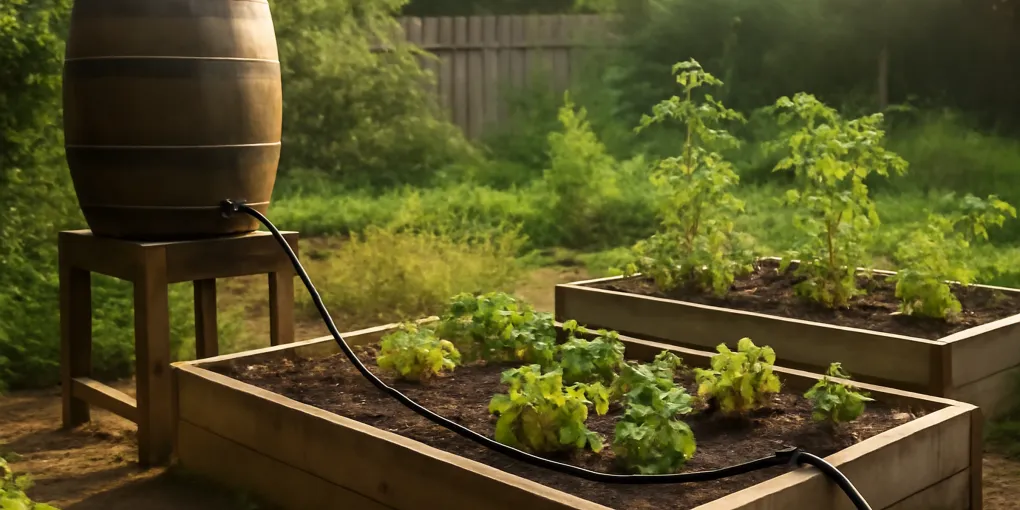
Raised beds are the easiest place to make gravity drip work because tubing can be short and visible. Put the barrel higher than the bed, run a simple mainline, and branch only where plants need water. Container gardens need grouping by water demand: herbs, tomatoes, and flowers should not all share one untuned line. Long vegetable rows are the hardest gravity case; if the row is far from the barrel, a pump may be a better buy than another emitter kit. A Raindrip-style search fits buyers who want a conventional kit they can simplify. A CARPATHEN-style adjustable-emitter search fits patio containers. A gravity-specific search is best when you want the listing to mention barrel use. A filter-first search fits buyers who already have tubing but need a more reliable emitter-protection chain. Flush the mainline after the first week and after pollen-heavy storms. At season end, drain tubing before freezing weather and test again in spring with the barrel partly full.
Field scenarios to think through
One raised vegetable bed near the barrel: this is the best gravity-drip case. Use a short mainline, a cleanable filter, and a few emitters. Time a bucket test at half-barrel height, then water the bed in one short zone. If the line drains evenly, expand slowly.
Patio containers spread around a deck: use adjustable outlets and group pots by thirst. A tomato in full sun, a herb pot, and a shaded flower basket should not all be on the same untuned branch. Keep tubing runs visible so you can spot kinks and clogged outlets.
Long row garden downhill from the barrel: gravity may work if the row is lower and the mainline is wide enough. Use fewer outlets per run and flush the end regularly. If the far end barely flows, split the row into zones rather than opening every emitter at once.
Garden uphill or far away: do not keep buying gravity accessories to solve a pressure problem. A pump, shorter route, or second barrel location may be the honest fix. The right buying decision may be a smaller drip kit plus a pressure solution, not a bigger kit.
Troubleshooting after the first week
If emitters close to the barrel flow while the far ones barely drip, the zone is too large or the tubing is too restrictive. Close half the outlets, shorten branches, or split the bed into two watering passes. If every emitter starts strong and then fades, check the filter and the falling barrel level. Gravity systems lose force as water drops, so judge performance at the lower level you actually expect to use. If one container floods while others stay dry, move that outlet to a separate valve or use a smaller emitter. Do not solve every imbalance by punching more holes; each added outlet reduces available flow. If algae keeps clogging emitters, shade the barrel, rinse the inlet screen, and flush the mainline before replacing the kit. If plants wilt despite visible dripping, measure delivered water into a cup for ten minutes. Slow drip can look active while providing too little volume for hot weather. The practical target is repeatable water delivery, not a perfectly even laboratory layout.
Buyer fit questions
- How many emitters must work when the barrel is only half full?
- Can the first zone be kept short enough to test in a bucket?
- Is there a cleanable filter before the first small emitter?
- Are high-water plants separated from herbs and drought-tolerant pots?
- Can you flush the mainline without cutting tubing? Use these questions to slow the purchase down before you compare prices. A rain-barrel product can look inexpensive until it needs extra adapters, a replacement hose, a new filter, or a second trip to the hardware store. It can also look overbuilt until it prevents one wet foundation corner or one failed irrigation week. Write the answers beside the product listing and reject any option that leaves the critical fit question unanswered. If two products both fit, choose the one with clearer instructions, easier cleaning, and more standard replacement parts. If neither product fits, change the system plan before ordering rather than trying to fix a mismatch with sealant and improvised fittings.
This step is especially useful for marketplace buying because photos, bundles, and seller descriptions can change. The product name may stay familiar while the included hose, fitting, or adapter set changes. A current listing check protects you from buying yesterday’s version of the kit.
A final sanity check is to read the lowest-rated current reviews for the exact pattern you are about to install. Repeated complaints about missing washers, confusing instructions, brittle fittings, or poor seller support matter more than a polished hero photo. Save the manual and order page until the part survives a storm and a normal watering cycle.
FAQ
How high should the barrel be for drip irrigation?
Higher is better, but stability comes first. Even a two- or three-foot stand may only support small zones, so test flow at half-full height before expanding.
Are pressure-compensating emitters good for barrels?
Often no. Many need more pressure than a gravity barrel provides. Simple adjustable or non-compensating emitters are usually easier to tune.
Should I use 1/2-inch or 1/4-inch tubing?
Use 1/2-inch tubing for the main run when possible, then short 1/4-inch branches to plants. Long 1/4-inch-only layouts lose flow quickly.
Why did the kit work on day one and slow down later?
The usual causes are a dropping water level, clogged filter mesh, algae in emitters, or too many outlets opened at once. Flush and simplify before replacing the whole kit.
Bottom line
Choose a low-pressure drip kit by proven gravity flow, cleanable filtration, and the ability to start small. The winning setup is usually a simple zone that works every week, not the kit with the most emitters.
Before purchasing, confirm the live listing details against your barrel size, outlet height, tubing layout, and maintenance needs.
If the water source is a covered 275-gallon/1000L IBC tote, keep the irrigation choice separate from the cover-fit question; our IBC tote cover comparison focuses on stated dimensions, access, and attachment details.