Quick picks
| Product | Key Specs |
|---|---|
| See price on Amazon |
|
| See price on Amazon |
|
| See price on Amazon |
|
| See price on Amazon |
|
Product availability, certifications, and retailer details can change; check the current Amazon page before buying.
A rain barrel that smells bad or turns green is usually telling you one of four things: sunlight is reaching stored water, organic debris is decomposing inside, water is sitting too long, or the inlet and overflow are letting insects and dirt enter. The fix is not to perfume the barrel or add random chemicals. The fix is to diagnose the source, clean the tank safely, reduce light and debris, and use the water often enough that it does not become a stagnant pond.
This protocol is for residential non-potable rain barrels used for outdoor watering. It is not drinking-water treatment advice. If the barrel contains chemicals, dead animals, sewage backflow, roof-treatment runoff, or anything you cannot identify, stop using the water on edible gardens and contact local extension or environmental health guidance before cleaning. For ordinary algae film, leaf sludge, and sour odors, the steps below will solve most recurring problems.
Quick action plan
- If water smells rotten, drain it away from edible plant leaves, clean the barrel, and inspect the bottom for sludge.
- If water is green but not foul, block sunlight, clean the inlet screen, and use stored water more frequently.
- If mosquitoes are present, repair screens and review our rain barrel mosquito control guide before refilling.
- If drip irrigation clogs, clean the barrel first, then add a Check Amazon results for low-pressure inline hose filters matched to gravity flow.
Useful parts for the cleanup are simple: Check Amazon results for long-handle cleaning brushes, Check Amazon results for replacement fine mesh inlet screens, Check Amazon results for opaque lids or covers, and cleanable outlet filters. Buy only the part that addresses your diagnosed failure; a filter will not fix a sunlit translucent barrel, and a new lid will not remove old sludge.
Step 1: identify the smell or color
Different symptoms point to different fixes. Bright green water usually means algae has enough light and nutrients to grow. Brown tea-colored water often comes from leaves, pollen, roof dust, or tannins. Black sludge at the bottom means organic debris is settling and decomposing. A rotten-egg or swamp smell usually means low-oxygen stagnant water and decomposing material. A chemical, fuel, paint, or pesticide smell is a stop sign, not a normal maintenance problem.
Use gloves and eye protection. Do not lean into a closed barrel and breathe concentrated odors. Open the lid if it is safe, step back, and let air move. If the barrel has a small opening, use a flashlight from outside rather than putting your face near the inlet. Keep children and pets away from the work area until the barrel is drained and rinsed.
If the water looks only mildly green and the barrel is otherwise clean, the source may be sunlight. If the odor is strong and there is a layer of leaves at the bottom, the source is organic decay. If the water is clear but the garden line clogs, the problem may be fine sediment leaving the barrel rather than algae itself.
Step 2: decide whether to drain now
Drain immediately when the water smells foul, contains larvae, has visible animal contamination, or is clogging the outlet. Use the water on non-edible soil or ornamental areas only if local guidance and the contamination level make that reasonable. Do not spray questionable water on leafy greens, herbs, patio furniture, play areas, or pet bowls.
If the water is merely green and you need it for ornamentals, you may use it soon and then clean the barrel. Algae itself is common in outdoor water, but the conditions that encourage algae also encourage slime, clogs, and mosquito problems. Leaving the barrel full for weeks usually makes the next cleaning harder.
Plan where the drained water will go. Keep it away from the foundation, basement windows, and neighboring property. If your barrel does not drain fully through the spigot, tip it only when empty enough to control safely. A full barrel is heavy; do not wrestle it off a stand.
Step 3: clean the barrel without making it unsafe
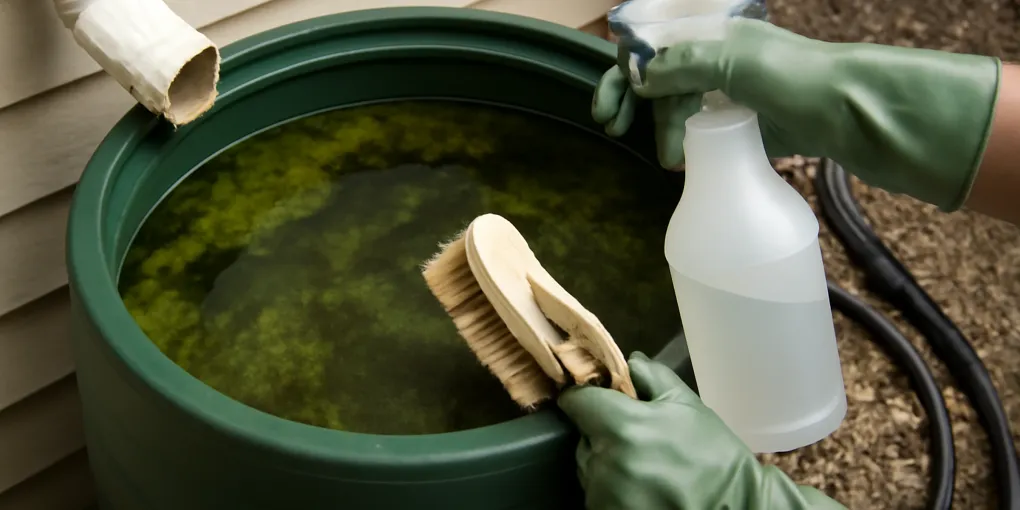
Disconnect the downspout or diverter so new roof water does not enter while you work. Drain the barrel through the spigot, then remove the lid or screen. Scoop out leaves and sludge with a dedicated garden tool or wet-dry cleanup method if the barrel design allows it. Scrub interior walls, lid grooves, inlet screens, and the area around the spigot. The goal is to remove the film and nutrient layer that lets odors return.
A Check Amazon results for long-handle rain barrel cleaning brushes is helpful when the barrel has a removable lid. For narrow openings, choose tools that fit without forcing the barrel apart. Rinse until the discharge runs mostly clear. Flush the spigot and any short outlet hose because sludge often collects there.
Avoid mixing cleaners. Do not combine bleach with vinegar, ammonia, or unknown products. Many extension and municipal rain-barrel instructions recommend simple physical cleaning for routine maintenance, with disinfection only when appropriate and carefully diluted. If you use any cleaner, follow the product label, rinse thoroughly, and keep the water out of sensitive plants until you are confident residues are gone.
Step 4: block sunlight
Algae needs light. A translucent barrel, open top, cracked lid, or sunny clear hose can turn a clean barrel green again. Move the barrel to shade if the downspout layout allows it. Use an opaque barrel, tight lid, or exterior cover that does not interfere with overflow. Replace cracked lids and loose screens.
A Check Amazon results for secure opaque rain barrel lids or covers is more than an appearance upgrade. It reduces light, keeps debris out, and helps block mosquito access. The cover must still allow safe inflow and overflow. Never seal a barrel so tightly that stormwater backs up into the gutter or toward the house.
Check the fill hose too. Some diverter kits use short clear hoses that can grow algae where sunlight hits them. If the hose is green inside, clean or replace it and route it out of direct sun where possible.
Step 5: stop feeding the barrel leaves and pollen
Algae and odor problems usually need nutrients. Roof grit, leaves, seed pods, pollen mats, and bird droppings all add material to stored water. A clean barrel will not stay clean if the inlet is wide open under a dirty gutter.
Inspect the gutter above the barrel. If it is packed with leaves, clean it before blaming the barrel. Inspect the downspout connection, inlet screen, and overflow opening. Replace sagging mesh with a Check Amazon results for fine rain barrel replacement screens that remains removable for cleaning. If the roof has heavy debris, consider a downspout pre-filter or first-flush diverter before adding finer outlet filtration.
Do not make the screen so fine that it clogs and sends water where it should not go. The right screen blocks debris while preserving overflow capacity. After a storm, look for water stains, mulch washout, or splash marks that show water bypassing the intended route.
Step 6: use water before it stagnates
A barrel that stays full for weeks is more likely to smell than one that cycles regularly. Use stored water for appropriate outdoor tasks between storms. Water containers, ornamentals, or soil-level garden areas according to local guidance. Avoid spraying stored roof water directly onto edible leaves or fruit unless your local extension guidance supports that use for your roof and setup.
If you do not need the water, drain the barrel before long hot stagnant periods. This is especially useful before travel, during mosquito season, or when a barrel sits under a messy tree. A smaller barrel that cycles often can be easier to manage than a large tank that rarely empties.
A simple bucket test helps you track improvement. After cleaning, fill the barrel from a hose or the next clean rain, then draw a gallon from the spigot. Note the color, smell, and visible particles. Repeat after one week. If the second sample is much worse, light, debris, or stagnation is still driving the problem.
Step 7: protect the outlet and irrigation line
Even a clean barrel can shed some fine sediment. If you connect soaker hose or drip irrigation, add a cleanable outlet filter and keep the line short enough for gravity pressure. Our rain barrel height and pressure guide explains why a barrel has very little pressure to spare.
Choose a Check Amazon results for inline hose filters for rain barrel garden lines with a removable screen or flush cap. Install it where you can reach it. Clean it after the first few watering sessions, then adjust the interval based on what you find. If it loads up with black sludge, return to barrel cleaning and inlet prevention rather than blaming the filter.
Do not install a tiny filter that starves a gravity system. Low-pressure flow needs broad passages, gentle turns, and cleanable screens. A filter is a maintenance point, not a cure for neglected storage.
Cleaning brush and scoop
A long-handle brush or scoop is the most useful tool when sludge is already present. Look for reach, sturdy bristles, and a shape that fits through your barrel opening. If the lid is removable, a wider brush can clean faster. If the inlet is narrow, a slimmer bottle-brush style may be safer.
Best for: barrels with visible film, odor, or debris after draining. Caveat: tools cannot compensate for a barrel design that cannot be safely opened or flushed. CTA: Check Amazon results for rain barrel cleaning brushes.
Replacement screen
A replacement screen prevents the next mess. Choose mesh that blocks leaves and insects, resists rust, and attaches tightly under the lid or at the inlet. The screen should be easy to remove and rinse because pollen can mat over fine mesh.
Best for: barrels with torn screens, open lids, mosquito access, or recurring leaf sludge. Caveat: too-fine mesh can cause bypass during heavy rain if it is not cleaned. CTA: Check Amazon results for fine mesh rain barrel screens.
Opaque lid or cover
An opaque lid or cover reduces sunlight and closes access gaps. It is especially important for translucent barrels and open-top conversions. The fit must be secure enough for wind and pests but not block overflow or maintenance access.
Best for: green water that returns quickly after cleaning. Caveat: covers that trap water on top can create mosquito habitat, so shape and drainage matter. CTA: Check Amazon results for opaque rain barrel covers.
How we score algae and odor fixes
| Criterion | Weight | How to apply it here |
|---|---|---|
| Research | 30% | Use established stormwater and public-health guidance: cover stored water, remove standing debris, maintain screens, and avoid potable-use assumptions. |
| Evidence Quality | 25% | Let drain samples, visible sludge, screen condition, and odor after one week guide the fix. |
| Value | 20% | Buy the lowest-cost part that addresses the diagnosed cause: brush for sludge, screen for debris, cover for light, filter for outlets. |
| User Signals | 15% | Track recurring green water, rotten smell, mosquito presence, and drip clogs after each rain. |
| Transparency | 10% | Be clear that routine cleaning improves non-potable garden storage but does not turn roof runoff into drinking water. |
Sources and further reading
- CDC mosquito prevention guidance on covering or emptying water-holding containers: https://www.cdc.gov/mosquitoes/prevention/index.html
- EPA Soak Up the Rain residential stormwater resources: https://www.epa.gov/soakuptherain
- University of Maryland Extension rain barrel and stormwater guidance for residential landscapes.
- Clemson Cooperative Extension rain barrel maintenance and mosquito-prevention guidance.
- Texas A&M AgriLife Extension rainwater harvesting resources on debris control, screens, and first-flush concepts.
FAQ
Why does my rain barrel smell like rotten eggs after hot weather?
The usual cause is stagnant, low-oxygen water with decomposing leaves, pollen, or sludge. Drain the barrel safely, scrub the interior, clean the inlet and spigot, then reduce debris and use the water more frequently.
Is green rain barrel water safe for vegetable gardens?
Do not treat green roof runoff as automatically safe. Follow local extension guidance for edible crops, avoid spraying questionable water on edible leaves or fruit, and use municipal or potable-quality water when food-safety risk is uncertain.
Will vinegar or bleach fix rain barrel algae permanently?
A cleaner may help during a controlled cleaning, but it will not fix sunlight, debris, or stagnant storage. Physical cleaning, light control, tight screens, and regular water turnover are the durable fixes.
Why does algae come back right after I clean the tank?
The barrel is probably still receiving light or nutrients. Check for a translucent wall, cracked lid, dirty gutter, torn screen, clear fill hose, or a layer of sludge that was not fully removed near the spigot.