Quick picks
Rain barrel pump options
Low-pressure drip kit options
The right rain-barrel pump decision starts with the route, not a product ranking. A short, level run to a small low-pressure zone may stay gravity-fed. A longer route, an uphill bed, or equipment that specifies a higher operating pressure calls for a pump-assisted setup only after you confirm the fittings, filtration, control hardware, and power arrangement.
Quick picks: start with the system you have
| Category | Best use | Skip if | Check before choosing |
|---|---|---|---|
| Check rain barrel pump options on Amazon | Moving stored water through a hose or a setup whose route or requirements exceed a small gravity zone. | A short, level, low-pressure zone already wets evenly from gravity. | Outlet and hose fittings, intake access, stated operating limits, clean-water requirements, and the manufacturer’s installation instructions. |
| Check low-pressure drip kit options on Amazon | A short, low-resistance watering zone designed for rain-barrel or low-pressure use. | The kit documentation expects more pressure than the barrel and route can provide. | Emitter and tubing requirements, filter fit, zone length, flush access, and whether a timer or regulator is compatible. |
These are category routes, not a claim that one pump or kit fits every barrel. View the current options on Amazon only after the compatibility details match the route you are building.
When gravity is enough
Gravity is often the simpler choice for a nearby watering can, a short hose, or a small low-pressure drip zone. It has the fewest components to inspect and gives you a clear baseline: fill the barrel, connect the actual hose and filter, then observe whether the far end of the intended zone waters evenly as the barrel level drops.
Start with the pressure question rather than adding height by instinct. Our rain barrel height and pressure guide explains why the water level, outlet elevation, hose length, and restrictions all affect a gravity route. If the route is already constrained, a taller stand is not a substitute for a stable base or a compatible watering plan.
When a pump-assisted route is worth comparing
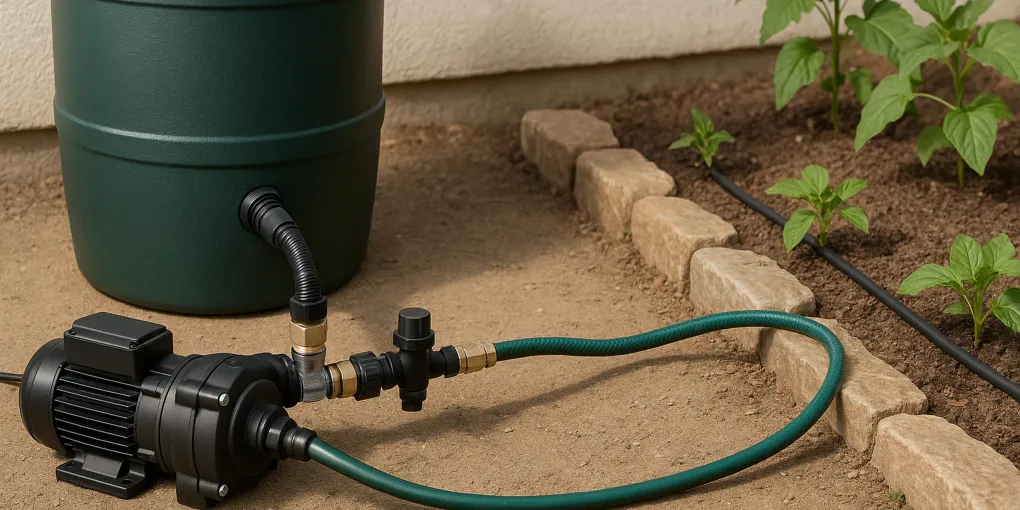
Compare pump options when the job involves a longer run, an uphill destination, or components whose documentation calls for more pressure than your gravity setup supplies. Treat the pump as one part of the route—not a universal upgrade. The barrel outlet, intake arrangement, filter, control hardware, hose, and drip mainline still have to work together.
For a pump-assisted drip layout, keep the first configuration small and inspect the result before expanding it. The detailed pump, drip, and pressure setup guide covers the order of components and the checks that belong between a barrel and a drip line. If your planned emitters or timer have requirements you cannot verify, use their documentation before selecting a pump category.
The fit checks that matter before a purchase
Route and elevation
Map the actual route from the barrel outlet to the furthest watering point. Note elevation changes, hose length, tight turns, and any valves or fittings. A low-pressure kit can be the better match for a short, simple route; a pump comparison becomes relevant when that route exceeds what the gravity baseline can support.
Water cleanliness and service access
Rainwater can carry debris into a hose or drip line. Choose a configuration only when you can inspect the intake or filter, clean it according to its instructions, and reach the fittings without dismantling the whole setup. The rain barrel pressure-regulator guide is the companion page for understanding where control hardware belongs in a drip route.
Connections and control hardware
List the thread, hose, tubing, and filter connections before shopping. A useful listing gives you the dimensions, included adapters, manual, warranty, and return details needed to rule it in or out. Do not assume a pump, filter, valve, hose adapter, or drip kit includes another part shown in a product photo.
Power and operating instructions
For a powered setup, use the manufacturer’s instructions for placement, connection, and operating limits. Keep the electrical plan and the water route reviewable before purchase rather than improvising a connection after delivery. For a gravity setup, apply the same discipline to stand stability and the route around paths or structures.
A practical decision table
| Watering job | Starting path | What to verify | Next internal guide |
|---|---|---|---|
| Watering cans or a short nearby hose | Gravity baseline | Outlet fit, hose route, and access to the barrel. | Rain barrel height and pressure |
| Small, short drip zone | Low-pressure kit comparison | Kit documentation, filtration, tubing, and emitter requirements. | Low-pressure drip kits for rain barrels |
| Longer or uphill route | Pump category comparison | Route, connection sizes, stated operating limits, and installation instructions. | Pump and drip pressure setup |
| Timed watering | Match the system before adding automation | Timer requirements, pressure expectations, and manual override. | Rain barrel drip timer setup |
How to read a pump or kit listing
A useful listing lets you compare the parts you can verify against the route you measured. Start with the connection specification, not the product title. Write down the barrel outlet, the hose connection, the drip mainline size, and any filter or valve connection already in use. Then look for the matching inlet and outlet information in the product documentation. If the listing uses a generic compatibility phrase but omits the thread, fitting, or adapter details, it has not answered the fit question.
Next, separate what is included from what is merely shown. Product photos can show a complete watering scene while the listing offers only one component. Check the included-parts list, the installation manual, and the manufacturer support page for the pump, filter, hose adapter, valve, and drip hardware you actually need. This is also where a return policy matters: a category can be inexpensive at checkout but a poor cost basis if it leaves you with incompatible fittings or an unreturnable component.
For a powered category, read the operating instructions before treating a flow or pressure figure as relevant. The route may include elevation, restrictions, or water conditions that differ from the simple setup used for a headline specification. A neutral comparison asks whether the documentation covers your connection path and maintenance access; it does not assume that a higher stated figure makes a product the better garden choice.
For a low-pressure kit, look for the same level of detail about tubing, emitters, filters, flushing, and any timer or regulator the documentation expects. The low-pressure drip kit guide can help you keep the kit-selection question separate from the pump-versus-gravity decision this page answers.
Plan the first working zone
Treat the first zone as a compatibility check for the route, rather than a promise to water every bed at once. Choose the closest intended bed, use the actual hose and fittings, and make sure the barrel, filter access, and connection path remain easy to inspect. A gravity-led test establishes whether a short low-pressure route is already sufficient. If it is not, your measurements and connection notes make the later pump comparison more specific.
Keep the first route easy to revise. Avoid burying or permanently fixing connections before you know which parts need cleaning access, a different fitting, or a shorter run. For a timed setup, leave a manual way to observe the watering route and verify that the timer documentation matches the system’s requirements. The point is not to create a universal configuration; it is to build one documented route whose components and limits you can verify.
This approach also keeps the purchase decision focused. Once you know whether gravity reaches the first zone and which connection or pressure requirement is unresolved, you can compare current Amazon options by the relevant category. If a listing cannot document the missing detail, it is not a stronger match merely because it includes more accessories.
Cost and return checks
Compare the whole route rather than only the pump or kit listing. A budget category can need additional fittings; a premium category can still be a poor fit if the required adapter, hose size, or service access is unclear. Review the current listing on Amazon, the seller’s return terms, the warranty information, and the manual before committing to a category.
The same check applies to replacement parts. Prefer a route where you can identify the relevant washer, filter, hose adapter, or tubing connection from the documentation. If a listing leaves the critical fit question unanswered, keep comparing rather than treating a broad compatibility claim as proof.
Common setup mistakes
- Choosing a pump before measuring the route and the highest watering point.
- Adding a drip kit without reading the emitter, tubing, and filter requirements.
- Treating a taller stand as an answer to a stability or compatibility problem.
- Assuming accessories shown in a listing are included.
- Making the electrical or connection plan only after the equipment arrives.
FAQ
Is a pump always better than gravity for rain-barrel drip irrigation?
No. A short, low-resistance zone designed for low pressure may be a better gravity fit. Compare a pump category when the actual route or component documentation calls for more than that baseline can provide.
What should I check on a rain barrel pump listing?
Check the stated operating limits, inlet and outlet connections, required water conditions, installation instructions, warranty, return details, and the fittings needed for your own hose or drip route.
Can I use a standard drip kit with a rain barrel?
Only when the kit documentation matches the pressure and route you can provide. For a gravity-led setup, start with our low-pressure drip kit guide rather than assuming a standard kit will suit the barrel.
What is the first thing to measure before buying?
Measure the route from the barrel outlet to the furthest watering point, including elevation changes and the connections already in the system. That tells you whether to keep testing gravity or begin a pump comparison.
Bottom line
Choose gravity for the simplest compatible route, and compare a pump only when the measured route or documented component requirements justify it. The two Amazon category links above are a starting point for current options; the final choice should follow verified fit, documentation, warranty, returns, and the complete connection path.