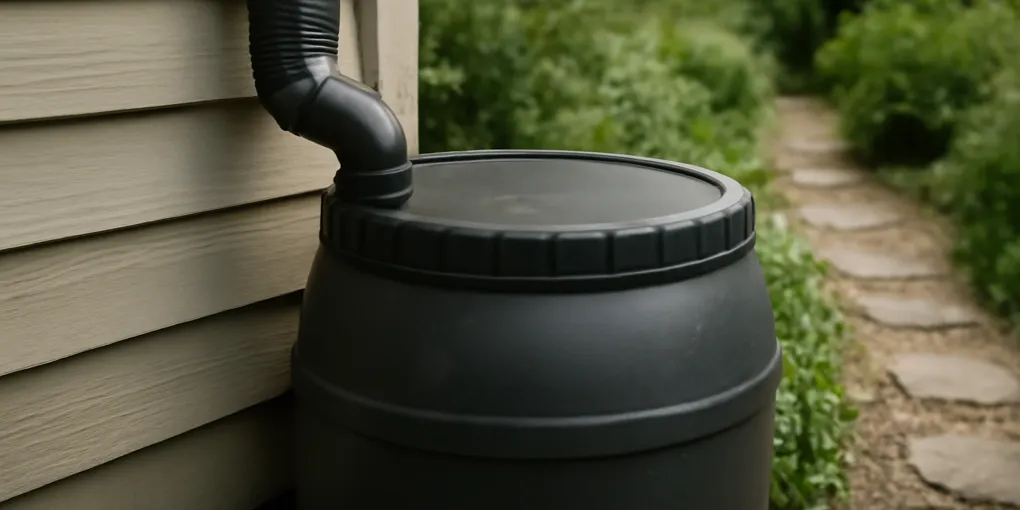
EarthMinded FlexiFit rain barrel diverter kit
Standard downspoutsUse Case: Standard rectangular downspouts
Varies
Quick picks
| Product | Key Specs |
|---|---|
| See price on Amazon |
|
| See price on Amazon |
|
| See price on Amazon |
|
| See price on Amazon |
|
Product availability, certifications, and retailer details can change; check the current Amazon page before buying.
A good rain barrel diverter kit should capture water without turning the downspout into a leak point. The best options match your downspout shape, drill cleanly, include a flexible fill hose, and let excess stormwater continue down the original downspout when the barrel is full.
What to compare before you buy
Measure the actual downspout first. Many kits are sold around 2x3-inch or 3x4-inch rectangular downspouts, while older homes, commercial gutters, and decorative round downspouts may need a different insert. Check whether the kit needs a hole saw, a full downspout cut, screws, or a removable section. For winter climates, favor a fill hose you can disconnect and cap before freeze season.
Overflow behavior is the core safety feature. A diverter should stop sending water to the barrel once the waterline reaches the fill port and should send excess water down the downspout. That only works when the barrel port height, hose slope, and downspout insert are installed as directed. If the barrel sits too low or the hose sags, water can pool in the hose and leak around the fitting.
Buying criteria
| Criterion | What to prefer | What to avoid |
|---|---|---|
| Downspout fit | Documented 2x3, 3x4, round, or cut-to-fit dimensions | Generic universal claims with no measurements |
| Barrel connection | Flexible hose, gasketed wall fitting, cap or winter bypass | Rigid hose routing that stresses the barrel wall |
| Overflow return | Clear instructions for full-barrel bypass through the downspout | Designs that rely on the barrel overflow as the only relief path |
| Install tolerance | Templates, hole saw size, and replacement washers listed | Tiny photos and no part list |
A strong listing gives enough detail to disqualify it before you order. That is useful. Rain barrel parts fail at the fit points: threads, hose slope, debris access, seal surfaces, and pressure assumptions. Favor products with diagrams, measurements, install photos, and replacement parts over listings that lean on garden lifestyle images.
Installation and setup checks
Dry-fit the downspout insert before drilling the barrel. Mark the barrel fill height so the hose slopes gently from the diverter to the barrel without a low pocket. After installation, run a hose into the gutter or upper downspout until the barrel reaches the fill port, then confirm excess water continues down the downspout.
After delivery, dry-fit every washer, gasket, clamp, barb, and threaded connection before making permanent cuts. Run a controlled hose or bucket test and watch for slow weeping. Hand-tight plastic threads with the right washer usually beat wrench-tight parts that distort under load.
Fit checks before drilling the downspout
Treat the diverter as a measured plumbing part, not a universal accessory. Photograph the downspout from the front and side, then measure the width, depth, and available straight run where the insert or fill hose will sit. Check whether the barrel lid, wall, or stand puts the fill port at the height expected by the kit. If the barrel port is too low, the hose can hold standing water; if it is too high, the diverter may bypass useful rainfall.
Also plan the winter position before installation. In freeze climates, the best kit is one you can disconnect, cap, or bypass without disassembling the downspout. Keep the original cutout, cap, or blanking plug with the barrel parts, and label the hose direction if it is easy to reverse. After the first storm, inspect the downspout seam, the barrel port gasket, and the ground below the wall. A slow drip at the diverter is a warning that the hole, insert, or hose slope needs adjustment before a larger storm tests it.
How we score this decision
| Criterion | Weight | How to apply it here |
|---|---|---|
| Research | 30% | Compare manuals, dimensions, included fittings, installation diagrams, and brand support before relying on star ratings. |
| Evidence Quality | 25% | Prefer listings with clear part photos, measured compatibility, manufacturer instructions, and owner reviews that match rain-barrel use. |
| Value | 20% | Reward serviceable fittings, standard replacement parts, and kits that reduce adapter purchases. |
| User Signals | 15% | Read recent low-star reviews for leaks, missing parts, brittle plastic, clogging, unclear instructions, and support problems. |
| Transparency | 10% | Penalize vague universal-fit claims, hidden pressure requirements, and listings that omit the one dimension your install needs. |
Common mistakes to avoid
- Buying before measuring the downspout flat sides.
- Putting the barrel port higher than the diverter outlet.
- Forgetting a winter cap or bypass plan.
- Assuming a diverter replaces a safe ground-level overflow route.
Final pre-order checklist
Confirm the measured site conditions one more time before buying: downspout shape, barrel height, outlet thread, hose route, cleaning access, freeze-season plan, and where unwanted water will go during a storm or malfunction. If a part touches the house envelope or a walking surface, give safety and routing more weight than accessory count.
Check replacement-part availability too. Washers, hose clamps, screens, barbed fittings, and standard tubing are cheap when they are common sizes. Proprietary pieces can still be worth buying, but only when the kit clearly solves your specific problem and the listing explains how to maintain it.
Product notes by downspout type
For common rectangular aluminum downspouts, decide whether a drilled insert or section-style insert suits your tools. A drilled insert keeps more of the original downspout in place, but hole placement has to be accurate. A section-style insert can be easier to inspect, but it needs a clean cut and secure fastening. Round downspouts deserve extra caution because the seal surface is different; search specifically for round compatibility rather than forcing a rectangular insert. Vinyl downspouts can flex when a fill hose pulls sideways, so strain relief matters. Older metal downspouts should be checked for corrosion before cutting. Choose an EarthMinded-style sidewall diverter for a familiar sealed barrel connection, an Oatey Mystic-style inline collector when you have room for the insert body, a RainReserve-style retrofit search for replacement hoses and fittings, and a round-downspout search when house geometry is the constraint. After the first two storms, inspect the cut, hose ends, and barrel fitting for dirt streaks that reveal slow leaks. Before winter, disconnect or cap the fill hose so trapped water cannot freeze and split the line.
Field scenarios to think through
Small ranch house with one front downspout: prioritize a clean-looking insert, a hose that can be hidden behind the barrel, and an easy winter bypass. The roof area may be modest, but the diverter still has to return water to the downspout when the barrel is full. A kit that includes caps and a flexible hose is usually easier to live with than a rigid custom connection.
Tall two-story downspout feeding a large roof plane: give overflow return and downspout seal quality more weight. Water can arrive quickly, and a small installation error can show up as a wall stain or mulch washout. If the barrel is close to a basement wall, pair the diverter with a separate overflow route even when the diverter claims full-barrel bypass.
Decorative or round downspout: make compatibility the first filter in the buying decision. Many mainstream kits assume rectangular aluminum. If the insert shape is wrong, no amount of sealant makes it a good install. Search narrower, compare owner photos, and be willing to choose a different collection method if the kit does not document the profile.
Rental or low-tool setup: avoid kits that require irreversible cuts unless the owner approves. A removable rain chain, external collector, or professionally installed diverter may be safer than making a rough cut that creates a maintenance problem later.
Troubleshooting after the first week
If the barrel does not fill, check height before blaming the kit. The fill hose outlet must sit below the diverter opening, and the hose should not sag into a water trap. Remove the hose and rinse it; a small wad of leaves can block flow while the downspout still looks clear. If water leaks from the downspout cut, inspect whether the insert is seated flat and whether screws distorted thin metal. If water enters the barrel but also spills near the foundation, the barrel may be full without a working bypass or the overflow route may be undersized. During a storm, never assume a quiet barrel means the system is working; look for water stains below the diverter, mulch displacement, and standing water near the wall the next morning. If the downspout vibrates or rattles after installation, support the fill hose so wind and water weight do not tug the insert loose. Keep the original downspout path intact below the diverter because that is still the emergency drain when the barrel is full or disconnected. A good diverter installation should be boring during heavy rain: water fills the barrel, then excess disappears down the normal path without splashing, backing up, or soaking siding.
Buyer fit questions
- What exact downspout size is printed on the house measurement, not the listing photo?
- Can the fill hose slope to the barrel without crossing a walkway or bending sharply?
- Where will water go when the barrel is full and you are not home?
- Can you disconnect or cap the system before freezing weather?
- Do you have the correct hole saw, screws, and seal parts before starting? Use these questions to slow the purchase down before you compare prices. A rain-barrel product can look inexpensive until it needs extra adapters, a replacement hose, a new filter, or a second trip to the hardware store. It can also look overbuilt until it prevents one wet foundation corner or one failed irrigation week. Write the answers beside the product listing and reject any option that leaves the critical fit question unanswered. If two products both fit, choose the one with clearer instructions, easier cleaning, and more standard replacement parts. If neither product fits, change the system plan before ordering rather than trying to fix a mismatch with sealant and improvised fittings.
This step is especially useful for marketplace buying because photos, bundles, and seller descriptions can change. The product name may stay familiar while the included hose, fitting, or adapter set changes. A current listing check protects you from buying yesterday’s version of the kit.
A final sanity check is to read the lowest-rated current reviews for the exact pattern you are about to install. Repeated complaints about missing washers, confusing instructions, brittle fittings, or poor seller support matter more than a polished hero photo. Save the manual and order page until the part survives a storm and a normal watering cycle.
FAQ
Can a diverter work without cutting the entire downspout?
Some kits only require drilled holes in the downspout and barrel, while others replace a short downspout section. Choose based on the tools you can use cleanly and the shape of your downspout.
Should the fill hose run uphill or downhill?
It should run with a gentle downward path from diverter to barrel. A sagging or uphill hose can hold water, collect debris, and leak around the fitting.
What should happen when the barrel is full?
A properly installed diverter sends extra water back down the downspout. Still keep a separate overflow route in case the hose clogs or rainfall exceeds the diverter capacity.
Is a round downspout kit different from a rectangular kit?
Usually yes. The insert shape and seal area differ, so search specifically for round downspout compatibility instead of forcing a rectangular diverter to fit.
Bottom line
Choose a diverter kit by measured downspout fit and full-barrel bypass behavior first, then compare price and accessories. A tidy install that returns stormwater to the downspout is worth more than an oversized parts bag.
Before purchasing, confirm the live listing details against your barrel size, outlet height, tubing layout, and maintenance needs.