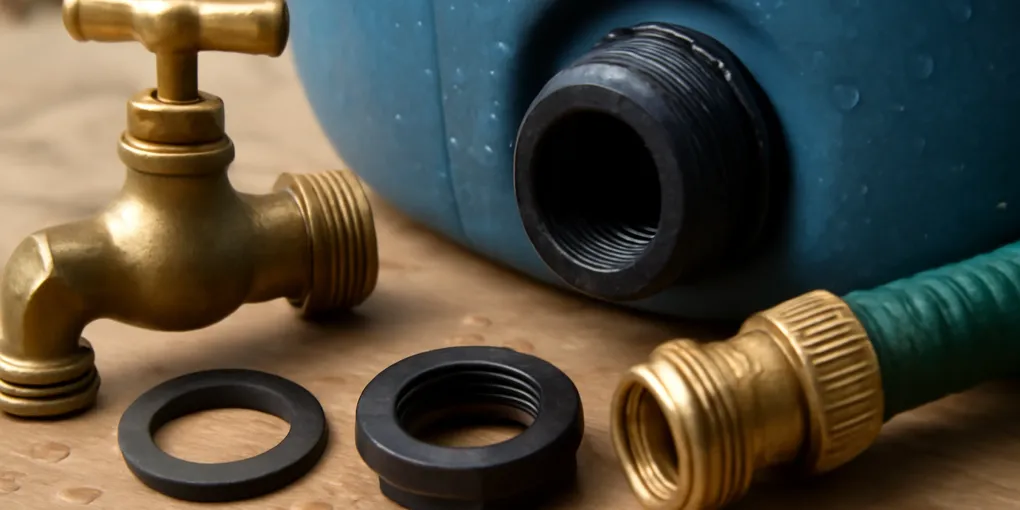
Rain barrel brass spigot replacement kit
Best durable valveUse Case: Replacing a cracked plastic tap or adding a stronger hose-thread outlet
$10-$25 typical
Quick picks
| Product | Key Specs |
|---|---|
| See price on Amazon |
|
| See price on Amazon |
|
| See price on Amazon |
|
Product availability, certifications, and retailer details can change; check the current Amazon page before buying.
A leaking rain barrel spigot is usually a small parts problem, not a reason to replace the barrel. The right fix depends on where the water is escaping. A drip from the hose threads may need a washer. A drip through the valve may need a new spigot. Water weeping around the barrel wall usually means the bulkhead fitting, gasket, or hole shape is the real failure.
For most homeowners, the best first replacement is a lead-free brass rain barrel spigot kit that matches the existing outlet hole and includes inside and outside washers. If the plastic around the outlet is distorted, or if a DIY barrel was drilled a little too large, choose a bulkhead fitting with a wide gasket instead of trying to rescue the old tap with more sealant.
Use this guide to choose the repair part before you drain the barrel. The goal is not the fanciest valve. It is a fitting that seals on a curved plastic wall, accepts a garden hose or low-pressure irrigation line, and can be tightened without cracking the barrel. If your bigger problem is low flow after the repair, pair this with our guide to rain barrel height and water pressure.
Mini chooser: buy the repair part for the leak location
| CTA | Choose this when | Compatibility check |
|---|---|---|
| Search Amazon for brass rain barrel spigot kits | The handle leaks, the outlet threads are stripped, or a hose connection wobbles. | Match the barrel hole, wall thickness, washer layout, and garden-hose thread before draining. |
| Search Amazon for rain barrel bulkhead fittings | Water seeps around the barrel wall instead of from the handle. | Choose a flat sealing surface, the correct gasket material, and enough thread length for the wall. |
| Search Amazon for hose washer and thread tape kits | The leak is at the hose, cap, or threaded joint, not the barrel wall. | Replace the washer first; tape helps tapered pipe threads but does not fix a missing hose gasket. |
Quick picks for common spigot repairs
- Best durable valve: Search Amazon for brass rain barrel spigot replacement kits. Choose this when the original plastic handle cracked, the valve drips when closed, or you want a stronger hose-thread outlet.
- Best wall-seal repair: Search Amazon for rain barrel bulkhead fittings with gaskets. Choose this when water comes from the barrel wall around the fitting.
- Best low-cost first attempt: Search Amazon for spigot washer and thread tape kits. Choose this when the fitting is solid and the leak is at a hose connection or threaded joint.
Diagnose the leak before buying parts
Dry the outside of the barrel, fill it above the spigot, and watch for the first wet spot. If the water appears at the spout opening while the valve is closed, the valve seat is failing. Replacing the spigot is usually faster than trying to rebuild a very cheap plastic tap. If the water appears where a garden hose connects, remove the hose and check for a missing or flattened hose washer. That fix costs much less than a new fitting.
If the water beads around the barrel wall, look closer before tightening. A curved rain barrel wall does not seal like a flat plumbing panel. The gasket must compress evenly against clean plastic. A fitting that is tilted, cross-threaded, too small for the hole, or missing an inside washer can leak even if the valve itself is fine. Over-tightening can make the problem worse by deforming the wall or squeezing the gasket out of position.
Also check for cracks radiating from the hole. A small hairline crack near the outlet can open when the barrel is full because the water load pushes on the wall. If the crack is structural, a new spigot alone may not hold. You may need a larger bulkhead fitting with a wider sealing surface, a patch made for the barrel material, or replacement of the barrel if the plastic is brittle.
What to buy for each failure mode
Drip from the closed valve: buy a replacement spigot. Brass is usually more durable than thin plastic, but match the part to your barrel. Look for standard garden hose threads on the outlet, a handle that clears the barrel wall, and enough shank length to pass through the wall and washers. If the product will touch water used around food crops, prefer parts labeled lead-free or suitable for potable-water contact, even though harvested roof runoff itself is not automatically potable.
Leak around the barrel wall: buy a bulkhead fitting or spigot kit with large washers. A bulkhead fitting is designed to clamp a gasket against the container wall. It matters more than the valve material when the hole is the problem. Check the required hole diameter before ordering. A fitting that needs a 1-inch hole will not reliably seal a ragged 1.5-inch opening unless the flange and gasket are designed to cover it.
Drip at the hose connection: start with a hose washer. Many suspected spigot failures are actually missing hose washers or damaged hose ends. A fresh washer and a clean hose thread can stop the drip without disturbing the barrel fitting. Avoid cranking a hose tight with pliers. Garden hose threads are not pipe threads; they seal mainly against the washer, not by brute-force thread wedging.
If flow is still slow after the repair, a leak-free spigot may still disappoint because the valve passage is tiny. Choose a full-port or larger-opening valve when you use a short hose, watering wand, or low-pressure drip kit. For gravity systems, every restriction matters. Our low-pressure drip kit guide explains why filters, emitters, and hose length can matter more than the barrel label.
Brass, plastic, or stainless: which spigot material makes sense?
Plastic spigots are inexpensive and may be perfectly adequate for a simple barrel that fills watering cans. They are light, do not corrode like some metals, and are often included with flat-back residential barrels. The downside is handle strength. Thin plastic handles can crack after sun exposure, freeze-thaw stress, or repeated hose tugging.
Brass spigots feel stronger and usually tolerate hose handling better. They are a good upgrade when the barrel sits in a busy walkway, feeds a hose, or has already broken a plastic tap. The tradeoff is fit and material labeling. Choose parts that clearly state lead-free if the water will be used around edibles. Also make sure the brass shank is long enough for the barrel wall and washers.
Stainless or composite fittings can make sense for specialty barrels, but they are less common in simple garden rain barrel kits. Do not pay extra for a material upgrade if the gasket design is weak. A premium valve attached to a narrow washer on a curved wall can still leak. The seal geometry matters at least as much as the metal.
Sizing and fit checks before you drain the barrel
Measure the existing outlet if you can access it safely. Note the hole diameter, the outside diameter of the threaded shank, the wall thickness, and whether there is room inside the barrel for a nut. Some decorative barrels have limited hand access. A fitting that requires reaching inside may be annoying or impossible unless the top opening is large enough.
Check the outlet height too. A very low outlet may sit close to the ground or stand, leaving little room for a downward handle or hose bend. A ball valve with a long lever can be easier to operate but may collide with the barrel side, stand, or hose route. If the barrel feeds a soaker hose, consider whether you need a straight hose outlet, a 90-degree elbow, or a short leader hose to avoid side loading the fitting.
Finally, inspect the plastic around the hole. Clean, flat molded pads seal more easily. Thin curved walls require bigger washers. Wavy, brittle, or cracked plastic needs a wider repair strategy. If the wall flexes when you touch the valve, a bulkhead fitting with broad gaskets is usually safer than another small-thread spigot.
Brass replacement spigot kit
A brass replacement kit is the right first pick when the old valve body or handle has failed. Look for a kit that includes the spigot, inside washer, outside washer, locknut, and clear thread-size information. The best listing photos show both sides of the fitting so you can see how it clamps the barrel wall.
Search Amazon for rain barrel brass spigot replacement kits
Best for: cracked plastic spigots, valves that drip when closed, and barrels that feed a short hose. Watch for: unclear thread sizes, missing washers, handles that hit the barrel, and claims that ignore curved-wall sealing.
Bulkhead fitting with gasket
A bulkhead fitting is the better repair when the leak is around the wall opening. It spreads pressure across a gasket and can rescue a barrel where the original hole is slightly oversized. It is also useful when building a DIY barrel from a food-grade drum because you can choose the hole size and fitting before drilling.
Search Amazon for rain barrel bulkhead fittings with gaskets
Best for: wall leaks, DIY barrels, and outlets that need a stronger clamped seal. Watch for: hole-saw requirements, nut access inside the barrel, gasket material, and whether the fitting outlet matches a hose-thread spigot or pipe-thread adapter.
Washer and thread-tape repair kit
A small washer kit is worth keeping with rain barrel parts because hose washers disappear and flatten. Use thread tape only where the fitting design calls for tapered pipe threads. Do not wrap tape around a garden hose thread and expect it to replace the hose washer. The hose connection should compress a washer at the end of the female fitting.
Search Amazon for rain barrel spigot washer and thread tape kits
Best for: hose-end drips, threaded adapter seepage, and low-cost troubleshooting before a full replacement. Watch for: outdoor rubber compatibility, washer diameter, and the temptation to over-tighten after adding tape.
Installation notes that prevent repeat leaks
Drain the barrel below the outlet before removing anything. Support the outside wall with one hand while loosening the nut or spigot so the plastic does not twist. Clean the sealing area with water and a soft cloth. Dirt, algae film, and old sealant under the gasket can create a channel for water.
Install washers in the order the kit specifies. Many rain barrel kits use one washer inside and one outside. Some bulkhead fittings use a gasket only on the water side. If the instructions conflict with generic internet advice, follow the manufacturer for that fitting. Tighten by hand first, then add a small additional turn if needed. Stop if the gasket bulges dramatically or the barrel wall starts to pucker.
After filling, test in stages. Add a few inches of water and check the seal. Then fill above the spigot and check again. Attach the hose last, because hose weight can pull on a new fitting before you know whether the wall seal is good. If the leak appears only after the hose is attached, use a short leader hose or support the hose so it does not act like a lever.
What not to buy
Avoid mystery kits that do not state thread size or include washers. Avoid tiny decorative taps if you expect to run a hose or drip line. Avoid relying on silicone caulk alone to hold back a full barrel; sealant may help a clean joint, but it should not be the main structural clamp. Avoid parts that require a hole larger than your barrel can safely support near the bottom.
Also avoid turning the spigot repair into a pressure upgrade. A stronger valve will not make a low barrel behave like a pressurized faucet. If the outlet no longer leaks but watering is still slow, solve that separately with shorter hose runs, cleaner filters, safe stand height, or a pump matched to rain barrel use.
G6 scoring for spigot replacement choices
| Criterion | Weight | How to apply it here |
|---|---|---|
| Research | 30% | Match the repair to the observed leak location, hole diameter, and wall shape before buying. |
| Evidence Quality | 25% | Trust staged water testing more than product claims about universal fit. |
| Value | 20% | Spend on a better gasket and fit before paying for decorative valve finishes. |
| User Signals | 15% | Drips at the hose, valve, and barrel wall point to different parts; do not treat them as one problem. |
| Transparency | 10% | Be clear that a spigot repair fixes leaks and usability, not gravity pressure limits. |
FAQ
What size is a rain barrel spigot?
There is no single size. Many garden barrels use hose-thread outlets, but the shank through the barrel and the drilled hole can vary. Measure the old fitting and read the replacement kit’s hole-size requirement before ordering.
Is brass better than plastic for a rain barrel spigot?
Brass is usually better for durability and hose handling, especially if the original plastic handle cracked. Plastic can still work for light watering-can use. Fit, washers, and lead-free labeling matter more than material alone.
Should I use silicone around a leaking rain barrel spigot?
Use sealant only as a helper if the fitting manufacturer allows it. A proper gasket or bulkhead fitting should do the sealing. Silicone smeared over a dirty, moving, or oversized joint often fails again after the barrel fills.
Why does my new spigot still leak when I attach a hose?
The hose may be missing its washer, the hose end may be damaged, or the hose weight may be pulling the fitting sideways. Replace the hose washer, support the hose, and check whether the leak comes from the hose connection or the barrel wall.
Sources
- U.S. Environmental Protection Agency, rain barrel conservation and stormwater basics: https://www.epa.gov/soakuptherain/soak-rain-rain-barrels
- University of Georgia Extension, rain barrel construction, placement, and maintenance guidance: https://extension.uga.edu/publications/detail.html?number=C915
- Penn State Extension, rain barrel setup and household stormwater guidance: https://extension.psu.edu/rain-barrels