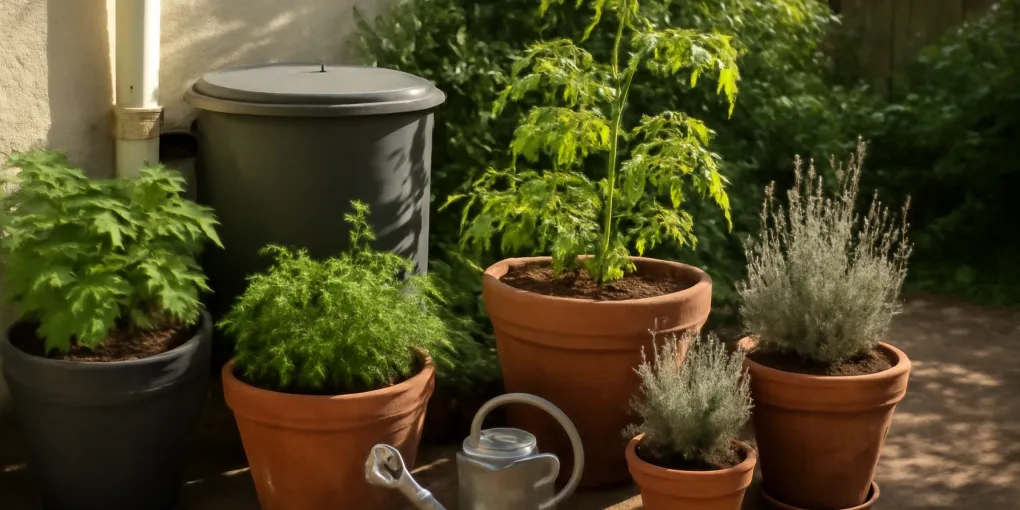
How to Use a Rain Barrel for Patio Containers Without Drowning Roots
ProtocolQuick picks
FCMP Outdoor Raincatcher 4000 Rain Barrel
★ Top pick Top pick for a compact collection point- Use Case: Collecting roof runoff near a patio garden where water can be carried to containers
- Best For: Gardeners who need a closed-barrel setup with accessible watering and overflow planning
- Watch For: Confirm the current listing, site the barrel on a stable base, and test the overflow before relying on it
Patio containers make rain-barrel water convenient, but they also make overwatering easy. A five-gallon pot has a small root zone and no deep soil profile to absorb a rushed watering. The right routine is not to empty a full watering can into every pot. It is to check the potting mix, water slowly at the soil surface, and stop when water begins to drain from the bottom.
This guide is for roof runoff collected in a maintained rain barrel and used outdoors. It is not drinking water. Keep rain-barrel water out of kitchens and food-washing routines, and follow local public-health guidance for edible crops.
A compact collection point for a patio garden
- Top pick: See current FCMP Raincatcher 4000 options if a documented barrel system fits beside the downspout and you need stored water for a nearby group of containers. Verify the current listing’s included parts, then plan the stand and overflow route before purchase.
A barrel should make container watering easier, not turn the patio into a spill zone. Put it on a stable, level base that supports a full barrel, leave access to the screen and spigot, and make sure the full-barrel overflow has a route away from doors, foundations, and walking surfaces. The University of Minnesota Extension rain-barrel guide is a useful starting reference for safe collection and use.
For the separate hose-storage decision, see the compact retractable hose-reel comparison, which compares listed product details without asserting barrel compatibility or watering performance.
Check the pot before opening the spigot
Container plants need water based on their pot size, plant growth, weather, and potting mix. A hanging basket in direct afternoon sun may need attention much sooner than a large shaded pot. A fixed calendar cannot see the difference.
For the separate question of getting rain-barrel water to one elevated basket, use how to water hanging baskets from a rain barrel.
Use a finger or a small moisture probe to check below the dry-looking surface. For most established patio plants, water when the upper layer of mix is dry but the pot is not bone dry all the way through. If the mix is still cool and moist a couple of inches down, wait. This simple pause prevents the common mistake of watering a stressed-looking plant whose roots are actually short of oxygen from staying wet.
Containers dry more quickly than in-ground beds and need regular monitoring. It also matters that a pot has unobstructed drainage holes. A decorative cachepot without a drain can hold water around roots even when the potting mix is otherwise appropriate.
Water the root zone slowly
Fill a watering can from the barrel and apply water at the potting mix, not over the foliage. Start near the base of the plant and move around the pot in a slow circle. Pause after a small amount so dry mix has time to absorb water rather than shedding it down the inside wall.
Stop when a small amount drains from the bottom. That tells you the root zone has been wetted through; it is not a reason to keep pouring. Empty any saucer that remains full after the pot has drained. A saucer is useful for protecting a patio surface, but standing water against the base of a pot can keep roots too wet.
For a newly planted container, use a smaller first drink and recheck the pot later. Fresh potting mix and a small root ball can dry unevenly. For a root-bound pot that sheds water, gently loosen the surface and apply several small passes rather than one fast flood.
Match the container to the barrel’s practical supply
Rain-barrel storage is finite. A small patio garden is usually a good match because you can direct water to the plants that need it most. A row of large fabric pots in a heat wave may use the stored water quickly, so make a priority list before the barrel is full:
- Newly planted containers and shallow-rooted herbs.
- Pots under eaves that receive no natural rain.
- Productive vegetables showing dry potting mix.
- Established drought-tolerant ornamentals last.
This is a watering triage, not a claim that one barrel can replace every outdoor tap. The rain barrel sizing guide helps estimate collection, but the useful measure is how many containers the stored water can serve between rain events.
Keep roof runoff and food handling separate
Rainwater collected from a roof can pick up debris from the roof surface, gutter, and downspout. For patio vegetables and herbs, aim the watering can at the soil rather than splashing leaves or fruit. Harvested food should be washed with potable water. Do not use a rain barrel as a source for drinking, cooking, handwashing, or rinsing produce.
Maintain the inlet screen and remove accumulated leaves so the barrel is less likely to clog or harbor debris. If the water smells unusual, looks heavily contaminated, or the screen has failed, stop using it for the garden until the barrel and collection path have been checked. The EPA rain-barrel overview provides general nonpotable-use context and maintenance reminders.
Separate watering from overflow management
The spigot is for planned watering. The overflow is for a full barrel during rain. Do not treat an open spigot, a loose hose, or a patio planter as the overflow strategy. Test the full-barrel route with a hose and watch where the water ends up. If it reaches the house, stairs, a sidewalk, or a neighboring lot, reroute it before the next storm.
Use the overflow away from foundation guide for the route-specific checks. A container garden can use stored water, but it should never be asked to absorb a sudden roof-flow event.
Sources
Patio-container rain-barrel FAQ
Can I use rain-barrel water on patio vegetables?
Use it as outdoor, nonpotable garden water and keep it on the soil rather than edible leaves or harvest-ready produce. Wash food with potable water and follow local guidance for your crop and roof setup.
How often should I water container plants from a rain barrel?
Check the potting mix before each watering. Hot, windy weather and small pots can create faster needs, while a deep container may remain moist below its surface.
Why are my container plants yellow after using rain-barrel water?
First inspect moisture and drainage. Yellow leaves more often point to a wet root zone, nutrient issue, heat stress, or disease than to a single watering source.
Can I leave rain-barrel water in a watering can?
Empty it after the session. Keeping standing water limited to a covered, screened barrel makes the patio easier to manage and inspect.
Frequently Asked Questions
- It is commonly used for outdoor garden watering, but roof runoff is nonpotable. Keep it off edible leaves and produce close to harvest, follow local guidance, and use potable water for washing food.
- Water when the potting mix needs it, not by a fixed barrel schedule. Small containers can dry quickly in heat, while a large pot may still be damp below the surface.
- Yellowing can come from overwatering, poor drainage, nutrient depletion, heat stress, or disease. Check the moisture level and drainage holes before assuming the water source is the cause.
- Empty it after use rather than leaving standing water around the patio. A covered barrel with an intact screen is easier to manage than several uncovered containers.