Rain Barrel vs Rain Garden: Which Stormwater Tool Fits a Small Yard?
Evidence ExplainerQuick picks
FCMP Outdoor Raincatcher 4000 Rain Barrel
★ Top pick Top pick when stored watering water is the goal- Use Case: A compact yard where the immediate job is collecting water for nearby containers or beds
- Best For: Small yards that need stored water for nearby containers or beds
- Watch For: A full barrel still needs a tested overflow route; it is not a substitute for drainage planning
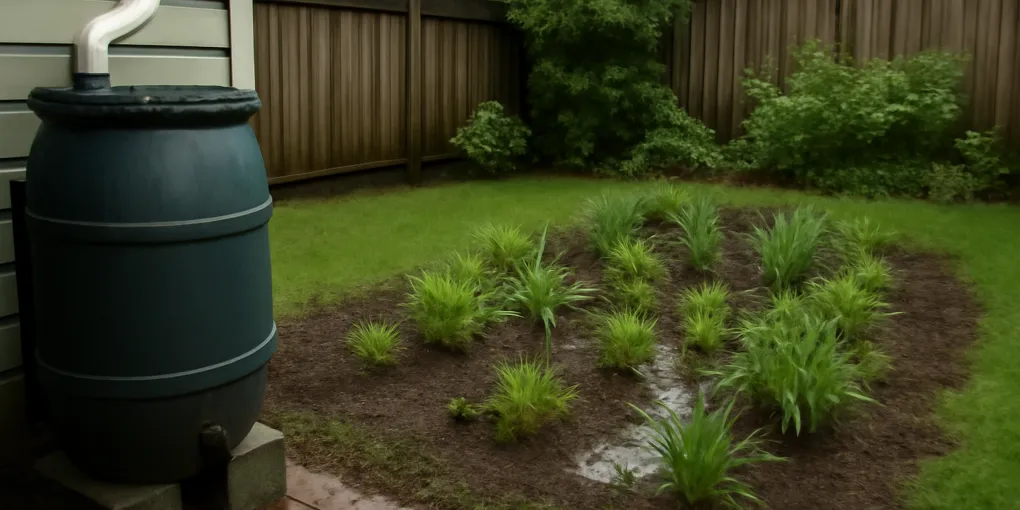
A rain barrel and a rain garden solve different parts of the same roof-runoff problem. A barrel captures a limited amount of water so you can carry it to containers, a tree, or a bed later. A rain garden is a planted shallow basin that slows and soaks in runoff where it lands. Neither is automatically the better choice for every downspout.
The useful question is what you need the water to do after a storm. If you regularly water pots or a small vegetable bed and can use stored water before the next rain, a barrel gives you a controllable supply. If the downspout sends a large roof area toward a wet lawn or sidewalk and you have a suitable planting zone, a rain garden can reduce the concentrated flow that a 50-gallon barrel cannot absorb.
Top pick when the answer is stored garden water
- FCMP Outdoor Raincatcher 4000: See current FCMP Raincatcher 4000 options when the decision is clearly for a compact collection point near containers or a small bed. Confirm the current listing and included parts, then budget separately for a stable base and a safe overflow route. Skip a barrel-first purchase if the downspout’s main problem is repeated runoff that needs a suitable planted infiltration area instead.
Start with the water path, not the product
A rain barrel has a fixed ceiling: once it is full, incoming water must bypass or overflow safely. That does not make it ineffective. It makes it a storage tool rather than a full-site drainage system. The EPA rain-barrel overview describes barrels as one way to capture runoff for outdoor use, while emphasizing that overflow still needs a route.
A rain garden has a different job. It receives runoff in a broad planted depression, lets it spread across the surface, and allows water to infiltrate into suitable soil. The EPA rain-garden guide frames these gardens as a landscape practice, not a decorative hole beside the foundation. Their success depends on site grade, soil behavior, plant selection, and where the water comes from.
For a small yard, trace the route from gutter to final destination on paper. Mark the downspout, basement windows, patio, sidewalk, property line, utilities, existing beds, and the places where water already ponds. That sketch often makes the choice clearer than a gallon rating or a plant list.
When a rain barrel is the better first move
Choose a barrel first when the main benefit is convenient garden water. It fits best when all of these are true:
- You have containers, a short bed, or newly planted shrubs that can use water close to the downspout.
- The barrel can sit on a stable base with room to open the lid, inspect the screen, and access the spigot.
- You can direct the full-barrel overflow away from the house.
- You accept that stored roof runoff is for outdoor nonpotable uses, not drinking water.
A barrel is especially practical on a patio where digging a planted basin would take away usable space. It also makes sense when a gardener wants to choose when water is released rather than relying on the soil to take it during a storm.
The tradeoff is capacity. A single barrel can fill early in a heavy rain, and an empty barrel cannot help a dry garden until the next storm. Use the rain barrel sizing guide to estimate how quickly a roof can fill the storage you are considering.
When a rain garden has the stronger job
A rain garden is often the better first project when the priority is managing repeated runoff rather than saving a few watering cans. It can be a better fit when a downspout drains toward a low lawn, a paved edge, or an area that erodes during storms, and when there is room to place the basin away from the house.
Do not decide from a glossy plant photo. Soil that stays saturated, a high water table, a steep slope, nearby foundations, or buried utilities can change the project completely. The University of Minnesota Extension rain-garden guidance recommends assessing drainage and siting before installation. A local conservation district or extension office can add site-specific rules that a national checklist cannot provide.
A rain garden also needs maintenance: weed control while plants establish, mulch that stays in place, an inlet that does not scour, and an overflow route for storms larger than the basin can handle. It is landscape infrastructure, not a place to hide every downspout problem.
The combined setup: barrel for use, garden for excess
For many small yards, the best answer is not an either-or choice. A barrel can supply watering water after ordinary rainfall, while its designed overflow can lead toward a properly sited rain garden. The two parts still need separate tests.
First, fill the barrel with a garden hose and watch the overflow route. The water should not run back toward the foundation, cross a walkway, or land at a neighbor’s boundary. Then test the path to the planted area with a low flow. If the connection scours mulch or cuts a trench, add a stable splash or spreader detail instead of assuming plants will solve it.
This pairing is not an excuse to place a rain garden too close to the house or to route a barrel overflow into soil that already ponds for days. The rain barrel overflow away from foundation guide covers the storage side of that decision; local rain-garden guidance should govern the planting and infiltration side.
A practical small-yard decision
Pick a rain barrel when your primary goal is watering nearby plants and you have a verified safe overflow route. Pick a rain garden when runoff volume and drainage are the main concern and the property has a suitable planted location. Consider both when the barrel’s stored water will be used regularly and the garden can take the excess without creating a new drainage problem.
A barrel is not a miniature rain garden, and a rain garden is not a storage tank. Matching each tool to its job keeps the project useful after the first attractive storm rather than leaving you with a full barrel, a muddy lawn, or both.
Sources
- EPA: Rain barrels
- EPA: Rain gardens
- University of Minnesota Extension: Rain gardens
- University of Maryland Extension: Rain gardens
Rain barrel and rain garden FAQ
Is a rain barrel or rain garden better for a small yard?
A barrel usually wins when the reader needs water for nearby containers or a compact bed. A rain garden can take a larger drainage role when the property has room, appropriate soil, and a safe site away from the house.
Can a rain barrel overflow into a rain garden?
Yes, when the overflow route is deliberately designed and tested. The receiving garden must be able to accept that water without sending it toward foundations, paving, or neighboring property.
Do rain gardens work in clay soil?
Clay does not automatically rule one out, but it changes the drainage assessment. Get local guidance before digging if the yard already ponds, drains slowly, or has a basement drainage history.
How far from the house should a rain garden be?
There is no universal safe distance. Slope, soil, foundations, utilities, and local requirements matter, so use a local extension or stormwater authority recommendation for the property.
Frequently Asked Questions
- A rain barrel is usually better when you want water beside a garden bed or containers. A rain garden can handle more runoff when the yard has a suitable planted area with drainage away from the house.
- It can be a useful combination when the overflow route is designed to reach a planted infiltration area without sending water toward the foundation, walkways, or neighboring property.
- They can, but the site needs a soil and drainage assessment. A rain garden that drains too slowly can pond longer than intended, so local extension or conservation-district guidance is important before digging.
- Local guidance varies with soil, slope, basement conditions, utilities, and drainage rules. Use local extension or stormwater guidance rather than copying a single distance from another property.