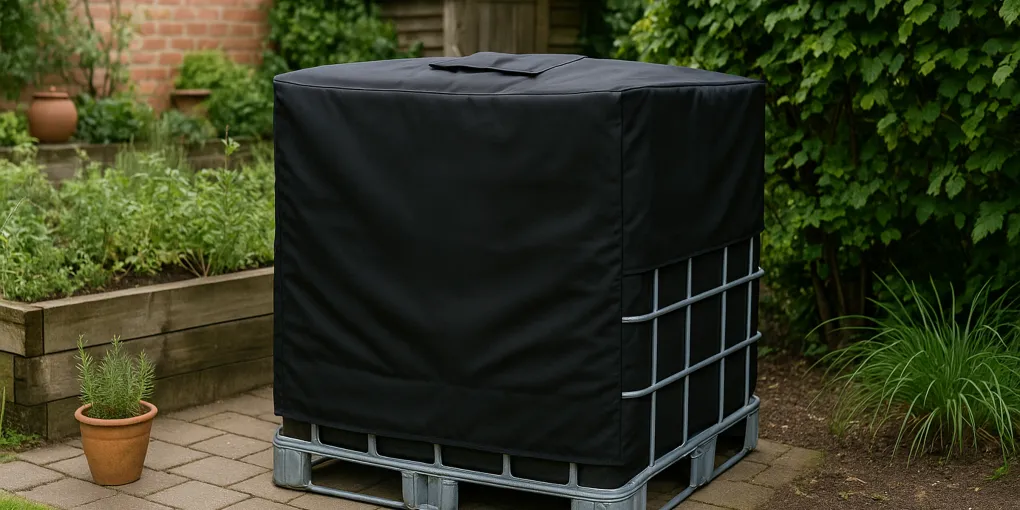
Huapate 420D IBC Tote Cover
Best for a stated zipper-access optionStated fit: 275-gallon / 1000L IBC tote
Quick picks
Huapate 420D IBC Tote Cover
★ Top pick Best for a stated zipper-access option- Stated fit: 275-gallon / 1000L IBC tote
- Material: 420D fabric
- Access detail: Zippered access
- Skip if: Your tote dimensions or access point do not match the listing
Comnova 600D IBC Tote Cover
Best for a stated heavier-fabric option- Stated fit: 275-gallon / 1000L IBC tote
- Material: 600D fabric
- Access detail: Zippered access
- Skip if: You need a different opening layout or attachment method
For a 275-gallon/1000L IBC tote, start by matching the cover to the tote’s stated dimensions and the opening you need to reach. The two Amazon listings below are worth comparing for their stated fabric weight and zipper access; neither is a substitute for checking the specific tote shape, valve-side clearance, or top opening you have.
Quick picks
- Huapate 420D IBC tote cover on Amazon: Start here when a listing that states 275-gallon/1000L fit, 420D fabric, and zipper access matches your tote. Skip it if the stated dimensions or access point differ from yours.
- Comnova 600D IBC tote cover on Amazon: Compare this listing when its stated 600D fabric and zipper access fit your decision. Skip it if you need a different opening layout or closure arrangement.
Check the current price on Amazon only after the fit and access details match your tote. The material labels and access details here are listing specifications paired with product identity.
First: confirm the tote and cover dimensions
“275-gallon” and “1000L” describe the common tote class, not a guarantee that every cover will sit the same way. Measure the tote width, depth, and height where the cover will rest. Note anything that changes the outline: a raised lid, a protruding valve-side fitting, a top opening, or a cage feature the cover must clear.
Then compare those measurements with the dimensions stated in the Amazon listing. A cover can be the wrong choice even when its capacity label sounds right if its zipper, flap, or lower edge lands where you need to reach the tote. Keep this page focused on that shopping check; for tote setup context, see the IBC tote rainwater setup guide.
Write the measurements down rather than relying on a quick visual match. Include the height from the base to the top edge, the width across the cage, and the depth from the front bars to the rear bars. If the tote sits close to a fence, wall, or garden bed, add the clearance you need to work the zipper. A fitted cover may be plausible on paper but still be awkward if the opening faces an obstruction.
Also check whether the listing describes the cover as a full sleeve, a top-and-side wrap, or a design with a lower exposed section. These are access and fit details, not quality grades. The useful comparison is whether the layout leaves the particular lid, valve-side area, or top access point you use reachable without moving the cover out of the way.
What the two listings make easy to compare
Huapate 420D IBC Tote Cover
The verified Huapate listing identifies a 275-gallon/1000L IBC tote cover with 420D fabric and a zipper. That makes it a reasonable first comparison when zipper access is the detail you need to evaluate. Before buying, compare the listing’s stated dimensions against your tote and look closely at where the zipper sits relative to your planned access point.
Check the current Huapate 420D cover listing on Amazon. Skip it if the listing does not document the opening or lower-edge detail your tote requires.
Comnova 600D IBC Tote Cover
The verified Comnova listing identifies a 275-gallon/1000L IBC tote cover with 600D fabric and a zipper. Compare it with the Huapate option when stated fabric weight and the listing’s access arrangement are the deciding details. The denier label does not answer fit by itself, so put the tote measurements and the listed dimensions side by side.
Check the current Comnova 600D cover listing on Amazon. Skip it if the access opening, closure, or stated dimensions do not match your tote.
Choose by access, then attachment details
The top opening deserves as much attention as the cover material. If you routinely need to reach a lid or another top feature, a listing should show and describe how that opening works. Do not infer the opening size from a product photo alone; use the dimensions, included details, and current listing images together.
Next, look for the stated lower-edge and attachment arrangement. Straps, drawstrings, and other closure details are only useful if they match the shape you measured. If a listing leaves that point unclear, it has not resolved the purchase decision. Compare the stated return terms on Amazon too, especially when the exact fit remains uncertain.
Treat the Amazon listing as a checklist rather than a promise. Open the current dimensions, product photos, included-parts notes, seller information, warranty details, and return terms in the same session. If a product photo shows a zipper but the listing does not explain the opening layout, keep that uncertainty in the skip column instead of assuming it will line up with your tote.
The cost basis is similarly practical: a budget option is not automatically the better purchase if an uncertain fit makes a return more likely, while a premium label does not answer the same question. Use the current Amazon price only as the last comparison point after the stated fit, access, lower edge, and return policy are documented.
For a separate discussion of shade-oriented cover choices, read rain barrel shade covers and algae-control context. That is a different editorial question from choosing a fitted IBC cover by dimensions and access.
A quick comparison checklist
| Check | Why it belongs in this decision |
|---|---|
| Stated 275-gallon/1000L fit | Confirms the listing targets the common tote class you are comparing. |
| Actual tote dimensions | Rules out a cover whose stated fit does not match your tote’s width, depth, or height. |
| Fabric weight where stated | Lets you compare the listing’s 420D or 600D specification without turning it into an outcome claim. |
| Top or side access | Shows whether the zipper or flap is positioned where you need to reach the tote. |
| Lower edge and attachment detail | Helps you identify a mismatch before ordering. |
| Warranty and returns | Gives you a buyer path if the delivered cover does not match the documented fit. |
A buyer path that avoids guesswork
Start with the tote, not the Amazon search result. Photograph the tote from the front and the access side, then note the dimensions and the features that interrupt a simple rectangle. Open both listings and compare only the facts that answer those notes: stated dimensions, 420D or 600D label where shown, zipper or flap placement, lower-edge description, and current return terms.
If one listing answers every fit and access question, it is the stronger option for your situation even if the other listing uses a more appealing product title. If both leave the same critical point unclear, pause the purchase and keep looking. That is more useful than choosing between fabric labels without knowing whether the opening and attachment arrangement actually match your tote.
How we evaluated these options
This comparison uses current product identity and listing-level neutral facts: stated 275-gallon/1000L fit, 420D or 600D fabric where named, and zipper access where named. The scope is listing-specification research rather than first-party use. Amazon listings, seller details, availability, and return terms can change, so recheck the current page before ordering.
The editorial method is intentionally narrow: compare the two product records against the details a buyer can verify in the current listing, then identify what remains unknown. It does not rank a fabric label as an outcome or treat a product title as evidence about water quality, tote condition, or longevity. That boundary keeps the choice centered on dimensions, openings, attachment details, and purchase terms.
If the tote will feed a garden-water route, keep the cover comparison separate from the irrigation decision. Our low-pressure drip kit guide and rain barrel pump guide cover those adjacent shopping questions.
FAQ
Will any 275-gallon cover fit a 1000L IBC tote?
Not necessarily. The capacity label is only the starting point. Compare the listing’s stated dimensions with your tote’s width, depth, height, top opening, and any fittings that affect the cover’s outline.
Is 600D always the better choice than 420D?
No. Those are stated fabric-weight labels, not a complete fit decision. Choose only after the dimensions, access opening, attachment details, warranty, and returns make sense for your tote.
What should I inspect in a cover listing before ordering?
Check the stated tote fit, dimensions, fabric label where provided, zipper or flap placement, lower-edge and attachment detail, included items, warranty, and current return terms.
Can I choose a fitted IBC tote cover from a photo alone?
No. Product photos can help you locate an opening or closure, but the dimensions and listing details should decide whether the cover is a plausible match for your tote.
Bottom line
Use the Huapate and Comnova Amazon listings as two verified starting points, then choose by the measurements and access layout you can confirm. A cover is ready to compare only when its stated fit, opening, attachment details, and return terms answer the questions your tote creates.