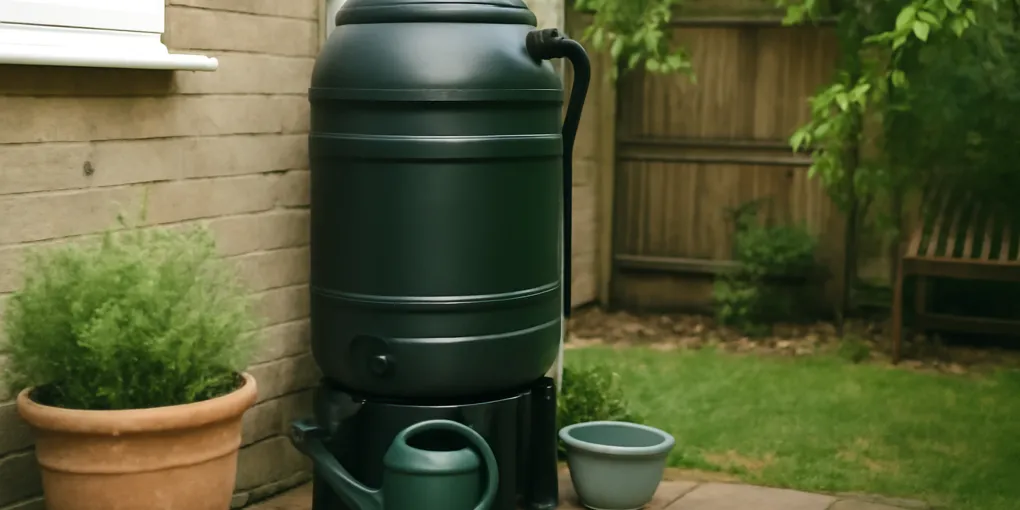
Slim flat-back rain barrel
Best tight-wall fitUse Case: Narrow side yards, townhome patios, and downspouts beside walkways
$90-$180 typical
Quick picks
| Product | Key Specs |
|---|---|
| See price on Amazon |
|
| See price on Amazon |
|
| See price on Amazon |
|
| See price on Amazon |
|
Product availability, certifications, and retailer details can change; check the current Amazon page before buying.
A small-yard rain barrel has to do more than hold water. It has to fit beside a downspout without blocking a path, sit level when it weighs several hundred pounds, fill through a screened or diverter-fed inlet, and overflow somewhere safer than the foundation. The best compact rain barrel is usually not the largest one you can squeeze into the space. It is the one that lets you water easily and inspect leaks before they become patio puddles.
For most small yards and patios, start with a slim flat-back barrel or a covered decorative 50-gallon barrel. Choose a collapsible barrel only when seasonal storage matters more than long-term rigidity. If the downspout outlet is low or a window blocks a tall barrel, look at low-profile wall tanks and measure the inlet height before buying.
Use this guide with our rain barrel location checklist and stand stability guide. A compact barrel still needs a compact, level base and a real overflow plan.
Quick picks for small spaces
- Best narrow-wall fit: Search Amazon for slim flat-back rain barrels when the barrel must sit close to siding or a fence without narrowing the walkway.
- Best patio-looking option: Search Amazon for decorative 50-gallon rain barrels if the barrel will stay visible near seating, containers, or a front-yard planting bed.
- Best seasonal option: Search Amazon for collapsible rain barrel kits when you need to pack the system away before freezing weather or a lease inspection.
- Best low-clearance option: Search Amazon for low-profile rain barrels when a standard barrel would sit above the safe diverter height.
What matters most in a compact rain barrel
Start with the installed footprint, not the advertised capacity. A small-yard barrel has to leave enough walkway or gate clearance after you add the stand, diverter hose, overflow hose, spigot handle, and room to lift or clean the screen. Check the published width, depth, and height against the actual downspout location, then leave working space for a watering can or hose connection.
Filled weight and base support matter as much as shape. A 50-gallon barrel holds roughly 417 pounds of water before you count the barrel, wet debris, or a stand, so narrow blocks, sloped pavers, and soft soil are bad tradeoffs in tight spaces. Favor barrels with a broad stable base, a screened or diverter-fed inlet, an overflow outlet you can route away from the wall, spigot clearance for your watering method, and a cleanout or drain you can reach without moving the whole setup.
Slim flat-back barrels: best when the path is narrow
A slim flat-back barrel is the first style to consider when the downspout sits beside a walkway, side-yard gate, townhouse wall, or fence line. The flat side keeps the barrel closer to the wall, while the front curve leaves a smaller footprint than a round drum. That can be the difference between a usable path and a barrel everyone bumps with a trash bin.
Search Amazon for slim flat-back rain barrels
Best for: narrow side yards and patios where the barrel will stay in one place all season. Watch for: the actual depth from wall to front, the width of the base, and whether the back is truly flat or only slightly flattened. A slim barrel can still tip if it is raised on a narrow homemade stand.
Check the spigot height before buying. Some compact barrels put the spigot close to the ground for maximum storage, which is fine for a hose but awkward for a watering can. If you need can-filling, plan a low stable stand or choose a barrel with a higher outlet.
Decorative 50-gallon barrels: best all-around patio choice
A covered 45- to 55-gallon decorative barrel is usually the safest default for a small patio. It stores enough water for containers and young beds, but it is still manageable to place, winterize, and clean. Look for an opaque body, a screened inlet, a threaded spigot, and an overflow fitting that can accept a hose or extension.
Search Amazon for decorative 50-gallon rain barrels
Best for: visible patios, container gardens, and homeowners who want an integrated lid and spigot rather than a DIY drum. Watch for: decorative shapes that hide small openings, flimsy plastic spigots, and faux-planter tops that leave less room for a practical inlet screen.
A decorative barrel should still be treated like drainage equipment. After the first full storm, check the lid, overflow, spigot washer, and base. If water stains the wall or pools under the patio door, the barrel location or overflow route needs fixing before the next rain.
Collapsible barrels: best for temporary or seasonal setups
Collapsible rain barrels are appealing because they cost less, ship smaller, and can be stored off-season. They can work for community gardens, renters, and short growing seasons, especially when the barrel sits away from pets, bikes, and wheelbarrows. The tradeoff is that the soft wall and frame need more attention than a rigid barrel.
Search Amazon for collapsible rain barrel kits
Best for: temporary watering where storage and price matter. Watch for: frame stiffness, base fabric, screened top quality, drain cap strength, and how the kit behaves when only partly full. A collapsible barrel can sag, lean, or catch wind if the frame is weak or the site is exposed.
Do not use a collapsible barrel as a set-and-forget foundation-side overflow solution. If the downspout serves a lot of roof area, use a diverter or overflow route that protects the house even if the soft tank shifts.
Low-profile barrels and wall tanks: best under windows or low diverters
Low-profile rain barrels and wall tanks help when a standard barrel is too tall for the available downspout height. They also fit where a window, deck framing, or low eave limits the inlet. The compromise is footprint: lower storage often means a wider tank, so you need more floor area and a base that supports the whole bottom.
Search Amazon for low-profile rain barrels and wall tanks
Best for: under-window downspouts, low deck edges, and locations where a tall barrel would force an awkward diverter angle. Watch for: cleanout access, spigot reach, and whether the tank can be drained fully before freezing weather.
Measure the diverter height before you shop. Many diverters rely on the barrel inlet sitting at a specific height relative to the downspout cut. If the barrel is too tall, water may not fill correctly. If it is too low, the diverter may not return overflow to the downspout as intended.
Small-yard buying checklist
Measure the full installed footprint, not just the barrel diameter. Include the stand, downspout elbow, diverter hose, overflow hose, spigot handle, and the space a person needs to remove the lid screen. If the barrel will narrow a gate or path, mark the footprint with cardboard before ordering.
Confirm filled weight and base support. Water weighs about 8.34 pounds per gallon, so a 50-gallon barrel holds roughly 417 pounds of water before you count the barrel itself, wet debris, or a stand. That is why loose soil, stacked blocks, and narrow stands are poor choices for compact spaces.
Choose the inlet for the mess above it. If the downspout catches leaves, seeds, and roof grit, a barrel with a small decorative screen may clog quickly. A diverter with a cleanable filter or a larger screened opening may be worth more than another 10 gallons of storage.
Plan overflow before delivery day. A small barrel fills fast from a large roof section. Use an overflow hose, diverter return, splash block, or extension that sends extra water away from siding, foundation walls, steps, and walkways. For detailed routing, use the rain barrel overflow guide.
Finally, check how you will empty the last few gallons. Small barrels often sit close to walls, so the drain cap, lower spigot, or cleanout may be harder to reach than it looks in product photos. Leave enough room to disconnect the hose, flush sediment, and tip the barrel only when it is mostly empty. If the barrel cannot be cleaned without moving patio furniture or stepping into a planting bed, choose a simpler shape with better access.
FAQ
What size rain barrel works best for a small yard?
A 40- to 55-gallon barrel is usually the easiest small-yard size because it stores useful water without becoming too wide or hard to place. Go smaller only when walkway clearance, base support, or downspout height makes a standard barrel unsafe.
Are collapsible rain barrels good enough for daily garden watering?
They can work for seasonal watering, but they need a flat protected spot, a screened top, and regular inspection. A rigid barrel is usually better for a permanent downspout location or any area where pets, tools, wind, or foot traffic could bump the tank.
Should a small patio rain barrel use a diverter or an open top?
A diverter is usually better beside walls, patios, and tight walkways because it keeps the original downspout involved when the barrel is full. Open-top inlet setups need a bigger screened opening and a separate overflow route that will not splash the house.
What is the biggest mistake when buying a compact rain barrel?
Buying for gallons before measuring the site. Measure path clearance, downspout height, stand height, lid access, spigot reach, and overflow direction before choosing the barrel shape.
Sources
- EPA WaterSense, Outdoor Water Use in the United States
- Rutgers Cooperative Extension, Rain Barrels
- University of Minnesota Extension, Rain barrels