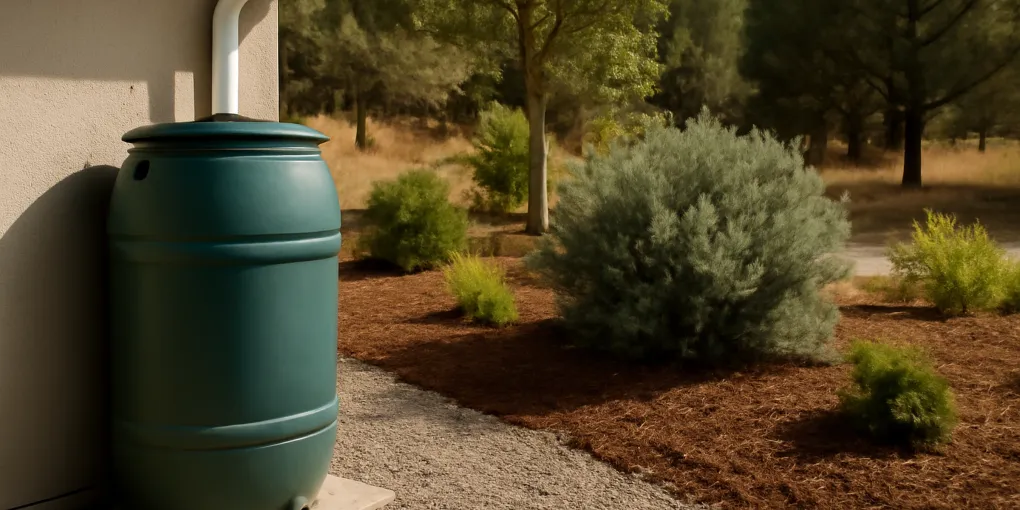
Rain Barrel Firewise Landscaping: Useful Backup Water, Not Fire Protection
Evidence ExplainerQuick picks
Flexzilla 5-foot lead-in hose with shutoff
★ Top pick Best close-range control- Best for: Directing stored water to nearby foundation plantings, gravel edges, or container plants without dragging a long hose
- Check first: Low-pressure gravity flow is slow; support the hose so it does not twist a plastic barrel spigot.
Dramm One Touch rain wand
Best gentle hand watering- Best for: Watering mulch-edge plants or ember-resistant landscape beds gently from a raised barrel
- Check first: Do not expect a wand to throw water like a pressurized fire hose.
WAYNE PC2 portable transfer pump
Best for moving water before fire weather- Best for: Moving stored water to a farther noncombustible-zone cleanup task before red-flag conditions arrive
- Check first: Use it only as a garden transfer tool with an intake screen and supervision, not as emergency firefighting equipment.
A rain barrel can support a firewise landscape, but it should not be marketed to yourself as fire protection. A common 50-gallon barrel is useful for watering a small planting zone, dampening a dusty gravel edge during maintenance, or keeping drought-stressed containers alive. It is not a hydrant, sprinkler system, or emergency water source for a house under ember attack.
That distinction matters because defensible-space work is mostly about fuel, spacing, maintenance, and access. Rain barrel water can help with the maintenance side: keeping chosen plants healthier, cleaning gutters and screens after dusty weather, and moving a limited amount of water to the right place before fire weather arrives. It cannot compensate for dry leaves under a deck, shrubs touching siding, a blocked driveway, or a barrel overflow route that dumps water against the foundation.
Quick picks for firewise rain barrel maintenance
- Best close-range control: Search Amazon for short lead-in hoses when the target bed or gravel edge is within a few feet of the barrel.
- Best gentle hand watering: Search Amazon for Dramm One Touch rain wands for slow watering around selected low-growing plants.
- Best for moving water before fire weather: Search Amazon for WAYNE PC2 transfer pumps if the useful maintenance zone is uphill or far from the barrel.
For the hydraulic limits behind this article, start with the rain barrel height and pressure guide and the rain barrel pump setup guide. If your barrel sits close to the house, pair this with the foundation overflow routing guide.
The useful role: pre-season water for selected zones
Firewise landscaping guidance from NFPA and University of Nevada, Reno Extension focuses on the home ignition zone: the immediate area near the structure, the surrounding landscape, and the fuels that embers can reach. Water is only one small part of that system. The more important work is removing debris, pruning, spacing plants, moving combustibles, and keeping access routes clear.
A rain barrel fits best before the high-risk day, not during it. Use stored water to maintain plants you have already chosen for the site, settle dust after cleaning hardscape, or water a small bed that would otherwise become crispy and stressed. If the barrel is near a downspout, it can also make routine gutter-screen cleaning less wasteful because you can rinse tools and parts outdoors without running a long hose.
What it cannot do is deliver high flow. Gravity water from a barrel may barely move through a long hose, and a raised stand adds only modest pressure. Even a small transfer pump is a garden tool, not a firefighting pump. Do not design an emergency plan around a plastic barrel, a light-duty spigot, and a garden wand.
Start with defensible-space work, then assign barrel water
Before deciding where the barrel water should go, walk the yard with a firewise checklist:
- Remove dry leaves, needles, bark chunks, cardboard, and stored lumber near the house.
- Keep gutters, roof valleys, and downspout strainers clear so debris does not feed the barrel or collect near eaves.
- Separate shrubs, vines, and branches from siding, windows, vents, and deck edges according to local guidance.
- Use noncombustible surfaces near the foundation where your local rules recommend them.
- Keep hoses, gates, and access routes clear for evacuation and firefighters.
Only after that work is assigned should the rain barrel get a job. Good jobs include watering a small group of well-spaced plants, rinsing dust from a gravel border, or filling a tree ring before a dry week. Poor jobs include trying to soak the whole yard, running a sprinkler, or leaving a hose aimed at siding as if the barrel were a suppression system.
The 50-gallon reality check
A full rain barrel sounds like a lot until you compare it with irrigation needs. Fifty gallons can disappear quickly if you fill a tree watering bag, run a pump, or try to cover a large bed. In a firewise yard, that limited volume should go to the place where it prevents routine stress without hiding bigger fuel problems.
Use this simple allocation test:
- Mark the barrel level before watering.
- Water one priority bed, container group, or young tree.
- Mark the level again.
- Decide whether the result was worth that share of storage.
If one short session uses half the barrel, reserve the rest for high-value plants or skip the barrel for that task. Municipal water, drip irrigation, or a larger rainwater system may be more appropriate for broad landscape establishment.
Hose and wand setup for low-pressure maintenance
The most firewise-friendly rain barrel hose setup is short, supported, and easy to shut off. A short lead-in hose with a valve lets you control slow flow without bending the barrel spigot every time. A gentle rain wand can spread water over mulch and soil without blasting it into siding cracks or washing mulch into a pile.
Search Amazon for short lead-in hoses
Search Amazon for Dramm One Touch rain wands
Keep expectations modest. A wand that feels excellent on a pressurized hose may feel slow from a barrel unless the barrel is raised and the hose is short. If you need to water beyond the immediate area, move the barrel, use a transfer pump before fire weather, or use another water source.
When a transfer pump makes sense
A small transfer pump can move stored water to a farther maintenance task, such as a young tree, a container cluster, or a gravel-edge rinse. It makes sense when gravity flow is the bottleneck and the work can be done calmly before red-flag weather.
Search Amazon for WAYNE PC2 transfer pumps
Use an intake screen so roof grit and algae do not enter the pump. Supervise the pump, keep cords and outlets safe, and do not run it dry. Never assume a pump turns a barrel into emergency equipment. If local authorities tell you to leave, leave; do not stay to operate a plastic storage barrel.
Barrel placement matters in a firewise yard
A rain barrel should not create a new hazard while trying to support a safer yard. Check placement carefully:
- The barrel is on stable, noncombustible or well-supported footing.
- Overflow moves away from the foundation and walking paths.
- The barrel does not block gates, hose bibs, crawlspace doors, or evacuation routes.
- The lid is tight enough to exclude debris and mosquitoes.
- Nearby mulch, leaves, and stored items are managed according to local defensible-space rules.
If your best downspout is in a narrow side yard full of clutter, solve the access and fuel problem first. The barrel should make maintenance easier, not add another object to navigate during an evacuation.
Use rain barrel water where it changes maintenance behavior
The best rain barrel firewise use is the task you will actually repeat. If the barrel makes it easy to keep a small bed healthy, rinse a hardscape edge after sweeping, or water a new tree slowly, it earns its place. If it becomes a full, algae-prone tank beside dry leaves and a blocked gate, it works against the larger goal.
Choose plants and layout using local extension or fire authority guidance. Then use the barrel as one maintenance tool for that plan. A full barrel can be valuable in a dry week, but the safer yard is built by removing fuel, spacing plants, keeping routes open, and making every drainage route predictable.
Rain barrel firewise landscaping FAQ
Can I connect a sprinkler to a rain barrel for fire protection?
No. A typical barrel does not provide the pressure, flow, reliability, or volume needed for fire protection. If you need exterior sprinklers or firefighting water, talk with local fire professionals and follow local code.
Is it helpful to wet mulch before a fire-weather warning?
It may help with routine plant stress or dust, but do not rely on a quick wetting as a safety strategy. Follow local guidance on mulch type, depth, placement, and noncombustible zones near the structure.
Should the barrel be plastic or metal in a firewise yard?
Material is only one factor. Placement, overflow, stability, access, and nearby fuels matter more for most homeowners. Keep any barrel away from stored combustibles and do not place it where it blocks movement around the house.
Can rain barrel water be used after ash falls on the roof?
Bypass the barrel when ash, roof debris, or firefighting residue may wash into the gutter. Let uncertain runoff drain safely away, clean the inlet and screen, and reconnect only when the roof and gutter are no longer shedding visible residue.
Sources
- University of Nevada, Reno Extension: Choosing the Right Plants for Northern Nevada’s High Fire Hazard Areas
- NFPA: Preparing homes for wildfire
- EPA: Soak Up the Rain: Rain Barrels
- Penn State Extension: Rain Barrels
Frequently Asked Questions
- No. A typical rain barrel holds too little water and has too little pressure for fire protection. Use it for routine landscape watering and cleanup, while following local defensible-space and emergency guidance.
- Yes, in a limited way. It can help establish and maintain selected plants, rinse dust from hardscape, or water containers before fire weather, but it does not replace vegetation management, clearances, or reliable municipal or well water.
- Only if the barrel is stable, covered, screened, and has a safe overflow route. A full barrel weighs hundreds of pounds and should not sit on a weak deck, block evacuation paths, or drain against the foundation.
- Buy control parts before pressure gadgets: a short hose with a shutoff, a gentle watering wand, clean screens, and a safe overflow route. Add a small transfer pump only when gravity cannot move water to the planned maintenance task.