Quick picks
Domed rain barrel inlet screen
★ Top pick Best first upgrade- Best for: Tree-covered roofs where leaves flatten against a standard lid screen
- Check first: The screen still needs a tight mosquito seal around the actual barrel opening.
Gutter scoop and downspout brush kit
Best maintenance helper- Best for: Clearing seed pods, needles, and compacted pollen before they wash into the barrel
- Check first: Use safe ladder practices or hire help; no barrel is worth a fall.
Overflow hose with removable debris screen
Best gap control- Best for: Barrels under trees where insects and leaf bits can enter through the overflow end
- Check first: Do not use a screen so fine that overflow backs up toward the foundation.
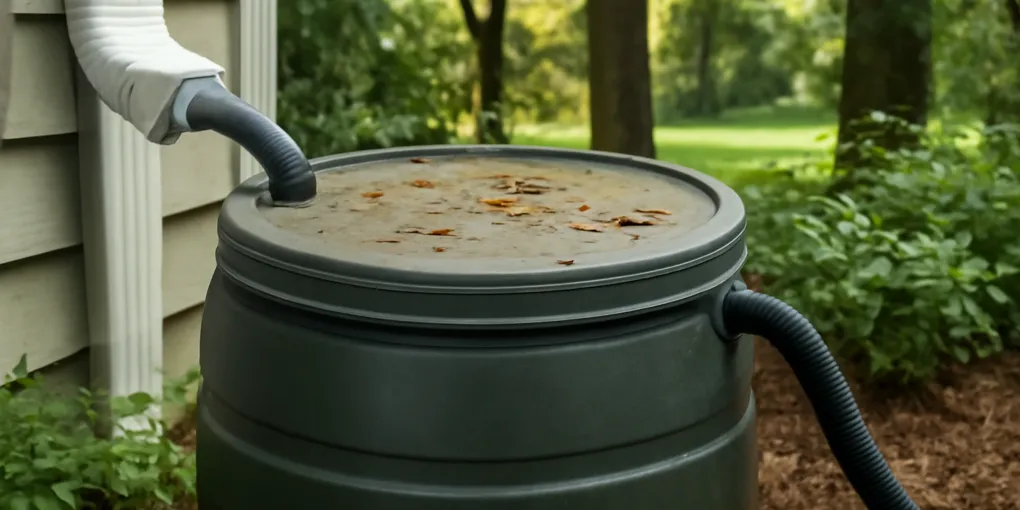
A rain barrel under trees can work well, but it is a higher-maintenance setup than a barrel on an open roof edge. Shade can reduce algae pressure, yet the same branches drop leaves, pollen, seed pods, needles, and bark bits into the gutter. Those materials can clog the inlet, sour the water, and turn a loose lid or overflow hose into a mosquito entry point.
The goal is not to keep every speck of organic matter out. The goal is to stop big debris before it reaches the barrel, keep mosquito-sized gaps closed, and make cleaning easy enough that you actually do it during leaf and pollen bursts.
Quick picks
- Use a raised or domed inlet screen so wet leaves do not plaster flat across the opening. Search Amazon for domed rain barrel inlet screens.
- Clean the gutter before predictable debris events such as spring pollen, seed drop, and fall leaf drop. Search Amazon for gutter scoops and downspout brushes.
- Screen the overflow without choking it so insects and leaf bits do not enter from the discharge end. Search Amazon for overflow hose debris screens.
For the sizing side of the setup, pair this protocol with our roof-area and gallon guide. For mosquito-specific gap checks, use the screen mesh guide.
Step 1: Decide whether the tree location is worth it
A tree-shaded rain barrel is worth keeping when the downspout run is short, the base is level, and overflow can discharge away from the house. It is a bad location when roots make the stand rock, when branches scrape the gutter, or when the only overflow path sends water into a trunk flare, basement wall, or neighbor’s low spot.
Stand beside the barrel after a storm and answer four questions:
- Did water enter through the screen, or did it sheet across the lid?
- Is the barrel still level when full?
- Does overflow leave the foundation area cleanly?
- Can you remove debris without moving the downspout every time?
If any answer is no, fix that before adding more accessories.
Step 2: Build a two-stage debris path
Tree debris should meet two barriers before stored water. The first is the gutter or downspout prefilter, which catches larger leaves and seed pods before they reach the barrel. The second is the barrel inlet screen, which catches finer debris and seals the storage opening.
A flat screen can work in a low-debris location. Under trees, a domed screen, inlet basket, or raised cover is easier to keep flowing because leaves do not seal it as quickly. The screen must still be fine enough and tight enough to close mosquito access. A leaf basket with large decorative holes is not enough by itself.
If water backs up at the downspout during moderate rain, the inlet is either too small, too dirty, or too flat for the roof area. Clean first. If the problem returns, increase screened area or move the first debris barrier upstream.
Step 3: Set a tree-season cleaning schedule
Do not use a calendar-only schedule under trees. Use the tree’s debris cycle:
- Spring pollen: brush or rinse the inlet when yellow film starts matting on the screen.
- Seed and flower drop: check after windy days, not only after rain.
- Summer storms: inspect overflow because small twigs and leaf pieces can lodge in hose ends.
- Fall leaf drop: clear the gutter and inlet before the next storm, not after the barrel has already overflowed across the lid.
- Post-storm check: look for water stains on the lid, fresh splash marks, or wet soil where overflow was not supposed to go.
Penn State Extension and Rutgers Cooperative Extension both emphasize rain barrel screens and maintenance because roof runoff systems collect debris. Under trees, maintenance is the system, not a side chore.
Step 4: Keep mosquito control physical first
The Centers for Disease Control and Prevention advises tightly covering water-storage containers as part of mosquito control. For a rain barrel, that means the inlet, lid rim, overflow hose, linked-barrel connections, drain plugs, and spigot area all need attention.
Tree debris can break that seal indirectly. A leaf mat can hold a lid open. A sagging screen can tear at the rim. A clogged overflow can force water to find an unintended gap. Fix the debris path before relying on larvicide products.
If you use mosquito dunks or bits, follow the product label and still keep the barrel sealed. They are not a replacement for a tight cover.
Step 5: Route overflow where leaf clogs cannot punish the house
A barrel under trees is more likely to clog at the inlet or overflow. That makes overflow routing especially important. Use a hose, splash block, diffuser, or yard-drainage endpoint that moves excess water away from the foundation even when the barrel fills faster than expected.
Screen the overflow end only if the screen is easy to inspect and large enough not to restrict flow. A tiny fine-mesh cap on a high-volume overflow hose can clog with seeds and push water back toward the wall. When in doubt, use a larger screened fitting and check it after storms.
For yard routing details, see our overflow away from foundation guide and clay-soil overflow protocol if your yard ponds.
Step 6: Know when to disconnect temporarily
Disconnect or bypass the barrel when the tree debris load overwhelms the screen faster than you can maintain it. Common triggers include heavy fall leaf drop, roof work, branches shedding seed pods, or a storm forecast after several dry weeks of accumulated gutter debris.
A downspout diverter with a bypass setting makes this easier. If your setup is direct-fill, use a temporary elbow or extension that sends water to the normal drainage path until the gutter and screen are clean again.
Do not leave the barrel open while disconnected. Store the lid in place, drain standing water from the top, and keep mosquito access closed.
Rain barrel under trees FAQ
Can a rain barrel sit under trees?
Yes, if the base is level, the inlet is screened, the gutter is cleaned often, and overflow still moves away from the foundation. Tree cover changes the maintenance schedule more than the basic plumbing.
Are leaves in a rain barrel dangerous?
Leaves usually create maintenance and odor problems rather than making the water drinkable or not drinkable by themselves. Keep organic debris out because it feeds sediment, smell, clogs, and mosquito habitat.
Should I remove the barrel during pollen season?
Usually no. Clean the inlet more often and flush the first dirty water if needed. Disconnect only when the screen clogs so fast that water backs up or overflow cannot be controlled.
Do gutter guards solve tree debris for rain barrels?
They can reduce large leaves, but small seeds, pollen, needles, and roof grit can still reach the downspout. Inspect the actual barrel inlet after storms before trusting the guard.
Sources
- CDC, Mosquito prevention
- Penn State Extension, Rain Barrels
- Rutgers Cooperative Extension, Rain Barrels
- University of Minnesota Extension, Rain barrels
Frequently Asked Questions
- Yes, if the base is level, the inlet is screened, the gutter is cleaned often, and overflow still moves away from the foundation. Tree cover changes the maintenance schedule more than the basic plumbing.
- Leaves usually create maintenance and odor problems rather than making the water drinkable or not drinkable by themselves. Keep organic debris out because it feeds sediment, smell, clogs, and mosquito habitat.
- Usually no. Clean the inlet more often and flush the first dirty water if needed. Disconnect only when the screen clogs so fast that water backs up or overflow cannot be controlled.
- They can reduce large leaves, but small seeds, pollen, needles, and roof grit can still reach the downspout. Inspect the actual barrel inlet after storms before trusting the guard.