Quick picks
| Product | Key Specs |
|---|---|
| See price on Amazon |
|
| See price on Amazon |
|
| See price on Amazon |
|
| See price on Amazon |
|
Product availability, certifications, and retailer details can change; check the current Amazon page before buying.
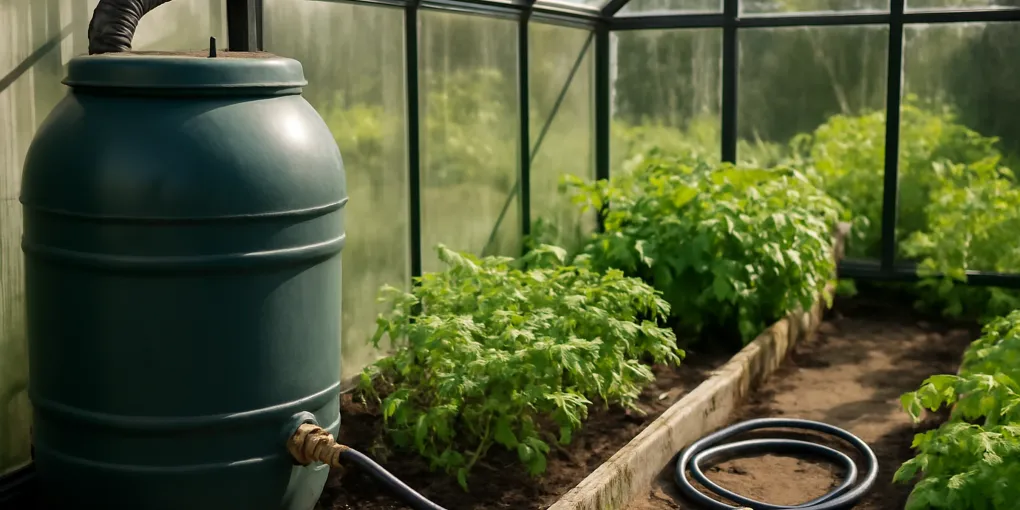
A greenhouse makes rain barrel watering more useful and less forgiving at the same time. Plants are concentrated in trays and pots, leaves stay closer together, and a clogged emitter or stale barrel can damage many plants before you notice. The setup should do three jobs before it tries to automate anything: keep grit out of small parts, make the water path easy to flush, and keep nonpotable barrel water separate from any drinking-water hose or plumbing.
This protocol is for a small backyard greenhouse, hoop house, or grow bench supplied by a nearby rain barrel. If you are still choosing the barrel location, start with the rain barrel location checklist so overflow, stand height, and access are solved before tubing enters the greenhouse.
Quick setup path
Start with the simplest version that can be inspected during watering.
- Put the barrel outside the greenhouse or in a shaded, stable corner with a safe overflow route.
- Add a leaf screen at the inlet and a cleanable inline sediment filter before any drip tubing.
- Keep the first greenhouse line removable so you can flush brown water and roof grit into a bucket.
- Use gravity only for short runs below the barrel outlet. Add a small transfer pump if water has to climb or feed many emitters.
- Label barrel hoses as nonpotable and keep them separate from hose-bib water.
Search Amazon for inline hose sediment filters
Step 1: decide whether the barrel belongs inside or outside
Most backyard greenhouses are easier to manage with the barrel outside. The outside barrel keeps weight off greenhouse floors, gives overflow a safer path, and makes algae control easier if the barrel can stay shaded. A full 50-gallon barrel can weigh more than 400 pounds before the stand, fittings, and water in hoses are counted.
Inside placement can work only when the floor and stand are designed for the load and overflow cannot flood a heater, outlet, seedling heat mat, or stored supplies. If the greenhouse floor is wood, deck-like, or raised, read the deck and balcony weight guide before assuming the structure can take it.
Step 2: build a flushable first section
Do not run the barrel outlet straight into buried or stapled greenhouse tubing. Add a short hose, shutoff valve, and removable filter where you can reach them. Open the line into a bucket after storms, after long heat, and before connecting delicate emitters. If the first bucket has grit, odor, heavy algae flakes, or dark sediment, flush until it clears or use the water on landscape soil instead of seed trays.
Rutgers rain barrel installation guidance emphasizes screening, overflow management, and maintenance. In a greenhouse, those maintenance steps matter more because the outlet parts are smaller and usually clog before a regular garden hose would.
Step 3: match pressure to the watering method
Gravity pressure is low. A barrel raised a few feet can fill a watering can, feed a short hose, or run a compact low-pressure drip kit below the water level. It may not run a long bench line evenly, and it will not behave like house-pressure irrigation.
Use a low-pressure drip kit when the greenhouse has many containers in a row and you can watch the end of the line. Use a watering wand when plants need different amounts of water. Use a small transfer pump when the barrel is at ground level, the greenhouse bench is high, or emitters at the far end stay dry.
Search Amazon for low-pressure greenhouse drip kits
Search Amazon for small transfer pumps for rain barrels
Step 4: protect seedlings and edible crops from splash risk
Rain barrel water is generally treated as nonpotable. That does not mean every use is unsafe, but it does mean you should avoid sloppy spray on edible leaves, harvested herbs, seedling trays, and tools that touch food. For edible greenhouse crops, apply water to the potting mix instead of spraying foliage. Stop using the barrel if the roof was recently treated, if animals may have contaminated the catchment, or if the water smells foul.
For young seedlings, the practical risk is not only microbes. Sediment can crust tray cells, algae can block fine rose heads, and cold stored water can shock warm greenhouse starts. Let a small bucket warm in the greenhouse before watering sensitive trays, and switch to clean potable water when germination or food-contact risk matters more than saving stored rain.
UMass greenhouse water-quality guidance focuses on pH and alkalinity because irrigation water can change crop performance. Rainwater is often low in alkalinity, but barrel water can pick up roof debris, dust, and organic material. If plants are yellowing or fertilizer response looks strange, test water and growing media rather than blaming the barrel alone.
Step 5: keep potable backup water separate
Many greenhouse owners want a hose bib as a backup. Keep that backup from becoming a cross-connection. Do not connect the rain barrel line and potable hose into the same fixed manifold unless a qualified installer and local code allow the design. The safer home setup is separate hoses, clear labels, and a backflow preventer or vacuum breaker on hose bibs where required.
Search Amazon for hose bib backflow preventers
If you need to switch a drip kit from rainwater to hose water during a dry spell, disconnect the barrel line first, flush the kit, and reconnect from the potable hose as a separate temporary setup. Do not leave both sources tied together.
Step 6: route overflow before the first storm
A greenhouse roof can collect water fast, and a greenhouse-adjacent barrel can overflow where you least want water: under sills, across gravel paths, or into electrical gear. Route overflow outside the greenhouse footprint and away from the foundation, sleepers, and walkways. If the overflow endpoint is still undecided, use the overflow endpoint guide before adding a permanent pipe.
A greenhouse setup also needs a bypass for times when you do not want fresh roof runoff entering the barrel. Use a diverter or removable inlet section before roof cleaning, pesticide use nearby, roof treatment, or winter shutdown.
Maintenance schedule for greenhouse use
After each heavy storm, check the inlet screen, filter bowl, first bucket of flushed water, overflow outlet, and the last emitter in the line. Once a month in the growing season, rinse the barrel screen, clean the inline filter, wipe algae from clear tubing, and confirm the pump intake is not sitting in sludge.
At season shutdown, drain greenhouse tubing and store filters where they will not freeze. If the barrel stays connected outdoors, follow the winterize a rain barrel before freezing weather guide so small valves and fittings do not split.
Greenhouse rain barrel FAQ
Is rain barrel water better than tap water for greenhouse plants?
It can be useful because it is stored on site and may be low in dissolved minerals, but better is not automatic. Barrel water can carry sediment, roof debris, algae, and microbes. Test and observe plant response, especially for seedlings and container crops.
Should the filter go before or after the pump?
Protect the pump inlet from large debris and use a cleanable sediment filter before drip emitters. If the pump manual requires a specific strainer, follow that first. Never let a pump run dry or pull sludge from the bottom of the barrel.
Can I use a timer with a greenhouse rain barrel?
Only if the timer is rated for the pressure and flow you actually have. Many hose timers expect household pressure. For barrel systems, a pump plus timer may work better than gravity, but test the whole zone while you are present before leaving it unattended.
What should I buy first?
Buy the parts that make the system inspectable: a shutoff valve, cleanable inline filter, short hose, and clear overflow route. Add drip tubing or a pump only after a bucket test proves the barrel can deliver clean water where the plants sit.
Sources
- Rutgers NJAES: Rain Barrels Part IV: Installation and Maintenance
- EPA: Soak Up the Rain: Rain Barrels
- UMass Extension: Water Quality: pH and Alkalinity
- Penn State Extension: Drip Irrigation for Vegetable Production