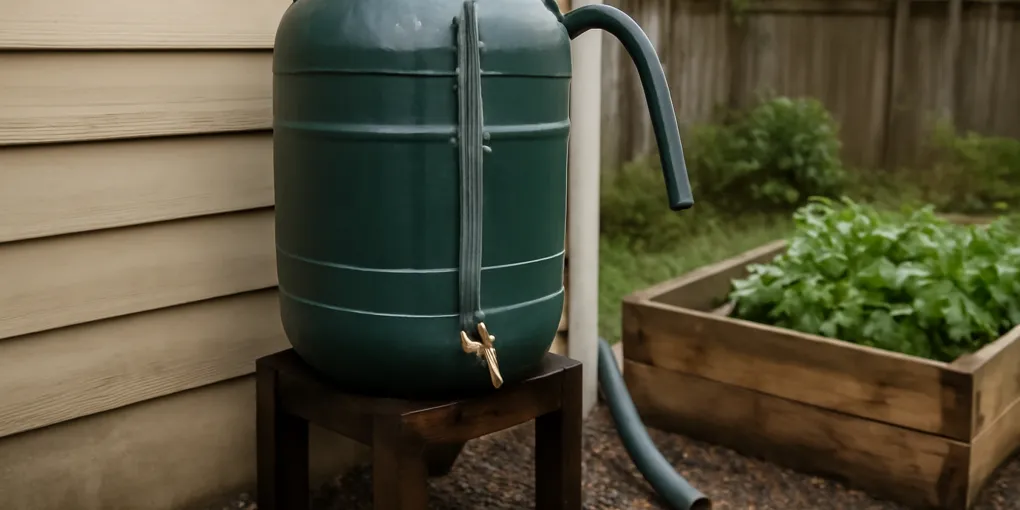
Rain barrel sight tube water level kit
Best visual gaugeUse Case: Checking water level from outside an opaque barrel
$10-$30 typical
Quick picks
| Product | Key Specs |
|---|---|
| See price on Amazon |
|
| See price on Amazon |
|
| See price on Amazon |
|
| See price on Amazon |
|
Product availability, certifications, and retailer details can change; check the current Amazon page before buying.
A rain barrel water level gauge is not a luxury if the barrel is opaque, tucked behind shrubs, or connected to drip irrigation. It tells you whether the next storm will overflow, whether a hose zone is about to run dry, and whether a slow leak has emptied storage before watering day. The best gauge is simple enough to survive weather, easy to read from the path, and matched to the barrel type you actually own.
For most 40- to 65-gallon backyard barrels, start with a clear sight tube or a lid-mounted float indicator. A sight tube gives the most direct outside reading, but it adds two penetration points that must seal. A float indicator is easier to glance at from above, but it needs room inside the barrel and can snag on inlet screens or pump hoses. For IBC totes and linked barrel banks, choose a larger side-mounted gauge that can be drained before freezing weather.
If the barrel sits close to a foundation, pair the gauge with overflow discipline. A full reading should trigger a check of the overflow hose, splash block, or linked barrel line. EPA WaterSense and extension rain-barrel guides from Rutgers and Penn State emphasize outdoor water conservation, covered storage, and safe overflow routing; a gauge helps you notice when that routine is being skipped.
Mini chooser: match the gauge to the barrel
| CTA | Choose this when | Compatibility check |
|---|---|---|
| Search Amazon for rain barrel sight tube gauges | You have a dark 40- to 65-gallon barrel and want the waterline visible from the path. | Confirm the wall is flat enough for two leak-free fittings and that the lower port sits above sediment. |
| Search Amazon for rain barrel float level indicators | Side drilling is risky or the barrel wall is decorative, thin, or ribbed. | Check lid thickness, float travel, inlet-screen clearance, and whether wind can tangle the marker. |
| Search Amazon for IBC tote water level gauges | You are reading a tall tote, linked storage bank, or screened-off tank. | Match the thread size, protect the tube from carts and tools, and plan winter draining. |
| Search Amazon for outdoor water leak sensors | The barrel sits near a basement wall, patio door, or finished walkway. | Pick an outdoor-rated sensor with enough Wi-Fi range and place it where overflow begins, not underwater. |
Quick picks
Use the quick picks as the product comparison: match the part to the failure you see first, then check the fit notes before buying.
- Best simple readout: Search Amazon for rain barrel sight tube gauges if the barrel wall is thick enough for secure fittings and you want a no-battery level line.
- Best covered-barrel option: Search Amazon for rain barrel float level indicators when the lid has a clean spot for a vertical indicator and the float will not hit the inlet basket.
- Best for totes or linked storage: Search Amazon for IBC tote water level gauges if your storage is too tall or too hidden for quick lid checks.
- Best warning near the house: Search Amazon for outdoor water leak sensors when overflow mistakes could send water toward a basement wall or patio door.
For the parts that make a full-barrel reading safe, see our guides to rain barrel overflow routing, overflow and linking kits, and spigot and bulkhead fittings.
What matters most in a rain barrel gauge
A good gauge should make the water level visible without adding a new leak point you cannot service. Check the fitting size, tubing or float path, seal method, and whether the gauge can be cleaned when algae, pollen, or roof grit builds up. Installation diagrams matter because many gauges need straight runs, a low connection point, or a barrel wall thick enough for the fitting.
For most small systems, the best gauge is simple, weather-resistant, and easy to read from the place where you decide whether to water. Skip decorative readouts that hide the connection details or make winter draining harder.
Why a gauge is worth adding
A barrel can look fine from the patio and still be nearly empty. Opaque plastic hides the waterline, and a spigot test only tells you what is available at that moment. A visible gauge helps with three routine decisions: whether to water today, whether to connect the overflow before a storm, and whether a drip zone stopped because the barrel ran low.
The gauge also protects the parts around the barrel. If the level falls overnight with no watering, look for a weeping bulkhead, loose spigot washer, cracked hose, or open drain cap. If the level stays pinned at full after a storm, inspect the overflow path before the next rain. Stored roof runoff is a small plumbing system, not just a decorative container.
Sight tube gauge: best for direct visual reading
A sight tube is a clear vertical tube connected near the bottom and top of the barrel. Water in the tube rises to the same level as water inside the barrel, so you can read storage without opening the lid. It is the easiest style to understand at a glance and works well on dark barrels, DIY food-grade drums, and barrels hidden under shade cloth.
Search Amazon for rain barrel sight tube water level gauges
Best for: opaque barrels where you can drill clean holes and inspect fittings. Watch for: tube discoloration, algae growth in clear tubing, freeze damage, and fittings that sit too low to drain before winter. A small shutoff or removable lower fitting makes cleaning much easier.
Install the lower fitting above the sediment zone, not at the very bottom where grit collects. Put the upper connection or vent where it will not interfere with a diverter hose, inlet basket, or lid latch. If the barrel sees sun, choose UV-resistant tubing or route the tube where it is shaded; clear tubing can grow algae faster than the barrel body.
Float indicator: best when drilling the side is risky
A float indicator usually uses a floating piece inside the barrel connected to a rod, cord, or visible marker above the lid. As the water rises, the marker moves. The advantage is that you may avoid sidewall plumbing holes. The tradeoff is that the float needs clean vertical travel and can be affected by turbulence from the inlet.
Search Amazon for rain barrel float level indicators
Best for: covered barrels with a flat lid and enough empty space below the indicator. Watch for: floats hitting inlet screens, mosquito mesh, pump cords, or the barrel wall. If the indicator uses a cord, make sure wind cannot tangle the external marker.
A float indicator is most useful when the barrel is near a garden path where you can see it every day. It is less useful behind a fence or under a deck where the top marker is hidden. In those locations, a sight tube or remote leak sensor may be easier to notice.
IBC tote and linked-barrel gauges
Large tanks make guessing worse. A 275-gallon tote can hold several storms of water, and a linked-barrel bank can hide uneven fill if one hose clogs. A larger gauge kit gives a readable side level and can help identify a blocked connector: one barrel reads full while the next stays low.
Search Amazon for IBC tote water level gauge kits
Best for: totes, cistern-style containers, and multi-barrel systems where the storage height is hard to inspect. Watch for: thread standards, adapter quality, tube protection, and winter drain-down. A gauge mounted on an exposed tote needs protection from wheelbarrows, pets, and garden tools.
For linked barrels, read the gauge after a rain and again after watering. If levels do not equalize, check the linking hose for slope, trapped air, clogged screens, or a valve left closed. A gauge is a diagnostic tool only if you use it to compare expected and actual behavior.
Leak sensor: not a gauge, but useful near foundations
A water leak sensor does not measure gallons in the barrel. It warns that water is appearing where it should not: under a spigot, beside an overflow, near a basement wall, or under a hose connection. That makes it useful when the barrel is close to the house and a small plumbing mistake could become a wet wall or slippery path.
Search Amazon for outdoor water leak sensors
Best for: foundation-adjacent barrels, patios, finished walkways, and basement entries. Watch for: outdoor rating, wireless range, battery access, and placement. Put the sensor where the first unwanted water will appear, not where it will be submerged in normal storm splash.
A leak sensor should never substitute for an overflow hose routed to daylight. It is a warning layer. The safer system still sends excess water away from the building and keeps the barrel lid, screen, and outlet fittings maintained.
Buying criteria that matter
Choose the gauge after looking at the barrel, not before. A decorative barrel with thin curved walls may not seal well with a generic sight tube. A square tote may accept a side kit easily. A barrel under a low deck may make a lid-mounted float unreadable. The right product fits the container shape and the way you walk past it.
Prioritize cleanable parts. Sediment, pollen, algae film, and mineral deposits can cloud a tube or jam a float. A gauge you cannot clean will eventually become a decoration. Look for removable tubing, accessible nuts, replaceable washers, and instructions that show the drill size or thread type.
Think about winter if your climate freezes. Any water trapped in a small tube or external fitting can crack the gauge. Drain or remove the gauge before hard freezes, and leave the barrel disconnected according to the barrel manufacturer’s instructions. If you winterize the barrel, the gauge needs a winter routine too.
Installation checks before the first storm
Fill the barrel partway with a hose before trusting the gauge to rain. Mark the visible waterline, then check whether the gauge matches the actual level inside. Let the barrel sit overnight with the outlet closed. A falling gauge means either the gauge fitting, spigot, drain cap, or another connection is leaking.
Next, fill the barrel to the overflow level. Confirm that water leaves through the intended overflow route and not around the gauge, lid, or downspout connection. If the gauge sits above a walkway or foundation wall, watch it during this full-barrel test. A slow drip at the gauge can be harder to spot after a real storm.
Finally, add a simple habit: read the gauge before watering and after storms. If the level is low, shorten the irrigation zone instead of blaming the drip kit. If the level is full, check overflow clearance before the next forecasted storm.
FAQ
Can I add a water level gauge to any rain barrel?
Usually, but not always. Thick, flat, accessible walls are easiest for sight tubes. Curved decorative barrels, thin plastic, and barrels with molded ribs can be harder to seal. For those, a lid-mounted float indicator may be safer than drilling the side.
Will a sight tube grow algae?
It can, especially in sun. Use UV-resistant tubing when available, shade the tube, and choose a kit you can remove or flush. If algae repeatedly clouds the tube, clean the barrel inlet screen and consider a darker route for the gauge.
Where should a gauge sit on a rain barrel?
Put it where you can read it without stepping into mud and where it will not be hit by hoses, tools, or pets. Keep it clear of the spigot handle, overflow hose, diverter hose, and lid clamps. On a sight tube, keep the lower connection above the worst sediment layer.
Is a smart sensor better than a simple gauge?
Only if you will actually maintain it. A smart leak sensor can warn about overflow or leaks near a foundation, but batteries, Wi-Fi range, and outdoor rating matter. For basic watering decisions, a visible sight tube or float indicator is usually more dependable.
Sources
- EPA WaterSense, Outdoor Water Use in the United States
- Rutgers Cooperative Extension, Rain Barrels
- Penn State Extension, Rain Barrels