Quick picks
| Product | Key Specs |
|---|---|
| See price on Amazon |
|
| See price on Amazon |
|
| See price on Amazon |
|
| See price on Amazon |
|
| See price on Amazon |
|
Product availability, certifications, and retailer details can change; check the current Amazon page before buying.
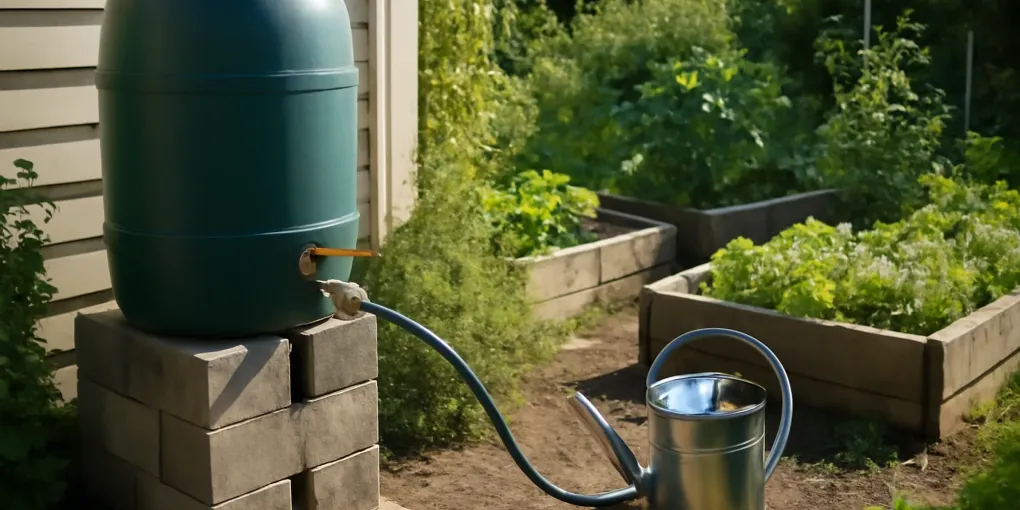
Yes, you can attach a garden hose to a rain barrel, but the useful version is a short, low-pressure watering setup rather than a normal hose-bib replacement. Start with three checks before buying anything: the barrel outlet must have garden-hose threads, the hose should run level or downhill, and the watering point should be close enough that a 10- to 25-foot hose can reach it.
The best gravity-flow setup is a raised barrel, a clean 3/4-inch or standard hose-thread spigot, a short 5/8-inch hose, a cleanable filter only when small openings need protection, and a low-restriction wand or open hose end. If the barrel sits on the ground, the hose climbs uphill, or you want to run a sprinkler, use a pump or a different irrigation plan instead.
Use this guide to decide whether a hose is worth connecting, which part is most likely choking flow, and when to switch to a soaker hose, drip kit, stand, or pump. For pressure math and stand-height planning, start with our rain barrel height calculator and pressure guide.
If your separate decision is how to store hose near the patio, compare the listed lengths and forms in our compact retractable hose-reel guide; that comparison does not establish a reel-to-barrel connection or watering result.
Mini chooser: start with the symptom
| CTA | Choose this when | Compatibility check |
|---|---|---|
| Check this brass rain-barrel spigot kit on Amazon | The factory outlet leaks, flexes, or has shallow plastic threads. | Confirm the barrel wall, hole size, washer layout, and thread type. Some decorative barrels use proprietary molded outlets. |
| Check this 25-foot 5/8-inch hose on Amazon | The bed is close, the route is level or downhill, and a long hose is stealing flow. | Keep the run short; a 25-foot 5/8-inch hose is still not a pressure booster. |
| Check this 3/4-inch hose-thread filter on Amazon | A wand, soaker hose, drip line, or emitter clogs with roof grit. | Make sure the threads match your hose path and leave room to unscrew the screen for rinsing. |
| Check this gentle shower nozzle on Amazon | A trigger nozzle or mist setting dribbles because it expects house pressure. | Treat it as a low-restriction watering end to consider, not a guarantee that a weak barrel will spray well. |
| Check this 55-gallon rain-barrel stand on Amazon | The barrel outlet sits too low for usable gravity flow. | Match the barrel footprint and filled weight, and set the stand on a flat, stable base. |
The remaining pump link below stays a search/comparison link on purpose: pump choice depends on electrical safety, dry-run protection, inlet screening, and hose size, so this page should not name one pump as the universal fix.
Quick answer: when a hose will work
A rain barrel hose is worth trying when all four conditions are true:
- The barrel is raised: even a sturdy 18- to 24-inch stand helps more than another adapter, as long as the stand matches the filled barrel.
- The hose is short and wide: use a short 5/8-inch hose when the bed is within a 10- to 25-foot run.
- The outlet is full-size and sealed: replace a weak outlet only after checking the barrel wall, bulkhead, washer, and thread compatibility.
- The end does not need pressure: choose an open hose end, simple thumb valve, gentle shower nozzle, or low-restriction wand instead of a multi-pattern spray nozzle.
Add an inline filter only when grit would clog a wand, soaker hose, or drip emitter. A filter on an open hose can be unnecessary friction.
If you are building a fixed bed system instead of hand watering, use this comparison to weigh a simple hose setup against our rain barrel to soaker hose setup guide and low-pressure drip irrigation kit guide.
What matters most in a hose-connection setup
Gravity hose flow is limited by height, hose length, friction, and how much water remains above the outlet. Before buying adapters, measure spigot height, hose run, and the watering task. Standard garden-hose threads, replaceable washers, and a cleanable filter matter more than a longer hose if the barrel sits low.
Use this quick diagnosis before replacing parts:
| Symptom | Most likely cause | First fix |
|---|---|---|
| Hose flows for a few seconds, then fades | Air pocket, uphill loop, or low water level | Lay the hose downhill and retest with the barrel at least half full |
| Bare spigot is already slow | Clogged outlet, tiny factory valve, or sediment | Flush the spigot, clean the screen, or upgrade the outlet |
| Flow is fine without the wand but poor with it | Trigger valve or spray head needs house pressure | Use an open hose end, thumb valve, or low-pressure watering wand |
| Soaker hose wets only near the barrel | Barrel is too low or hose run is too long | Shorten the run, raise the barrel, or use a pump/drip plan |
Skip parts that promise sprinkler-like pressure from a ground-level barrel. A good hose setup gives you enough clearance to connect the hose, enough filtration to protect the nozzle or drip line, and a simple way to disconnect and drain the line before freezing weather.
Step 1: decide whether gravity can do the job
Gravity flow depends mostly on height and friction. The water surface in the barrel must sit above the hose outlet you are using. A full barrel on a sturdy stand has more usable flow than a barrel sitting on the ground. As the barrel empties, pressure drops. That is why a hose may work acceptably when the barrel is full and then slow to a trickle near the end.
For hand watering, gravity is usually acceptable when the hose is short, the bed is nearby, and the water travels downhill or level. For uphill runs, long hoses, sprinklers, and spray nozzles, gravity is usually not enough. Use the first test before buying more parts: fill a bucket from the barrel spigot for one minute. If the bucket barely fills with no hose attached, adding a hose will not improve the result.
Extension rainwater-harvesting guides from sources such as Rutgers Cooperative Extension, Penn State Extension, and Clemson Cooperative Extension consistently treat rain barrels as non-potable, low-pressure storage systems that need covered inlets, safe overflow, and routine maintenance. The hose setup should respect those limits instead of pretending the barrel is a pressurized irrigation supply.
Step 2: inspect the spigot and bulkhead
The spigot is the bottleneck. Many decorative barrels ship with small plastic outlets that are fine for filling a watering can but frustrating for hose use. Look for a standard garden-hose-thread outlet, a firm mounting surface, a washer that seals cleanly, and no flexing when a hose is attached.
Check this brass rain-barrel spigot kit on Amazon
Best for: barrels with weak factory spigots, cross-threaded outlets, or slow leaks around the handle. Watch for: the existing hole size, whether the barrel uses a bulkhead fitting, and whether the replacement includes washers on the correct sides of the wall. Treat the linked kit as a candidate for standard hose-thread replacements, not proof that every barrel accepts the same bulkhead.
Before replacing a spigot, drain the barrel below the outlet and photograph the current fitting. Some barrels use proprietary molded outlets that do not accept a generic replacement. If the outlet is integrated into a thin decorative wall, overtightening can distort the plastic and make leaks worse. Hand-tight plus the right washer is safer than wrench force on soft plastic.
Step 3: choose the hose length and diameter
Use the shortest hose that reaches the plants. A 25-foot 5/8-inch hose usually beats a 50- or 100-foot lightweight hose for gravity flow. Long, narrow, kinked, or uphill hoses steal the little pressure the barrel has. Coiled expandable hoses can be especially disappointing at low pressure because many are designed around household spigot pressure.
Check this 25-foot 5/8-inch hose on Amazon
Best for: nearby raised beds, container clusters, and hand watering close to the barrel. Watch for: kinks at the spigot, heavy hose pulling on the barrel wall, and old washers that leak at low flow. A 25-foot 5/8-inch hose is a better candidate than a long narrow run, but it still depends on barrel height and route. Add a 90-degree elbow or short leader hose if the main hose bends sharply downward from the spigot.
Lay the hose with a steady downward or level route. Avoid loops that climb over edging and then dip back down, because high spots can trap air and low spots can collect sediment. If the barrel sits on a stand, secure the hose so a tug does not twist the spigot.
Step 4: add filtration only where it helps
A filter protects small openings, but it also adds resistance. If you are filling a watering can or using an open hose end, a clean barrel screen may be enough. If you attach a watering wand, soaker hose, drip kit, or small valve, a cleanable inline filter becomes more useful because roof grit and algae film can block small passages.
Check this 3/4-inch hose-thread filter on Amazon
Best for: drip connections, soaker hoses, and fine watering heads. Watch for: mesh that is too restrictive, tiny filters with no cleanout cap, and filters installed backward. The linked filter is useful only if its 3/4-inch hose-thread path matches your setup and you can reach it for cleaning. Put the filter where you can unscrew and rinse it without crawling behind the barrel.
If flow slows suddenly, clean the filter before blaming the barrel height. Also inspect the inlet screen. A dirty inlet allows more debris into storage, which then clogs the outlet filter repeatedly. Our guide to rain barrel filters and screens covers inlet and outlet filtration choices in more detail.
Step 5: pick a low-pressure watering end
A restrictive spray nozzle can make a workable gravity hose feel broken. Multi-pattern nozzles, mist settings, and trigger valves often need more pressure than a barrel can provide. A gentle watering wand with a broad rose, an open hose end, or a simple thumb valve is usually a better match.
Check this gentle shower nozzle on Amazon
Best for: containers, ornamental beds, shrubs, and soil-level watering around fruiting vegetables. Watch for: tiny spray holes, stiff trigger valves, thread fit, and claims that assume household pressure. A broad shower end can be easier to live with than a restrictive trigger nozzle, but a barrel with poor open-hose flow may still need more height or a different plan.
For edible crops, keep non-potable roof runoff near the soil and avoid spraying water on harvestable leaves. Use potable water for final produce washing. Our vegetable garden safety guide explains crop-by-crop caution levels, and the food-grade rain barrel material guide covers why a food-grade barrel still does not make roof runoff potable.
Step 6: run the one-minute flow test
Test before you bury hose lines or cut tubing. Fill the barrel at least halfway. Open the spigot with no hose attached and time one minute into a bucket. Then attach the hose only and test again. Add the filter and watering end one at a time, repeating the one-minute test after each change.
This sequence tells you which part caused the slowdown. If the bare spigot is weak, raise the barrel, clean sediment, or improve the outlet. If the hose causes most of the loss, shorten it or use a wider hose. If the filter or wand causes the loss, clean it, choose a less restrictive part, or switch to a setup designed for gravity.
Record the rough result on painter’s tape near the barrel: for example, “half-full barrel: 2 gallons/minute open hose” or “wand: slow but usable for containers.” That note prevents future overbuilding. It also tells family members what the barrel can realistically do.
When to add a stand or pump instead
Raise the barrel before you shop for pumps if the main problem is a low outlet. A compatible stand can give a nearby hose more head height without cords, noise, or moving parts.
Check this 55-gallon rain-barrel stand on Amazon
Best for: a compatible 55-gallon barrel with an outlet too close to the ground. Watch for: filled weight, footprint, stand rating, level base, and tip risk. Do not improvise a wobbly riser under a full barrel.
Add a pump only after the gravity setup fails a real need. A pump may make sense for uphill beds, long hose runs, sprinklers, or faster hand watering, but it adds cost, electrical safety considerations, noise, maintenance, and winter storage. The pump also needs clean inlet water; otherwise grit can damage small parts.
Compare rain-barrel transfer pumps on Amazon
This pump link stays broad because the right model depends on dry-run protection, inlet filtration, cord and GFCI setup, hose size, lift height, and manufacturer instructions. If you add a pump, choose one designed for garden water transfer and follow the manufacturer’s instructions for grounding, dry-run protection, hose size, and storage. Keep cords and connections away from standing water. A pump does not make roof runoff potable or food-safe.
For many homes, moving the barrel closer to the bed, raising it safely, shortening the hose, and using a gentle watering end solves the real problem without a pump.
Maintenance after setup
After each heavy storm, check the inlet screen and overflow path. A clogged inlet can dump water over the barrel edge, and a blocked overflow can send water toward the foundation. After each watering session, close the spigot, relieve hose pressure, and coil the hose where it will not pull on the barrel wall.
Once a month during the watering season, flush sediment from the spigot into a bucket away from edible plants. Rinse the inline filter. Inspect hose washers. If the barrel smells rotten, grows visible slime, or produces black sediment, pause hose watering and clean the barrel before using the water around plants.
Before freezing weather, disconnect the hose, drain the barrel according to your climate and product instructions, and remove small filters or adapters that can crack when water freezes inside them.
Related guides for the next decision
- hose shutoff valves and splitters that work with low pressure.
- soaker-hose setup when a normal nozzle wastes too much flow.
- barrel height and pressure math before blaming the hose.
FAQ
Can a rain barrel run a normal garden hose?
Yes, for nearby low-pressure watering. It will not feel like a house spigot. Keep the hose short, avoid uphill runs, and use a gentle watering end. If the barrel is on the ground, expect very weak flow.
What size hose works best from a rain barrel?
A short 5/8-inch hose is a good default for hand watering because it loses less flow than a long narrow hose. The exact result depends on barrel height, hose length, fittings, filters, and the watering end.
Why does my rain barrel hose stop flowing when the barrel is still partly full?
The water level may have dropped close to the spigot height, leaving little pressure. The hose may also be too long, kinked, uphill, air-locked, or clogged at the filter or nozzle. Test the bare spigot first, then add parts one at a time.
Should I use a nozzle on a rain barrel hose?
Use a simple, low-restriction nozzle or gentle watering wand. Avoid mist, jet, and multi-pattern nozzles that depend on household pressure. If a nozzle reduces the flow too much, use an open hose end or a watering can filled from the barrel.
Sources
- Rutgers Cooperative Extension, Rain Barrels
- Penn State Extension, Rain Barrels
- Clemson Cooperative Extension, Rainwater Harvesting Systems
- EPA WaterSense, Outdoor Water Use in the United States