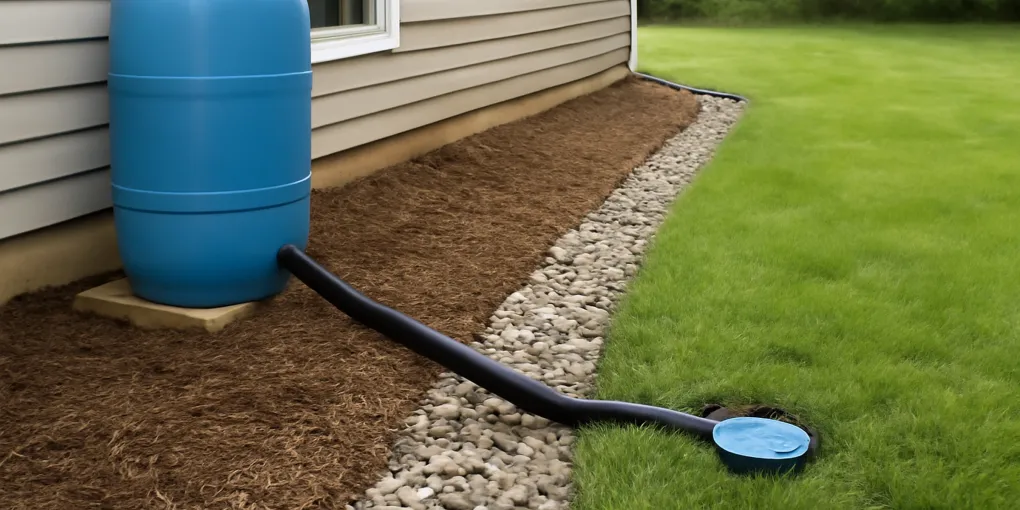
Can Rain Barrel Overflow Go to a French Drain? Basement, Clog, and Slope Checks
Evidence ExplainerQuick picks
NDS pop-up drainage emitter
★ Top pick Best visible endpoint- Best for: Rain barrel overflow lines that need a visible discharge point away from the foundation
- Check first: A pop-up emitter still needs enough slope and a safe low point; it is not a cure for a flat yard.
Flex-Drain solid landscape drain pipe
Best extension run- Best for: Moving overflow from the barrel area to daylight or a drain feature without soaking the base
- Check first: Use solid pipe near the house; perforated pipe beside the foundation can put water where you are trying to avoid it.
NDS catch basin drain kit
Best debris access- Best for: Overflow layouts that need a cleanout point before water enters underground pipe
- Check first: Clean baskets after leaf storms; a clogged basin can back water up toward the barrel.
Rain barrel overflow can go to a French drain only when the drain is designed to accept that extra water. The risky version is simple: a hose disappears into gravel, the barrel fills during a storm, and nobody knows whether the buried pipe is clogged, flat, undersized, or aimed back toward the foundation.
A safer layout treats the barrel overflow as roof runoff that still needs a visible, maintainable drainage path. If the French drain has slope, capacity, cleanout access, and a real outlet, it may be a good endpoint. If it is an old mystery trench beside the basement wall, keep the barrel overflow out of it.
Quick picks
- Best visible endpoint: Search Amazon for NDS pop-up emitters when you want overflow to discharge where you can see whether it is working.
- Best extension run: Search Amazon for solid landscape drain pipe for moving water away from the barrel and foundation before it reaches any infiltration area.
- Best debris access: Search Amazon for NDS catch basin kits if leaves, shingle grit, or mulch can enter the overflow route.
For above-ground options, compare our overflow hose and yard drainage guide. If your yard already ponds, read the clay-soil overflow routing protocol before burying more pipe.
The short answer
A French drain can be part of a rain barrel overflow system when all five checks pass:
- The drain is away from the foundation or protected by solid pipe near the house.
- The overflow line has continuous fall to the endpoint.
- There is an outlet, pop-up emitter, dry well, rain garden, or other place for excess water to go.
- There is a cleanout or accessible basin for leaves and grit.
- The system can handle the barrel being full at the start of a storm.
Fail any of those checks and the barrel can make an existing drainage weakness worse. A full barrel no longer stores roof runoff; it simply passes new stormwater through the overflow. That means your overflow route may need to handle the same roof area as the downspout.
French drain, dry well, rain garden, or pop-up emitter?
These drainage terms get used interchangeably online, but they solve different problems.
French drain: a gravel trench with perforated pipe that collects and moves subsurface water or lets water spread into soil. It can clog with silt and roots. It should not become a hidden dumping point for dirty roof debris without a cleanout.
Dry well: an underground storage/infiltration feature that holds water while soil absorbs it. It needs soil that drains and enough distance from structures, wells, septic systems, and slopes.
Rain garden: a planted shallow basin that temporarily holds runoff and lets it soak in. EPA stormwater guidance treats rain gardens and infiltration practices as useful tools when sited correctly, but they still need overflow planning.
Pop-up emitter: a visible outlet at the end of solid pipe. It does not infiltrate much by itself; it simply lets water exit at a safer location. Visibility is the benefit. If it clogs or sits too low, you can see the problem.
For many rain barrel owners, the safest first upgrade is solid pipe to a visible pop-up emitter or splash area. Move to a French drain or rain garden only after you know where water will go during a heavy storm.
Where direct French drain connections go wrong
The common failure is connecting the barrel overflow to an existing foundation drain or unknown gravel trench. That can create three problems.
First, overflow may re-wet the foundation zone. If perforated pipe starts near the house, it can spread water into soil that should be kept drier. Use solid pipe to carry overflow away from the structure before any infiltration section.
Second, the buried route may clog with roof debris. Rain barrels catch leaves, pollen, shingle grit, and screen bypass debris. A French drain is harder to clean than an above-ground hose. Add a screen, basin, or cleanout before water enters buried pipe.
Third, the system may back up silently. A hose into gravel looks tidy until a thunderstorm fills the barrel and water comes out around the stand. A visible pop-up emitter or inspection basin tells you whether the route is flowing.
Slope and capacity checks before you bury pipe
Before you buy pipe, test the route above ground.
Run a temporary overflow hose from the barrel to the intended endpoint. During a hose-fill test or moderate rain, watch for these signs:
- Water leaves the barrel without backing up at the inlet.
- The hose does not trap low spots full of water.
- Discharge stays away from the foundation and walking paths.
- The endpoint does not pond for hours after normal rain.
- The barrel stand and base stay dry enough to inspect.
If the above-ground hose fails, buried pipe will not magically fix it. The pipe still needs fall, an outlet, and a place for water to go. In a flat yard, you may need a shorter visible discharge route, a larger rain garden area, or a drainage professional rather than a longer underground run.
Solid pipe near the house, perforated pipe only where infiltration is intentional
Use solid pipe for the first section that carries water away from the barrel, wall, patio edge, or deck footings. Solid pipe is also better under walkways where you do not want water softening the base.
Use perforated pipe only in the part of the system meant to infiltrate water, and only where extra moisture is safe. That usually means away from the foundation and not uphill of a basement, crawlspace, retaining wall, well, septic field, or neighbor’s low spot.
If you are using a French drain as the endpoint, place a cleanout, basin, or removable grate before the perforated section. Rain barrel overflow is not clean laboratory water; it carries fine organic material that can settle in gravel and fabric.
A practical connection layout
A safer rain barrel-to-drain layout looks like this:
- Barrel overflow fitting exits near the top of the barrel.
- Short flexible hose drops to a supported solid-pipe inlet.
- Solid pipe carries water away from the foundation.
- A catch basin or cleanout catches grit and leaves.
- Water exits at a pop-up emitter, rain garden edge, dry well, or French drain located where infiltration is acceptable.
- There is a visible overflow escape if the buried feature fills.
That last point matters. Every underground drainage feature can be overwhelmed. Build the overflow so excess water has a safe surface path instead of backing up into the barrel area.
When a rain garden is the better endpoint
A rain garden can be a better choice when you have enough space, soil that drains after storms, and a spot that is safely downhill from the house. EPA’s Soak Up the Rain guidance highlights rain gardens as a way to manage runoff on site, but the location and overflow path still matter.
A rain garden gives you visible storage and easier maintenance than a buried mystery trench. You can see mulch movement, sediment buildup, standing water duration, and plant health. Those clues are hidden in a French drain until something backs up.
Do not send barrel overflow to a rain garden that is already saturated, aimed toward a neighbor, or placed over utility conflicts. A rain garden is a drainage feature, not a decorative puddle.
Maintenance after storms
Check the overflow system after the first heavy storm and after leaf-heavy storms.
- Clear the barrel inlet screen.
- Lift the catch-basin grate and remove grit or leaves.
- Confirm the pop-up emitter opens and closes freely.
- Look for mulch washout at the endpoint.
- Check whether the barrel base settled or softened.
- Watch for water stains on the foundation side.
If maintenance is hard, simplify the route. An ugly above-ground hose that you can inspect may be safer than a buried line you ignore.
FAQ
Can I connect a rain barrel overflow directly to a French drain?
Sometimes, but only if the drain has capacity, slope, cleanout access, and a discharge path that will not send water back toward the foundation. A blind connection to an unknown buried drain is risky.
Should the overflow line be solid or perforated pipe?
Use solid pipe near the house and barrel base so overflow moves away before soaking in. Perforated pipe belongs only where infiltration is intentional and safely away from the foundation.
Is a rain garden better than a French drain for barrel overflow?
A rain garden can be better when you have space, soil that drains, and a safe overflow path. A French drain or pop-up emitter may fit narrow side yards better, but it still needs maintenance and slope.
What if my yard is flat or clay-heavy?
Do not bury overflow and hope. Use above-ground observation first, keep discharge away from the house, and consider a visible pop-up emitter, rain garden, or professional drainage plan for chronic ponding.
Sources
- EPA, Soak Up the Rain: Rain Gardens
- EPA, National Menu of Best Management Practices for Stormwater
- Rutgers Cooperative Extension, Rain Barrels
- Penn State Extension, Rain Barrels