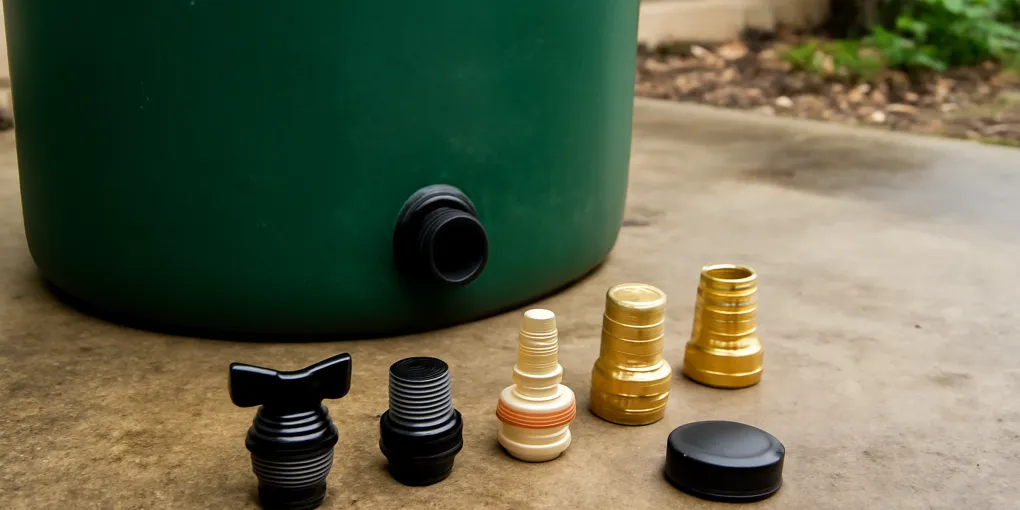
Best Rain Barrel Drain Plugs and Cleanout Fittings for Easier Seasonal Emptying
Buyer's GuideThreaded bulkhead drain plug kit
Best clean retrofitUse Case: Adding a low capped drain to a DIY plastic barrel
$10-$30 typical
Quick picks
| Product | Key Specs |
|---|---|
| See price on Amazon |
|
| See price on Amazon |
|
| See price on Amazon |
|
| See price on Amazon |
|
Product availability, certifications, and retailer details can change; check the current Amazon page before buying.
A rain barrel drain plug is the part you appreciate at the end of the season, after a storm has left grit, pollen, shingle granules, and leaf sludge in the bottom inch of the tank. The normal spigot is usually placed above that dirty layer so watering cans and hoses do not pull sediment every day. That is good for watering, but it also leaves heavy, messy water behind when it is time to clean or winterize the barrel.
The best cleanout setup is simple: a low, gasketed fitting that seals reliably, a cap or valve you can operate without crawling under the stand, and a discharge path that does not dump muddy water against the house. If your barrel already has a molded drain port, start there. If it does not, choose a retrofit fitting only after checking that the lower wall is flat, reachable from inside, and high enough above the base to keep the cap from scraping the stand.
Quick picks
Use the product card above for the structured comparison, then match the part to the barrel’s existing outlet and your cleaning routine.
- Best clean retrofit: Search Amazon for bulkhead drain plug kits when a DIY plastic barrel has a flat lower wall and inside access for the nut.
- Best controlled drain: Search Amazon for hose-thread ball valves if you want to open the cleanout slowly instead of pulling a plug under pressure.
- Best spare to keep on hand: Search Amazon for hose caps and washers because one missing washer can turn a winterized drain into a slow leak.
- Best bucket-friendly add-on: Search Amazon for short drain hoses with shutoffs when the lower outlet cannot sit directly over a bucket.
If the everyday tap is the problem rather than the cleanout point, compare parts in our rain barrel spigot and bulkhead fitting guide. For shutdown timing, pair the fitting with the winterizing rain barrel irrigation parts checklist.
What a cleanout fitting has to do
A cleanout fitting is not just a second spigot. It has three jobs. First, it must empty the water that the normal outlet leaves behind. Second, it must pass cloudy sediment water without clogging immediately. Third, it must close tightly after cleaning, because a low leak can soften the barrel base and undermine the stand.
Extension rain-barrel guidance from Rutgers, Penn State, and the University of Minnesota all treats screens, overflow, and maintenance as normal parts of rain barrel ownership. That matters for drain hardware because roof runoff is not clean tap water. Even a screened inlet can let fine grit settle inside. A lower drain gives that material a planned exit instead of forcing you to tip a partly full barrel.
Threaded bulkhead drain plug kits: best for DIY barrels
A threaded bulkhead fitting with a removable plug is the neatest option when the barrel has no factory drain. The gasket seals around a drilled hole, and the plug stays closed until cleaning day. This style works best on a flat lower side wall, not on a curved bottom or molded seam.
Search Amazon for bulkhead drain plug kits
Before buying, measure the wall thickness and check whether you can reach the inside with a hand or tool. Many food-grade barrels have narrow lids. If you cannot tighten the inside nut or seat the gasket squarely, choose an external repair on an existing port instead of drilling a blind hole.
Ball valves: best when you want control
A ball valve is easier to manage than a loose plug when several gallons remain in the barrel. You can crack it open, catch the first dark water in a bucket, then close it while you move the hose or rinse the bottom. A standard hose-thread outlet also lets you connect a short drain hose for cleaner routing.
Search Amazon for hose-thread ball valves
The tradeoff is exposure. A valve handle can catch on shoes, freeze with water inside, or put twisting force on the barrel wall. Keep the valve tucked inside the stand footprint, drain it before freezing weather, and support any hose so the fitting is not carrying the hose weight.
Hose caps, plugs, and washers: boring parts that prevent leaks
A cap and washer assortment is not exciting, but it belongs in the same bin as spare screen mesh and hose washers. Lower drains live in a dirty spot. Caps get lost in mulch, plastic threads crack, and flat washers deform after a season in the sun.
Search Amazon for hose caps and washers
For seasonal shutdown, cap the fitting only after the barrel is empty and the valve or hose has drained. A sealed cap on a trapped slug of water can split plastic parts when temperatures drop. If the barrel stays outdoors disconnected, leave the system arranged so rain cannot refill it through an open downspout.
Short drain hoses: best for barrels with awkward clearance
Some barrels sit too low for a bucket under the drain. A short hose fixes that without turning the cleanout into a permanent hidden line. Keep it short, removable, and easy to flush. The dirty first flow can go to a bucket for inspection, then to a lawn or mulch area that slopes away from the house.
Search Amazon for short drain hoses with shutoffs
Do not leave a low hose connected where it can siphon, kink, or hold water through winter. After cleaning, disconnect it, rinse it, and store it with the other irrigation parts. If the hose end is lower than the barrel and the valve is bumped open, the barrel can empty where you did not intend.
Which cleanout setup fits your barrel?
Choose the fitting by barrel shape before price. A converted food barrel with a removable lid is the best candidate for a threaded bulkhead plug because you can reach inside and hold the nut. A decorative barrel with a narrow top opening is usually better served by upgrading the existing lower port, replacing the cap, or adding a short hose to the factory drain rather than drilling a new blind fitting.
A barrel that sits on a low patio stand needs extra clearance planning. If the drain outlet points straight forward, a ball valve may hit the blocks or force the hose into a kink. In that case, a compact plug plus a removable hose adapter can be safer than a permanent valve handle. If the barrel is beside a walkway, avoid any fitting that sticks out far enough to be kicked.
For winter climates, favor parts that can be opened, drained, and left dry. Brass can be durable, but it still needs a washer and a supported connection. Plastic caps are cheap and easy to replace, but they crack if they are cross-threaded or left under ice pressure. The right answer is the one you can inspect at the start and end of every season.
Installation checks before drilling
Mark the drain location with the barrel sitting on its stand. Confirm the cap, valve handle, and any hose connection clear the blocks or platform. A fitting that works on the workbench can become unusable once the barrel is back against the wall.
Stay several inches above the bottom curve unless the manufacturer provides a molded drain pad. Drill the hole size required by the fitting, remove burrs, and tighten the gasket only enough to seal. Over-tightening can deform thin plastic and create a leak path.
Fill the barrel with a hose before reconnecting the downspout. Watch the fitting, cap, and surrounding wall. Then open the drain into a bucket and close it again. If it weeps while the water is clean and controlled, fix it before roof runoff adds sediment.
After the leak test, run one dirty-water rehearsal before the first freeze or big cleanout. Put a bucket under the outlet, open the drain slowly, and watch whether the first slug of water splashes, misses the bucket, or undermines the stand. If the flow cuts into mulch or moves toward the foundation, add a short hose or choose a different discharge point before the barrel is full of real sediment.
Rain barrel drain plug FAQ
Should a rain barrel have a separate drain plug?
A separate low drain is useful if the normal spigot sits above the sediment layer or cannot empty the barrel for winter. It is not required on every barrel, but it can make cleaning safer than tipping a heavy container.
Is a drain plug the same as a spigot?
Not exactly. A spigot is the everyday water outlet. A drain plug or cleanout valve sits lower and is mainly for flushing sediment, emptying the last gallons, or winter shutdown.
Where should dirty cleanout water go?
Send it to a lawn, mulch area, or bucket where grit can settle and water will not flow toward the foundation, a walkway, or a neighbor’s lot. Do not connect rain barrel drains to drinking-water plumbing.
Can I drill a drain fitting at the very bottom?
Drill only where the barrel wall is flat enough for the gasket and strong enough to support the fitting. Many curved bottoms seal poorly, so a low side-wall drain is usually safer than a bottom hole.
Sources
- Rutgers Cooperative Extension, Rain Barrels
- Penn State Extension, Rain Barrels
- University of Minnesota Extension, Rain barrels
Frequently Asked Questions
- A separate low drain is useful if the normal spigot sits above the sediment layer or cannot empty the barrel for winter. It is not required on every barrel, but it can make cleaning safer than tipping a heavy container.
- Not exactly. A spigot is the everyday water outlet. A drain plug or cleanout valve sits lower and is mainly for flushing sediment, emptying the last gallons, or winter shutdown.
- Send it to a lawn, mulch area, or bucket where grit can settle and water will not flow toward the foundation, a walkway, or a neighbor's lot. Do not connect rain barrel drains to drinking-water plumbing.
- Drill only where the barrel wall is flat enough for the gasket and strong enough to support the fitting. Many curved bottoms seal poorly, so a low side-wall drain is usually safer than a bottom hole.