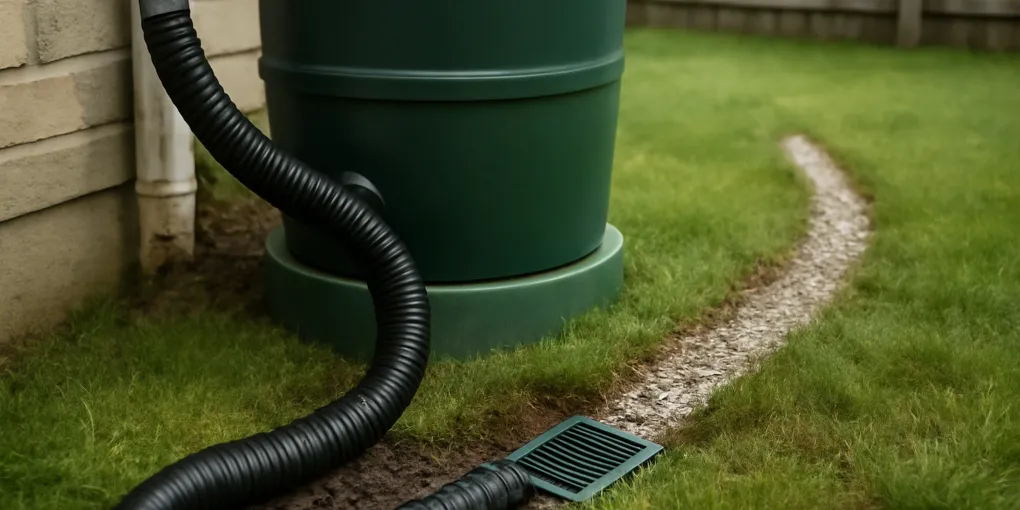
1-1/4 inch sump pump discharge hose kit
Best high-flow temporary routeUse Case: Moving overflow several feet across mulch or lawn during heavy storms
$15-$35 typical
Quick picks
| Product | Key Specs |
|---|---|
| See price on Amazon |
|
| See price on Amazon |
|
| See price on Amazon |
|
| See price on Amazon |
|
Product availability, certifications, and retailer details can change; check the current Amazon page before buying.
A rain barrel overflow hose is the part that only gets attention when everything else is already full. That makes it one of the most important pieces in the system. A small decorative tube may handle a drizzle, but a roof, gutter, and full barrel can send a lot of water toward the same outlet during a summer storm. The best overflow route is wide enough for the barrel outlet, hard to kink, easy to inspect, and pointed somewhere that can take the water.
For most backyard barrels, start with the overflow outlet size and the discharge location. If the barrel has a molded 1-inch or 1-1/4 inch overflow port, a sump-style discharge hose or purpose-built overflow adapter kit is often the simplest upgrade. If the water needs to travel farther across a bed or along a fence, flexible corrugated drain pipe can work if it keeps a continuous downhill path and stays cleanable. If the run is short, a splash block or downspout extension can spread water at the end instead of letting it drill a hole into mulch.
This guide is not about linking extra barrels for more storage. For that, use our overflow and linking kit guide. Here the job is different: what should happen after the barrel is full and the next inch of rain still has to go somewhere?
Quick picks
Use the product card above as the structured comparison, then choose based on outlet size, route length, and whether you need a temporary or season-long path.
- Best high-flow temporary hose: Search Amazon for 1-1/4 inch sump discharge hose kits when you can clamp a larger hose to the overflow outlet and lay it where it will not kink.
- Best longer yard route: Search Amazon for flexible corrugated drain pipe if the discharge point is farther away and the pipe can slope to daylight.
- Best direct replacement: Search Amazon for rain barrel overflow hose adapter kits when the barrel has a known outlet size and you want gaskets, clamps, and hose in one kit.
- Best visible end point: Search Amazon for rubber splash blocks and downspout extensions where a short hose needs to finish on a sloped lawn or mulch bed.
If overflow has already reached the house, read the foundation overflow routing guide before buying parts. The product is only as good as the place it sends water.
What matters most in an overflow hose
Capacity comes first. A barrel overflow line should not be smaller than the outlet it connects to unless the barrel’s own design limits the flow. Narrow vinyl tubing can look tidy but become a bottleneck when leaves, pollen, or roof grit collect at the opening. A wider hose also gives debris more room to pass to a cleanable exit instead of backing water up at the lid.
The route matters just as much as the diameter. Water will follow the easiest path. A hose that dips behind the barrel, rises over edging, then drops to the lawn can trap water in the low spot. That trapped water becomes a sediment pocket, mosquito risk, freeze point, or hidden plug. Keep the route short, downhill, and visible where possible.
Finally, think about how the hose fails. Thin hose can collapse under mulch, kink behind the stand, or split after sun exposure. Corrugated pipe can crush under foot traffic. Splash blocks can move when the soil softens. Pick a system you can inspect after storms, not a hidden route you will forget until the basement wall is wet.
Sump-style discharge hose: best for storm capacity
A sump pump discharge hose is not made specifically for rain barrels, but the size and flexibility can be useful when the barrel outlet is large enough. The common 1-1/4 inch style moves more water than a narrow decorative tube and can be rolled up when the barrel is disconnected for winter.
Search Amazon for sump discharge hose kits
Best for: temporary or seasonal routing across mulch, lawn, or a side yard. Watch for: secure clamps, adapter fit, hose kinks, and the hose end moving during heavy flow. Do not reduce a large overflow port down to a tiny hose just because the adapter is convenient.
If the hose lies on top of soil, pin it lightly or route it where it will not be kicked. Leave the end open and visible. A discharge hose buried under leaves can clog at the worst time because the first heavy storm also washes roof debris into the barrel screen.
Flexible corrugated drain pipe: best for a semi-permanent path
Flexible corrugated drain pipe is useful when overflow needs to move beyond the immediate barrel pad. It can follow a fence line, bed edge, or swale better than a straight hose. The tradeoff is maintenance. Corrugations catch debris, and long runs are easy to install with hidden sags.
Search Amazon for flexible corrugated drain pipe
Best for: a visible downhill route to lawn, a rain-garden edge, or another daylight outlet. Watch for: crushed sections, buried ends, leaf plugs, and discharge points that send water toward a neighbor. If you cannot see the end after a storm, add a cleanout or shorten the route.
Do not treat corrugated pipe as a magic drain. It still has to empty somewhere. EPA and extension rain-barrel guidance emphasizes overflow direction because the barrel does not eliminate runoff during larger storms; it simply delays and redirects part of it. A pipe that terminates in a soggy low spot can create a new problem.
Purpose-built overflow adapter kits: best for a neat barrel connection
Commercial rain barrel overflow kits usually include a hose, gasket, clamp, or threaded adapter sized for common barrel ports. They are convenient when your barrel has a molded outlet and the original hose is too short or brittle.
Search Amazon for rain barrel overflow hose adapter kits
Best for: replacing missing factory parts or adapting a commercial barrel without guessing every fitting. Watch for: whether the kit is meant for overflow discharge or for linking barrels. A linking hose may not include the right discharge end, and a short overflow tube may still need an extension.
Measure the outside diameter of the outlet before ordering. If the barrel uses a threaded port, identify the thread type instead of forcing a clamp over it. A poor connection can leak constantly beside the stand, softening the base exactly where stability matters.
Splash blocks and downspout extensions: best at the exit
A splash block is not a full overflow system, but it can make the discharge point safer. When water leaves a hose at one concentrated spot, it can dig into mulch or splash back toward siding. A rubber splash block or short downspout extension spreads the flow and makes the exit visible.
Search Amazon for splash blocks and downspout extensions
Best for: short runs that already discharge away from the house. Watch for: slope, erosion, winter ice, and mower damage. If the ground is flat or already wet, a splash block alone will not fix the route.
This is also the easiest part to inspect after a storm. If soil is cutting a channel, the end point is too concentrated. Move the discharge, add a wider diffuser, or send the water farther to a spot that can spread it.
Fit checks before you buy
First, measure the barrel outlet and note whether it is smooth, barbed, or threaded. Second, map the route with a garden hose before buying a permanent pipe. The hose should leave the barrel, travel downhill, avoid walkways, and end where water naturally moves away from the building.
Third, plan cleaning access. Leaves that pass the inlet screen can lodge at the overflow elbow or hose end. If the barrel sits under trees, choose a route you can disconnect and flush. If the barrel sits near a basement wall, consider pairing the overflow route with a simple water alarm near the risky area.
Fourth, test the system with a hose before the next storm. Fill the barrel until overflow starts, then watch the connection, hose body, and discharge point. Fix kinks and leaks while you control the water, not while the gutter is roaring.
FAQ
What size hose is best for a rain barrel overflow?
Match the barrel outlet first. A larger, smoother route is safer than a narrow hose that backs up during a cloudburst. Many small factory tubes are fine for light rain but too restrictive if the diverter keeps feeding the barrel after it is full.
Can I bury a rain barrel overflow hose?
Only if the route stays sloped, cleanable, and open to daylight. A buried low spot can fill with sediment or freeze. For most backyard barrels, a visible hose, shallow protected pipe, or removable storm-season route is easier to maintain.
Where should overflow water discharge?
Send it to a spot that slopes away from the house, does not cross a walkway, and can absorb or spread the flow without eroding soil. Avoid basement walls, window wells, neighboring yards, and low spots that already stay wet.
Is a linking kit the same as an overflow hose?
Not always. A linking kit moves water between barrels. An overflow hose carries excess water away after storage is full. Some parts overlap, but the final discharge route still needs enough capacity and a safe exit.
Sources
- EPA Soak Up the Rain, Rain Barrels
- Rutgers Cooperative Extension, Rain Barrels
- Penn State Extension, Rain Barrels