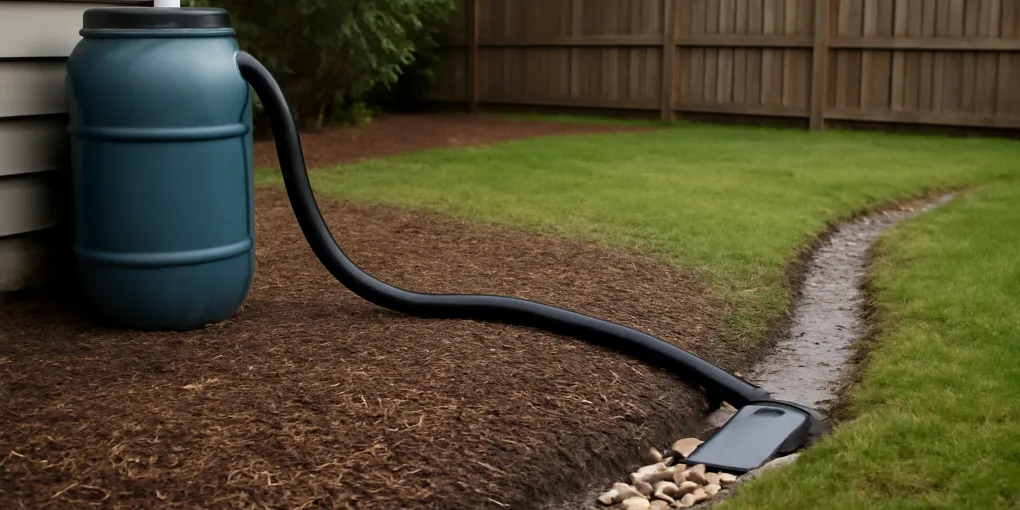
Rain Barrel Neighbor Drainage: How to Route Overflow Without Creating a Yard Dispute
ProtocolQuick picks
Rain barrel overflow hose extension
★ Top pick For reaching a safer outlet- Use Case: Moving full-barrel discharge away from a fence, foundation, sidewalk, or gate path
- Best For: Side yards where the safe outlet is several feet beyond the barrel
- Watch For: Hose diameter, continuous slope, UV resistance, and easy winter draining
Rain barrel splash block or overflow diffuser
For slowing concentrated flow- Use Case: Spreading outlet water so it does not cut a trench through mulch or soil
- Best For: Visible discharge points near beds, fences, and compacted side yards
- Watch For: Stable placement, cleanable openings, and enough width for storm flow
A rain barrel changes where roof water leaves the gutter system. That is useful when the overflow is planned, but risky when the barrel sits near a fence and the hose simply points at the nearest open strip of soil. The goal is not only to store water for dry days. It is to return extra stormwater to the yard without concentrating it against your house or sending it next door.
This protocol is for side yards, shared fences, tight urban lots, townhomes, and any barrel placed close to a property line. It does not replace local drainage rules, HOA requirements, or engineering advice for chronic flooding. It gives you a practical way to check whether the barrel overflow path is neighbor-safe before the next heavy rain.
EPA rain-barrel and stormwater guidance frames barrels as a runoff-reduction tool, not a license to dump concentrated water wherever convenient. Start with the basics from EPA Soak Up the Rain rain barrels, then use local extension guidance such as Minnesota Extension rain barrels and Penn State Extension rain barrel guidance to keep covers, screens, overflow, and winter disconnection in the plan.
Quick picks
This is not mainly a shopping problem, but a few simple parts can make a safe route easier.
- Search Amazon for rain barrel overflow hose extensions when the safe outlet is several feet beyond the barrel.
- Search Amazon for rain barrel splash blocks and diffusers when the outlet is cutting soil or pushing mulch toward a fence.
The neighbor-safe overflow rule
A rain barrel overflow should discharge where the water can spread, soak in, or continue through an existing safe drainage path. It should not blast through mulch at a fence line, soak a neighbor’s planting bed, cross a sidewalk as algae-prone sheet flow, or run back toward either foundation.
Use this quick test: if the barrel is full and a thunderstorm drops another inch of rain, where does the water go for the next 30 minutes? If the honest answer is “toward the fence” or “beside the basement wall,” the setup is not finished.
For the hardware side of the same problem, see the rain barrel overflow routing guide, overflow diffusers and splash blocks, and heavy-storm bypass setup.
Step 1: map the roof area feeding the barrel
A small-looking side-yard barrel can receive a lot of water if the downspout drains a large roof plane. Walk the gutter line and identify which roof sections feed that downspout. A 50- or 65-gallon barrel can fill early in a storm, so the overflow route matters more than the storage volume.
Mark three points on paper or with temporary flags: the downspout, the barrel outlet, and the final overflow discharge. Then add the property line, fence, foundation, basement windows, driveway, sidewalk, and low spots. The safest route is often obvious once the map shows where water should not go.
Step 2: keep the outlet out of the fence strip
The narrow strip between a house and fence is a common bad overflow target. Soil is often compacted there, downspouts are close together, and the fence can hide erosion until water has already moved under the boards. A short hose that ends at the fence may turn a helpful rain barrel into a concentrated drainage complaint.
Move the outlet toward a mulched bed, lawn swale, rain garden, or existing downhill drainage route on your side of the property. If the yard is too tight, consider moving the barrel to a different downspout rather than forcing overflow into the only available gap.
Step 3: spread the water before it reaches soil
Overflow leaves a barrel faster than many people expect. A small hose pointed at bare soil can dig a trench and send muddy water toward the lowest neighbor-side gap. Use a splash block, diffuser, stone apron, short level spreader, or shallow swale to slow the water before it leaves the immediate barrel area.
The discharge should be visible enough to inspect after storms. Do not bury the problem under decorative rock if you cannot tell whether the water is surfacing at the fence, washing mulch away, or pooling beside the foundation.
Step 4: preserve the downspout bypass
A diverter with a bypass is often better near a property line than a hard-cut downspout that feeds the barrel all the time. When the barrel is full, winterized, clogged, or temporarily disconnected, the roof water needs a known path through the original downspout or an approved extension.
Before a forecasted heavy storm, check that the diverter is set for storm mode and that the normal downspout outlet is not blocked by leaves, pavers, toys, or stored garden supplies. A bypass only helps if the water can actually leave.
Step 5: do a storm walk after installation
The first real storm is the best inspection. Put on boots and watch from a safe spot during moderate rain. You are looking for four things: water entering the barrel, overflow beginning, discharge spreading without erosion, and no flow crossing the property line.
After the storm, check for sediment fans, mulch movement, puddles beside the fence, wet siding, or algae-prone water across a walkway. These marks show where the water really went, not where the hose appeared to point when dry.
When a second barrel helps, and when it does not
A second barrel can delay overflow and give you more water for irrigation. It does not eliminate the need for a final discharge route. During a long storm, linked barrels can fill and overflow together. If the last overflow hose still points at a neighbor’s yard, the added storage only postpones the same problem.
Use linked barrels when you have a stable base, level connections, mosquito-safe lids, and a final overflow path that can handle a full-roof storm. If space is tight, a single barrel with a dependable bypass may be more neighbor-safe than two barrels squeezed against a fence.
Tight-lot setup checklist
- Keep the barrel and outlet on your side of the property line with room to inspect the hose.
- Aim overflow away from both foundations, including a neighboring foundation on the other side of a fence.
- Use a diffuser, splash block, swale, rain garden edge, or stone apron to reduce erosion.
- Keep overflow out of sidewalks, driveways, stairs, and gate paths where algae or ice can create slip risk.
- Preserve a bypass for full-barrel storms and winter disconnection.
- Recheck after heavy rain, gutter cleaning, landscaping changes, and hose replacement.
If one of these checks fails, solve that failure before increasing storage. More gallons do not fix a bad discharge point.
Fit the parts to the route
A longer overflow hose helps when the safe discharge point is beyond the barrel. A splash block or diffuser helps when water is cutting soil. A diverter with bypass is useful when the barrel sits near a shared fence and needs a full-storm escape route.
If you buy parts, match them to measurements rather than guesswork. Hose diameter should not be smaller than the barrel overflow fitting. The route should slope continuously or be easy to drain. Any screen or diffuser should be cleanable after leaf season.
Rain Barrel Neighbor Drainage FAQ
Can rain barrel overflow go toward a neighbor’s yard?
Avoid it. A barrel concentrates roof runoff at one outlet, so the overflow should stay on your property and move through a controlled route. If the only easy path points at a neighbor, move the barrel or add a safer discharge path before using it.
Is a rain garden a good overflow target?
It can be, if it is sized and placed correctly. A shallow rain garden, swale, or planted depression can slow and absorb overflow, but it should not sit against a foundation, fence, utility area, or spot that already stays wet.
What if my yard naturally slopes toward the neighbor?
Do not make that slope worse by adding a concentrated hose outlet at the property line. Spread the water higher in the yard, use an existing approved drainage path, or ask a local stormwater professional about dry wells, rain gardens, or regrading.
Should I disconnect the rain barrel before a major storm?
If the overflow route is not ready for a large storm, yes. Use the downspout bypass or temporary extension so roof water follows the safer original route. Reconnect after you have fixed the discharge path.
Frequently Asked Questions
- Route it somewhere else when possible. Overflow should leave the barrel in a controlled path that does not concentrate water at a property line, fence, sidewalk, driveway, or neighboring foundation.
- Use the longest safe route your yard allows and keep the outlet sloped away from the house. Many homes need an extension, splash block, swale, rain garden, or dry well rather than a short hose beside the wall.
- A second barrel adds storage, but both barrels still need overflow. During a large storm, linked barrels can fill quickly and discharge the same roof water unless the final overflow route is controlled.
- Map the overflow path first. If the only outlet points toward a neighbor, walkway, or foundation, move the barrel, use a diverter with bypass, or build a safer discharge route before cutting.