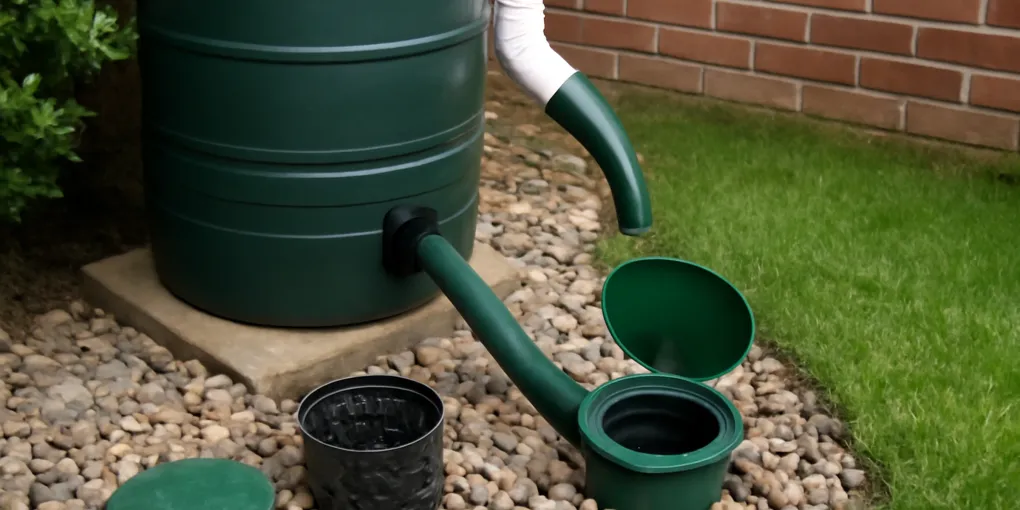
Best Rain Barrel Overflow Endpoints: Pop-Up Emitters, Dry Wells, and Rain Gardens
Buyer's GuideRain barrel overflow hose to lawn pop-up emitter
Best visible dischargeUse Case: Moving overflow to a lower lawn or planting area
$20-$60 typical
Quick picks
| Product | Key Specs |
|---|---|
| See price on Amazon |
|
| See price on Amazon |
|
| See price on Amazon |
|
| See price on Amazon |
|
Product availability, certifications, and retailer details can change; check the current Amazon page before buying.
A full rain barrel does not stop roof runoff. Once the barrel reaches the overflow port, every additional gallon needs a safe path away from the house, walkway, and neighbor’s yard. That path can be a flexible extension across mulch or a built-out pop-up emitter, dry well, or rain garden. The right choice depends on slope, soil, visibility, and maintenance after storms.
This guide is for the discharge point, not the barrel inlet. If your problem is water spilling at the top of the barrel, start with the rain barrel overflow away from foundation guide. If the problem is where the overflow should end, use the matrix below before burying pipe or digging a dry well.
EPA and extension stormwater resources treat rain barrels as one piece of a yard drainage system. Capture what you can, then direct extra water to a location that can handle it without erosion, ice, basement seepage, or neighbor conflict.
Quick picks for overflow discharge
| CTA | Best use | Do not use when |
|---|---|---|
| Search Amazon for pop-up emitter drainage kits | You have a downhill pipe route and want overflow to appear in a visible lawn outlet. | The route is flat, freezes solid, or exits where people walk. |
| Search Amazon for flexible overflow extensions | You need a fast, inspectable way to move overflow several feet from the house. | The hose will cross a path, kink behind shrubs, or discharge onto a neighbor’s lot. |
| Search Amazon for catch basin drain kits | Surface hoses are unsafe and you can maintain a sloped buried route with cleanouts. | You cannot confirm pipe slope or a safe daylight outlet. |
| Search Amazon for dry well kits | Soil drains well and you have a legal, utility-clear place away from structures. | Clay soil, shallow groundwater, septic setbacks, or repeated ponding make infiltration unreliable. |
First choose the safe discharge zone
Walk the yard during or right after rain. The endpoint should be lower than the barrel, away from the foundation, away from basement windows and stairwells, and clear of walkways that can ice over. It should not dump into a neighbor’s yard or public sidewalk.
Distance alone is not enough. Five or ten feet from the foundation may still be wrong if the yard slopes back toward the house. Before digging, check local utility marking requirements and municipal stormwater rules.
Pop-up emitter: best when you need a visible outlet
A pop-up emitter sits at the end of a buried pipe. During overflow, water pressure lifts the lid and releases water across the lawn or bed. When flow stops, the lid closes so the outlet is less obvious than an open pipe. For rain barrel overflow, the main advantage is visibility: you can see where the water exits and inspect whether debris has jammed the cap.
Search Amazon for downspout pop-up emitter drainage kits
Use solid pipe, not perforated pipe, when the goal is to move overflow to a specific outlet. Keep the pipe sloped. Add a removable elbow, cleanout, or accessible section near the barrel so you can flush roof grit.
Avoid pop-up emitters where freezing is common and the route cannot drain after storms. A low spot in the pipe can hold water, freeze, and block the next storm. Also avoid discharge into a mowing path where the cap will be hit, or next to a sidewalk where winter overflow can become ice.
Flexible extension: best first test
A flexible downspout extension is not elegant, but it is the easiest way to test a route before digging. Attach it to the overflow hose or elbow, run it downhill across mulch or turf, and watch the next storm. If water pools, returns toward the house, or crosses a path, you have learned that a buried pipe in the same direction would fail too.
Search Amazon for flexible downspout extensions for overflow
Use the extension as a seasonal or diagnostic tool. Pin it so wind does not swing the outlet toward the foundation. Keep it out of mower paths. For a permanent surface route, a smoother solid hose or rigid pipe is easier to flush.
This option is also useful for storms that exceed the barrel’s normal setup. Pair it with the heavy-storm overflow bypass protocol when a long forecasted rain could overwhelm a small barrel.
Catch basin and solid pipe: best for finished beds
A small catch basin can collect overflow at grade and send it through solid drain pipe to a safer outlet. Use it when a surface hose would cross a patio, path, or planting bed.
Search Amazon for catch basin and solid drain pipe kits
The tradeoff is maintenance. Use cleanouts, keep the route as straight as practical, and discharge to daylight where you can inspect flow. If the pipe feeds a dry well or rain garden, keep an emergency overflow path for storms larger than the soil can absorb.
Dry well: best only when the soil can take it
A dry well stores water below grade while it soaks into surrounding soil. It can keep overflow out of walkways and beds, but it can fail silently in clay, compacted soil, high groundwater, or locations too close to structures.
Search Amazon for yard dry well kits with landscape fabric
Dig a small test hole after a wet period. If water stands for many hours nearby, a dry well may just create a hidden pond. Keep it away from foundations, septic components, wells, retaining walls, and buried utilities, and give it a bypass for long storms.
Rain garden: best when you want overflow to do useful work
A rain garden is a planted depression designed to receive and soak stormwater. It can be a good endpoint because plants and amended soil slow water instead of dumping it in one fast stream. Minnesota Extension rain garden guidance emphasizes location, size, soil, and plant selection.
A rain garden should not sit against the house or in a place that already ponds for days. It needs an inlet that does not erode, a basin that spreads water, and an overflow path for storms larger than the garden can hold.
If you are not ready to build the garden, run the barrel overflow to a temporary extension and observe how much water actually arrives. A 50-gallon barrel can overflow quickly from a moderate roof section, so size the garden for the roof area and rainfall, not for the barrel volume alone.
Installation checks before you bury anything
Hose-test the route before backfilling. Fill the barrel or run a hose into the overflow line and watch the endpoint. Confirm water exits where expected, does not reverse toward the foundation, and does not cross a path. Keep a removable adapter near the barrel so you can flush the line when the pop-up emitter stops opening or the dry well slows.
For buried kits, buy more access than the package photo suggests. A low-profile emitter, one cleanout tee, and solid pipe with enough slope are usually more useful than a decorative outlet with no way to clear roof grit. For dry wells, budget for landscape fabric, washed stone, and a surface overflow path; the plastic chamber alone does not make clay soil drain.
Common mistakes
Burying a flat pipe. Water left in a flat pipe can collect sediment, mosquitoes, odors, and ice. If you cannot maintain slope, keep the route visible or choose a different endpoint.
Sending overflow under a deck or patio. Hidden water can undermine footings, encourage rot, or freeze where you cannot see it. Use a visible discharge point away from structures.
Routing to the property line. Overflow that solves your puddle by creating your neighbor’s puddle is not a drainage fix. See the neighbor drainage and overflow etiquette guide before changing discharge direction.
Overflow endpoint FAQ
How far should a pop-up emitter be from the rain barrel?
Far enough that discharged water cannot run back to the foundation, and low enough that the pipe keeps a reliable slope. The exact distance depends on yard grade. A shorter downhill route can be safer than a long flat one.
Can I connect rain barrel overflow directly to a storm drain?
Do not assume you can. Local rules vary, and some stormwater systems restrict private connections. Check municipal guidance before connecting to a curb, storm drain, or public right-of-way.
Should I use perforated pipe for rain barrel overflow?
Use solid pipe when you need to move overflow to a specific endpoint. Perforated pipe can work as part of an infiltration trench designed for the soil, but it can also leak water beside the foundation if placed incorrectly.
What if the overflow line clogs?
Disconnect the line at the barrel, flush from the high end, clear the pop-up emitter or outlet, and clean the barrel inlet screen. If clogging repeats, add a better leaf screen or a small catch basin before the buried route.
Sources
- EPA: Soak Up the Rain: Rain Barrels
- Rutgers NJAES: Rain Barrels Part IV: Installation and Maintenance
- University of Minnesota Extension: Rain gardens
- University of Georgia Extension: Stormwater management in the home landscape
Frequently Asked Questions
- Yes, if the pipe slopes away from the barrel and the emitter discharges to a place that can absorb or safely convey the water. Keep a visible cleanout or removable section because roof grit and leaves can clog underground routes.
- A dry well can work in soil that drains well and in a location away from foundations, septic areas, wells, and buried utilities. It is a poor choice for compacted clay, high groundwater, or yards that already pond after normal rain.
- Often, yes. A rain garden can slow and soak stormwater, but it needs the right location, soil preparation, overflow path, and plants. Do not send overflow toward a neighbor, basement wall, sidewalk, or public right-of-way.
- A flexible downspout extension or solid overflow hose routed downhill several feet from the house is the easiest first fix. Upgrade to a pop-up emitter, buried pipe, or rain garden when the surface route creates trip hazards or erosion.