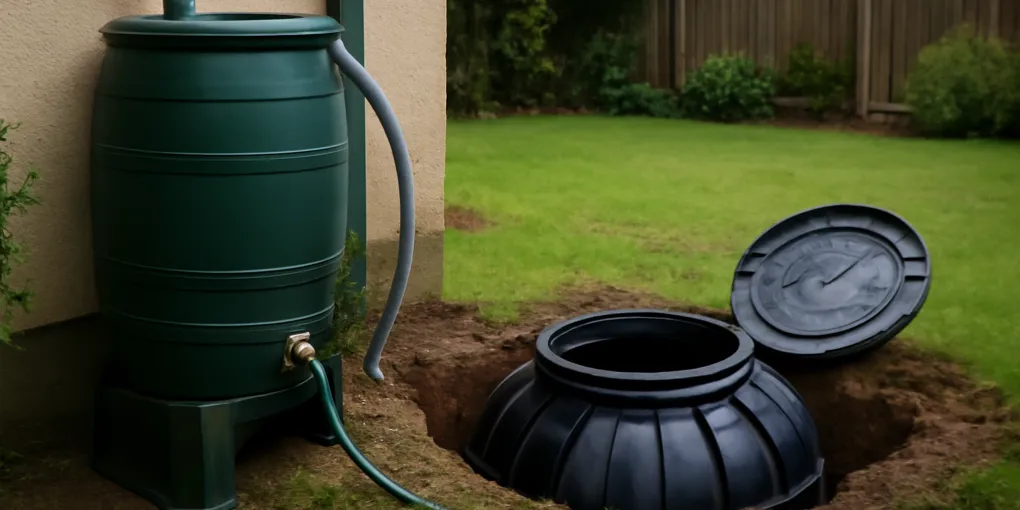
Rain Barrel vs Underground Cistern: Which Rainwater Storage Setup Fits Your Yard?
Evidence ExplainerQuick picks
FCMP Outdoor RC4000-BRN rain catcher barrel
★ Top pick Best first storage step- Best for: Testing one downspout, watering nearby plants, and learning overflow behavior before larger storage
- Check first: Visible, limited capacity, and still needs a safe overflow route away from the foundation.
RTS Home Accents 50-gallon flat-back rain barrel
Best capacity upgrade without digging- Best for: More storage along a fence, garage wall, or side yard where a round barrel wastes space
- Check first: A larger tank gets very heavy and needs a level structural base plus larger overflow planning.
NDS 12-inch catch basin with solid drain pipe parts
Best planning proxy- Best for: Understanding the fittings, cleanouts, and excavation work involved before a true underground cistern quote
- Check first: A catch basin or dry well is not the same as a potable-rated or pump-fed cistern system.
A rain barrel and an underground cistern both store roof runoff, but they solve different problems. A barrel is a visible, low-cost way to capture water from one downspout for nearby watering. A cistern-style system is a larger storage project with excavation, pumps or gravity outlets, access lids, overflow routing, and local-code questions.
If you are deciding between them, do not start with the biggest tank you can imagine. Start with three questions: where will extra water go when storage is full, how will you use the stored water, and what maintenance access will you still have after the system is installed?
Quick answer
Choose an above-ground rain barrel if you want a simple garden-water source, a low-risk test at one downspout, or a seasonal setup you can disconnect. Consider a slim tank when you want more capacity but can still keep storage visible and serviceable. Consider an underground cistern only when you have a clear use for much larger storage, room for excavation, a safe overflow path, pump access, and a contractor or local guidance for code-sensitive work.
For most homeowners, the smart sequence is barrel first, larger above-ground tank second, buried cistern only after the roof area, water demand, drainage, and maintenance workload are proven.
Quick picks before you scale storage
- First storage test: Search Amazon for FCMP RC4000 rain catcher barrels if you have one downspout and nearby plants.
- More capacity without excavation: Search Amazon for RTS flat-back rain barrels when a side yard or fence line can handle a larger visible tank.
- Drainage-planning parts: Search Amazon for NDS catch basin and pipe parts to understand cleanouts, pipe slope, and access before requesting underground cistern quotes.
This is not a recommendation to bury a generic tank. Underground storage should use products and installation methods rated for soil loads, groundwater, access, and local requirements.
What a rain barrel does well
An FCMP- or RTS-style above-ground rain barrel is best when the job is small and visible: water patio containers, fill a watering can, feed a short soaker hose, or test whether a downspout produces enough useful runoff. You can see leaks, clean the screen, disconnect before freezing weather, and move the overflow hose if a storm reveals a drainage problem.
The tradeoff is capacity. A typical residential barrel fills quickly from a moderate roof area and empties quickly during a dry spell. That can be a feature during planning. If a 50-gallon barrel overflows after one storm and empties after one watering session, you have learned something important before paying for excavation.
A barrel also keeps failure visible. If the inlet clogs, the lid overflows. If the stand settles, you can see it. If the water smells, you can clean it. Underground systems hide more of those signals behind lids, pipes, pumps, and buried slopes.
What an underground cistern changes
A cistern-style system is about larger storage. It may be underground for appearance, freeze protection, space, or volume. But burying storage changes almost every design issue:
- Structure: the tank must be rated for burial and the loads above it.
- Excavation: utilities, soil stability, groundwater, access, and spoil removal matter.
- Inlet filtration: roof grit and leaves need screening before they enter hard-to-clean storage.
- Overflow: a full cistern still needs a legal, erosion-safe discharge path.
- Access: pumps, inspection lids, sediment removal, and winterization must be serviceable.
- Use: most residential roof runoff storage is for outdoor non-potable use unless a specialized treatment and code-compliant system is designed.
That is a different project from setting a barrel on blocks. It can be worthwhile, but it should be priced and planned like infrastructure, not like a bigger decorative barrel.
Capacity: roof area fills both faster than you think
One reason people jump from barrels to cisterns is overflow frustration. A small barrel may fill during a single storm, especially on a large roof section. Larger storage can capture more runoff, but the same roof that quickly fills a barrel can also send a lot of water to a cistern overflow once the cistern is full.
Before scaling up, estimate the roof area feeding the downspout and compare that to your actual use. If you only water a few planters, a cistern may sit full for long periods and still need overflow during storms. If you irrigate many beds or trees through dry weather, larger storage may make sense, but you will need a distribution plan, not just a tank.
Use the rain barrel sizing guide and the dry-spell watering plan before comparing quotes.
Overflow is the deciding safety issue
A full rain barrel and a full cistern have the same basic problem: the next gallon has to go somewhere. Above ground, you can often route an overflow hose to a lawn, rain garden, or safe discharge point. Underground, overflow may need solid pipe, cleanouts, slope, and a visible outlet or approved connection.
Do not let hidden storage hide drainage mistakes. If overflow leaves the cistern toward a foundation, sidewalk, neighbor’s yard, septic area, or poorly draining clay soil, the larger system can create a larger problem. Read the overflow away from foundation guide and the overflow endpoint guide before you bury anything.
Maintenance: visible chores versus buried chores
Rain barrels need cleaning, screen checks, mosquito exclusion, spigot maintenance, and winter disconnects. Those chores are not glamorous, but they are reachable. Underground cisterns still need sediment management, inlet screening, pump service, access-lid checks, overflow inspection, and sometimes winter or freeze planning. The difference is that several chores now require opening a buried access point or servicing a pump.
If you dislike cleaning a barrel screen, a cistern will not remove maintenance. It will make maintenance less visible. That is why pre-filters, cleanouts, and access lids are not optional details. They are the difference between a serviceable system and a buried mystery tank.
Cost and installation risk
A barrel kit is usually a weekend-level project for a suitable downspout. A slimline tank can still be a homeowner project, but the base, weight, and overflow route become more serious. A buried cistern usually brings excavation, utility locating, soil, structural, pump, and code questions.
The installation risk is not only the tank price. It is also the cost of fixing bad slope, a clogged buried inlet, an inaccessible pump, or a discharge point that ices over a path. If you are not sure the yard can handle overflow, buy observability first: a barrel, a water-level gauge, a temporary overflow extension, and a season of notes.
A practical decision sequence
- Install or inspect one above-ground barrel. Confirm how fast it fills, how often you use the stored water, and where overflow goes.
- Improve the visible system. Add better inlet screening, a level base, a water-level gauge, or a safer overflow endpoint.
- Try more above-ground capacity if demand is real. A slim tank can prove whether more storage helps without hiding the system.
- Price underground storage only after the use case is proven. Bring roof area, rainfall observations, watering demand, overflow plan, and site constraints to the quote.
- Keep a bypass plan. During roof work, storms, freezing weather, or dirty runoff events, you need a way to route water away from storage.
This sequence protects the budget and the house. It also gives a contractor better information if you eventually want a cistern.
When a cistern is probably too much
A buried system is usually overkill if you water only a few containers, cannot route overflow safely, have a small or shaded roof area, live in a site with high groundwater or difficult excavation, or do not want pump maintenance. It is also the wrong shortcut when the real problem is a clogged gutter, a bad downspout location, or a barrel overflow pointed at the foundation.
Fix the visible drainage first. A cistern should expand a working stormwater plan, not hide a broken one underground.
Sources
- EPA: Soak Up the Rain: Rain Barrels
- Rutgers NJAES: Rain Barrels Part IV: Installation and Maintenance
- University of Georgia Extension: Stormwater management in the home landscape
- University of Minnesota Extension: Rain gardens
Frequently Asked Questions
- It can store more water and stay out of sight, but it costs more, needs excavation, requires overflow and pump planning, and may need permits. A rain barrel is usually the better first test.
- Do not bury a regular above-ground barrel unless the manufacturer specifically rates it for burial. Soil pressure, groundwater, traffic loads, and collapse risk are different underground.
- A common rain barrel stores about 50 gallons, while cistern-style systems can store hundreds or thousands of gallons. The useful amount still depends on roof area, rainfall, demand, overflow, and local rules.
- Start with a screened barrel or slim tank, a safe overflow route, and a water-level gauge. Those parts reveal how fast your roof fills storage and whether your yard can handle extra overflow.