Quick picks
Soil moisture meter
★ Top pick Prevents guess watering- Use Case: Checking whether rain barrel water should go to roots today or be saved
- Best For: Raised beds, containers, and gardeners who overwater by habit
- Watch For: Probe depth, easy-to-read dial, and cleaning the probe between beds
Watering can with rose head
Best gallon control- Use Case: Delivering measured gallons from a barrel without washing soil away
- Best For: Seedlings, containers, herbs, and small high-priority beds
- Watch For: Capacity when full, removable rose, and a fill opening that fits under your spigot
A full rain barrel feels like a backup water supply until the weather turns hot and dry. Then 50 gallons can disappear in one evening if every bed gets a casual rinse. A dry-spell plan keeps the barrel from becoming a guesswork hose substitute.
The useful question is not whether rainwater is good for plants. It is which plants deserve stored water first, how many gallons they actually need, and when the barrel should be saved for the next high-stress day. If your setup is still new, pair this protocol with our guides to rain barrel height and water pressure and low-pressure drip kits for rain barrels.
Quick picks
- Measure before watering. A simple probe helps separate dusty surface soil from genuinely dry root zones. Search Amazon for garden moisture meters.
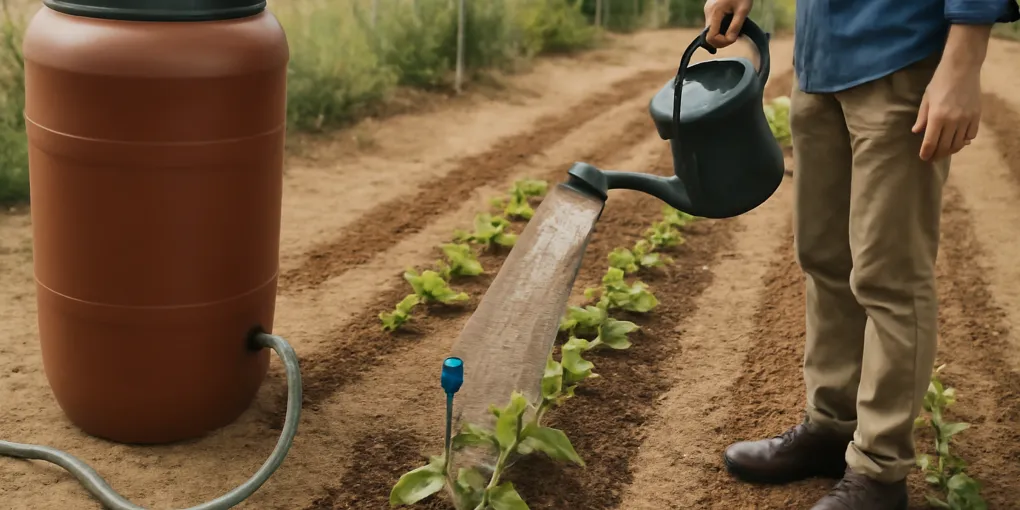
- Use a can for priority plants. A two-gallon can with a rose head lets you deliver known amounts without blasting mulch away. Search Amazon for rose-head watering cans.
- Use drip only after a test run. A clogged emitter can waste the best water on the first plant while the last pepper stays dry.
Why the first gallons should go to the highest-risk beds
Do not start with the thirstiest-looking leaf. Start with plant value and root risk.
Highest priority goes to seedlings, new transplants, containers, shallow raised beds, and fruiting vegetables such as tomatoes, cucumbers, peppers, and beans. These plants have smaller root buffers or a short harvest window. One dry afternoon can cause wilt, blossom drop, bitter fruit, or a container that becomes hard to rewet.
Middle priority goes to established herbs, perennials, and larger in-ground vegetables with deeper roots. They may still need water, but mulch and deeper soil usually buy more time.
Lowest priority is lawn, ornamental beds that can tolerate dormancy, and established shrubs unless they were recently planted. A rain barrel rarely carries enough water to keep turf green during a real dry stretch.
Write the order on a tag, notebook, or phone note before the heat arrives. That prevents the common mistake of watering the closest bed first simply because the hose reaches it.
Why root-zone moisture beats surface guessing
Dry mulch and dusty soil do not always mean the root zone is dry. Push a finger, trowel, or moisture probe several inches down near the plant, not right beside the stem. If the soil below the surface is still cool and slightly damp, save the barrel for a later day.
Containers need a separate check because they dry faster than ground beds. Lift the pot if possible, check drainage holes, and water slowly until the root ball accepts moisture. A quick splash can run down the side of a dry potting mix and leave the center dry.
A moisture meter is not magic, but it gives you a repeatable reading. Clean the probe, test at the same depth, and compare the result with how the plant looks the next morning. Over a week, you will learn which beds deserve stored rainwater first.
Why measured pours stretch a small water supply
A dry-spell plan works better with measured pours than with minutes at the spigot. Mark a watering can, bucket, or jug so you know how many gallons leave the barrel.
Use small, targeted amounts first:
- Seedlings and new transplants: water the root area slowly, then check whether the soil accepted it.
- Containers: water in two passes so dry mix has time to absorb.
- Fruiting vegetables: water at the base, under mulch, and avoid wetting foliage when possible.
- Established beds: water only if the root-zone check says they need it.
This sequence keeps 50 gallons from being spent as a light sprinkle over too many square feet. A shallow sprinkle evaporates fast and encourages surface roots. Fewer plants watered deeply are usually a better use of stored rainwater.
Why conservation starts before the next pour
The cheapest gallon is the one you do not have to pour. Pull weeds that compete for moisture, add mulch around vegetables after the soil is watered, and shade tender transplants temporarily during extreme afternoon sun. Move containers out of reflected heat from concrete if they can tolerate the light change.
Inspect the barrel path too. A leaking spigot, loose hose washer, or cracked watering can can waste more water than a small herb bed needs. If gravity drip is attached, open one zone at a time and watch the farthest emitter. See our rain barrel clogged emitter filter guide if sediment is slowing the line.
Why the next storm changes the plan
A dry spell often breaks with a hard storm. If the forecast shows real rain, use enough barrel water to create capture capacity, but keep overflow safety first. The overflow still needs to route away from the foundation, basement windows, patios, and neighbor property. Our overflow routing guide covers that setup.
Do not drain a full barrel beside the house just to make room. Send water to priority beds or a safe discharge area. If the barrel has been sitting for weeks, inspect the lid, inlet screen, and water surface before using it. CDC mosquito guidance focuses on covering or removing standing water, so a tight screen matters during every dry interval.
Common mistakes during a dry week
- Watering leaves instead of roots. Rain barrel water belongs at the base of the plant, not as a cooling spray.
- Using drip without watching it. Low-pressure systems need clean filters and short zones. Test the far end before walking away.
- Ignoring container weight. Pots can look fine in the morning and wilt by late afternoon.
- Saving every gallon too long. Stored water that never reaches stressed plants is not useful. Use it where it prevents real loss.
- Letting overflow become an afterthought. A dry-spell plan should still leave the barrel ready for the next storm without sending water toward the foundation.
Source notes
- University of Minnesota Extension: rain barrels and water harvesting
- EPA WaterSense: outdoor water use
- CDC: prevent mosquitoes around your home
FAQ
How much garden can a 50 gallon rain barrel water during a dry spell?
A 50 gallon barrel is best treated as targeted plant support, not whole-yard irrigation. Give first priority to containers, seedlings, transplants, and fruiting food crops. Mulched in-ground beds with established roots can often wait longer than pots and shallow raised beds.
Should I empty the rain barrel before a forecast storm?
Use some water before a likely storm if the barrel is full and the water can go to plants or a safe discharge area. Do not dump water near the foundation. The overflow route still has to handle the storm after the barrel refills.
Is drip irrigation better than a watering can in a dry week?
Drip is efficient for longer rows when filters and emitters stay clean. A watering can is better when you need to spend exact gallons on a few high-value plants. Many gardens use both: a can for containers and a short drip zone for one raised bed.
Can stored rain barrel water sit through a long dry spell?
Yes, if the barrel is covered, screened, and shaded, but inspect it before use. Look for odor, algae, mosquito access, loose lids, and sediment near the outlet. Keep stored rainwater for non-potable garden use and avoid splashing edible leaves.