Quick picks
Concrete patio pavers for rain barrel base
★ Top pick Best base material- Best for: Creating a flat, visible pad under a barrel stand or low platform
- Check first: Pavers still need compacted, level support below them so they do not tilt after storms.
Rain barrel downspout diverter kit
Best controlled fill- Best for: Covered barrels near standard downspouts where the original downspout should keep working
- Check first: Match downspout size, barrel inlet height, and the manufacturer's full-barrel behavior.
Rain barrel overflow hose kit
Best placement safeguard- Best for: Testing whether the chosen location can discharge extra water safely
- Check first: Avoid uphill runs, flat sags, narrow fittings, and discharge points beside the foundation.
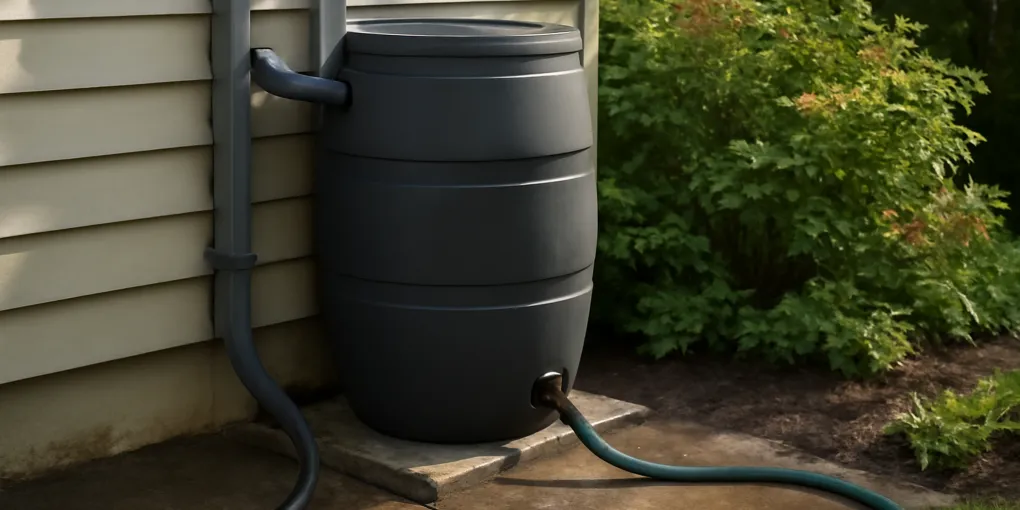
The best rain barrel location is not simply the downspout with the most water. It is the place where a full barrel can sit level, fill cleanly, overflow safely, and deliver water to a garden you actually use. A poor location can create weak hose flow, mosquito gaps, foundation splash, awkward winter disconnection, or a tilting stand long before the barrel itself wears out.
Before you cut a downspout, walk the site after a real rain. Watch where water already goes, where soil stays soft, where paths get slippery, and which planting beds are close enough for a short hose or watering can. The right location should make the original drainage problem better, not move it a few feet sideways.
This checklist focuses on placement. For detailed base construction, see our rain barrel stand stability guide. For overflow routing, use the foundation-safe overflow guide before you rely on the barrel during a heavy storm.
Quick picks for rain barrel placement
- For the base: Search Amazon for concrete patio pavers if the chosen spot needs a flat pad under a barrel stand.
- For controlled fill: Search Amazon for rain barrel downspout diverter kits when you want the original downspout to keep draining after the barrel is full.
- For the first storm test: Search Amazon for rain barrel overflow kits before the location is considered finished.
Step 1: choose the downspout that serves the real watering job
Start with the garden, not the roof. A barrel beside the busiest vegetable bed, container cluster, or young tree is usually more valuable than a barrel on the far side of the house with a larger roof area. Gravity-fed water loses usefulness when you need a long hose, a kinked route, or repeated trips around corners.
Check whether the chosen downspout has enough space for the barrel footprint, lid access, spigot access, and a person standing nearby. You need room to clean the screen, attach a hose, close the spigot, inspect leaks, and disconnect parts before freezing weather. A narrow side yard may collect plenty of water but still be a poor service location.
If two downspouts are candidates, pick the one with the safer overflow route and better garden reach. You can always add a second barrel later. It is harder to fix a location that dumps excess water toward a basement wall.
Step 2: confirm a stable base before you think about height
A full 50-gallon barrel can weigh more than 400 pounds once water and the barrel body are included. That load needs a level, compacted, non-wobbly base. Do not place the barrel directly on mulch, loose soil, stacked bricks, rotting boards, or a sloped paver that rocks under foot pressure.
A low platform with patio pavers is often safer than a tall homemade tower. Height can improve gravity flow, but stability comes first. If you need more pressure, raise the barrel only after the ground is prepared and the stand is designed for the weight.
Test the spot with a long level. Then test it again after rain. Soft soil can settle under one corner and tilt the whole setup. If the barrel leans, drain it before adjusting the base. Do not try to shove or lift a full barrel back into position.
Step 3: keep overflow away from the foundation
Every rain barrel location needs a full-barrel plan. Once storage is full, roof water still arrives. The overflow should leave through a clear route with continuous fall and enough capacity for the connected roof section. It should not dump beside siding, basement walls, crawl-space vents, steps, or a walkway that gets slick.
A downspout diverter can help when it is installed according to the kit instructions and sends excess water back down the original downspout. Some diverters depend on the barrel inlet height. If the barrel is too low or too high, the full-barrel behavior may not work as intended.
If you use a separate overflow hose, route it before the first storm. Lay it out with no uphill loops, crushed sections, or tiny adapters. End the hose where water can spread without erosion. After a heavy rain, inspect the route for soil cutting, pooling, or water marks on the wall.
Step 4: balance shade, access, and water quality
Shade is usually helpful. A shaded or partly shaded barrel can stay cooler, reduce sunlight-driven algae, and protect plastic from harsh exposure. Full shade is not required, but a translucent barrel in hot sun is a poor choice unless the water turns over quickly and the inlet is well screened.
Access still matters. Do not hide the barrel behind thorny shrubs or permanent fencing. You should be able to remove the screen, check the water level, close the spigot, clean sediment, and spot mosquito gaps without fighting the landscape.
Also look up. Overhanging branches can shade the barrel, but they can also load gutters with leaves, pollen, seeds, and bird activity. A shaded spot under messy trees may need a better screen, more gutter cleaning, or a first-flush diverter.
Step 5: test hose reach before cutting anything
Attach a garden hose or rope to the proposed spigot height and walk the route to the watering area. Watch for steps, gates, corners, HVAC equipment, thorny plants, and places where a hose would rub siding or cross a path. If the route is annoying while dry, it will be worse with a hose full of low-pressure water.
For hand watering, the barrel can be close to a path if the spigot and hose do not create a trip hazard. For drip or soaker use, keep the run short and simple. If the chosen bed is far away, consider a second roof source or a small pump setup instead of expecting gravity to perform like a house spigot.
Use our guide to connecting a rain barrel to a garden hose if the distance is short but the flow is weak.
Step 6: check local rules and household safety
Some areas have rules about rainwater harvesting, downspout disconnection, mosquito control, overflow discharge, or placement near property lines. Homeowner associations may also restrict visible barrels. Check local requirements before cutting a downspout on the front of a house or routing overflow near shared drainage.
Household safety is practical, not decorative. Keep the lid secure. Keep children from climbing the stand. Avoid placing the barrel where a car door, trash bin, or gate can hit it. If pets move through the area, protect hoses and screens from chewing and keep overflow from creating a muddy path.
If the barrel supplies edible gardens, remember that roof runoff is not potable. Keep water at soil level, avoid spraying harvestable leaves, and wash produce with potable water. The location should support those habits instead of forcing messy splash watering.
How we score a rain barrel location
| Criterion | Weight | How to apply it here |
|---|---|---|
| Research | 30% | Choose the downspout after checking roof area, local rules, drainage, and garden demand. |
| Evidence Quality | 25% | Walk the site during rain and verify how overflow behaves after installation. |
| Value | 20% | Spend first on a stable base, diverter or screened inlet, and overflow route before cosmetic upgrades. |
| User Signals | 15% | Watch for leaning, algae, mosquito gaps, weak hose flow, and water stains near the wall. |
| Transparency | 10% | The setup should make it obvious where water enters, where it exits, and how to disconnect it. |
Red flags that mean choose another spot
Choose a different location if the only available base is sloped, the overflow would discharge beside the foundation, the spigot would face a walkway, or the barrel would block a utility meter or service panel. Also reconsider locations under heavy roof debris if you cannot clean the gutter safely.
A location can be close to perfect and still fail one requirement. Do not ignore that requirement. A barrel that is easy to fill but hard to empty will sit stagnant. A barrel that waters the garden well but floods the foundation is not a good trade.
FAQ
Should a rain barrel be in sun or shade?
Shade is usually better because it can reduce heat, algae pressure, and material weathering. Full sun can still work if the barrel is opaque, covered, screened, and easy to clean.
How far can a rain barrel be from the garden?
Put it close enough that you will actually use the water. Long hose runs reduce gravity flow and make watering less convenient, especially if the barrel is low.
Can I put a rain barrel on soil?
Bare soil is risky because a full barrel is heavy and can settle after storms. Use compacted base material and pavers or a purpose-built stand so tilt is visible before it becomes dangerous.
Do I need to place the rain barrel next to a downspout?
Usually yes, unless you are building a gutter extension or shed-roof setup. The easier choice is a downspout with enough room for the barrel, the base, the inlet, and a safe overflow route.