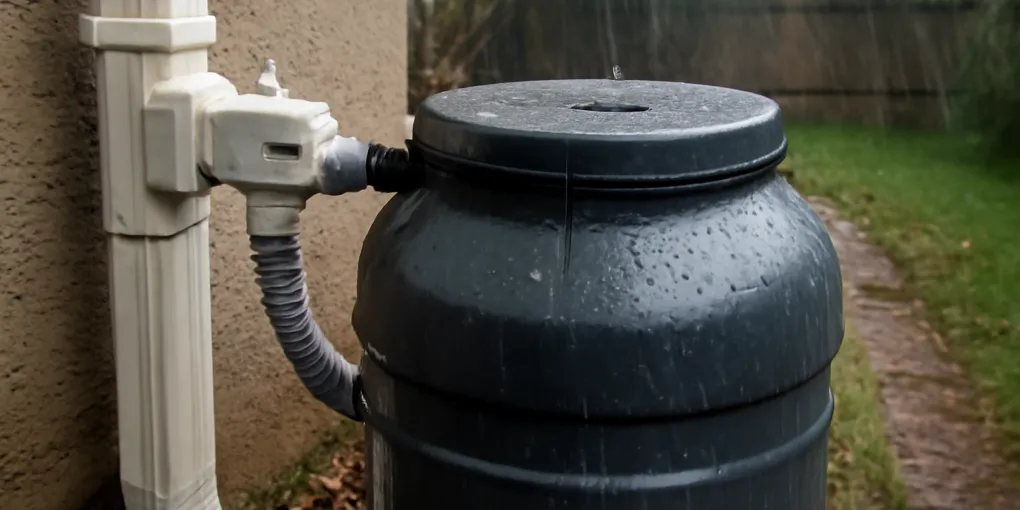
Best Rain Barrel Downspout Diverter Valves for Winter and Storm Bypass
Buyer's GuideRainReserve-style downspout diverter kit
Best for shutoff controlUse Case: Manual control between barrel fill, shutoff, and downspout flow
Varies
Quick picks
| Product | Key Specs |
|---|---|
| See price on Amazon |
|
| See price on Amazon |
|
| See price on Amazon |
|
| See price on Amazon |
|
Product availability, certifications, and retailer details can change; check the current Amazon page before buying.
A rain barrel diverter valve has a more specific job than simply “getting water into the barrel.” The best versions let the barrel collect during normal rain, stop accepting water when the barrel is full, and bypass the barrel when you are winterizing, traveling, cleaning the screen, or preparing for a storm that is bigger than the overflow route can handle.
That bypass control is the detail many buyers miss. A cheap diverter can be fine for a small garden barrel under a porch roof. It is less fine if the barrel sits beside a basement wall and the only winter plan is to hope the hose does not freeze. Before buying, decide how the system will behave in three states: normal fill, full-barrel overflow, and barrel-offline bypass.
If you are still choosing the main kit, see our broader guide to rain barrel diverter kits for common downspouts. If your problem is severe rain rather than product selection, read the heavy-storm bypass setup guide first.
Quick picks for diverter-valve shopping
- Search Amazon for RainReserve-style diverters if you want a more deliberate shutoff or bypass decision and can install the valve where it remains reachable.
- Search Amazon for EarthMinded FlexiFit diverters for a common retrofit style that many homeowners use on rectangular downspouts.
- Search Amazon for Oatey Mystic rainwater diverters when you want a simpler insert-style product and your downspout outlet already handles overflow safely.
- Search Amazon for Garden Watersaver rain barrel diverters when cost is the main constraint and you are willing to verify the parts list carefully.
What a bypass-capable diverter should do
A useful diverter valve should answer four practical questions:
- How does water enter the barrel during ordinary rain?
- What happens when the barrel is full?
- How do you stop collection before freezing weather?
- Where does roof water go when the barrel is disconnected?
The fourth question is the one that protects the house. A winterized or bypassed barrel still leaves the roof collecting water. The diverter should restore a continuous downspout path or send water to a visible extension that drains away from the foundation. Do not buy a diverter just because it fits the barrel hose; buy one that makes the offline state clear.
Fit checks before you buy
Measure the downspout before searching. Many residential kits are designed around common rectangular downspouts, but older homes, round downspouts, oversized gutters, corrugated adapters, and decorative chains can complicate the install. Check the product listing and manual for the exact downspout dimensions, cutting method, hose size, and barrel height requirement.
Height is especially important. Many sidewall diverters rely on the relationship between the diverter opening and the barrel inlet. If the diverter is installed too high, too low, or with a hose that sags, the barrel may not fill correctly or may overflow from the wrong point. Set the barrel on its final stand before cutting the downspout.
Also check reach. A winter or storm bypass setting is not useful if it sits behind a thorny shrub, under a deck, or above comfortable reach. You should be able to inspect and operate the diverter without climbing during bad weather.
Product-family notes
RainReserve-style diverter kits
RainReserve-style kits are worth considering when you want a more controlled system rather than a simple passive inlet. The buying reason is not magic flow capacity; it is user control. A reachable valve or shutoff path can make winterization and vacation mode less improvised.
Choose this style when the downspout is easy to access, you want to label the operating positions, and you are willing to install according to the manual instead of guessing from photos. Avoid it if the valve location would be hidden or if you need a no-cut solution.
EarthMinded FlexiFit diverter kits
EarthMinded FlexiFit-style kits are common because they retrofit into many rectangular downspouts and pair with typical rain barrel heights. They can be a good middle-ground choice for homeowners who want a tidy side hose and a system designed around barrel filling rather than a cut downspout dumping into an open lid.
The key fit issue is height. Read the instructions before drilling, and dry-position the barrel at its final elevation. If you plan to move the barrel for winter, confirm how the downspout will be capped or routed after the hose is disconnected.
Oatey Mystic rainwater diverter
Oatey Mystic-style diverters appeal to buyers who want a straightforward downspout insert. They can make sense for a simple collection setup where the original downspout extension already sends water away from the house.
The limitation is bypass control. Before choosing this style, verify whether it gives you the winter and storm behavior you need. If bypassing requires disassembly every time, it may be inconvenient in climates with freeze-thaw swings or frequent severe-rain forecasts.
Garden Watersaver and budget diverters
Budget diverters can work, but the risk is incomplete fit information. Look for clear photos of every included part: hose, seals, screws, caps, adapters, and cutting template. Read whether replacement washers or hoses are available. A cheap kit becomes expensive if the first gasket leak soaks siding or if the hose size traps water before winter.
Budget is most defensible on small barrels, simple roof sections, and easy-to-reach downspouts. Spend more when the barrel sits close to the house, serves a larger roof area, or needs reliable winter shutoff.
How we score diverter valves
| Criterion | Weight | How to apply it to this purchase |
|---|---|---|
| Research | 30% | Confirm downspout dimensions, barrel height, product manual, and local drainage expectations before cutting anything. |
| Evidence Quality | 25% | Prefer product documentation and user photos showing the same downspout shape over vague universal-fit claims. |
| Value | 20% | Pay for reachability, shutoff clarity, included seals, and replacement parts before decorative features. |
| User Signals | 15% | Treat leaks, recurring hose clogs, winter cracking, and confusing operating positions as signs to upgrade. |
| Transparency | 10% | Label bypass/fill positions and keep the downspout route obvious so seasonal changes are not guesswork. |
Installation details that separate good from bad purchases
A diverter can be the right product and still be a bad install. Cut once, after the barrel is on its final stand. Use the hole saw or template the manufacturer specifies. Deburr sharp downspout edges so they do not slice a hose or seal. Seat gaskets evenly. Route the hose with a smooth downward path to the barrel inlet.
Before drilling, hold the diverter body against the downspout and map the hose curve with the barrel lid closed. The hose should not rub on a sharp metal edge, bend upward before it enters the barrel, or sit where snow sliding off a roof can pull it loose. If the kit uses a removable cap for winter, confirm that the cap can be installed with gloves on and that the removed hose has a dry storage place. For storm bypass, make sure the original downspout extension is still long enough after the diverter cut; many poor installs collect water well but leave the bypass outlet too close to the foundation.
After installation, test with a garden hose at the gutter or downspout if safe, then check again during the first rain. Watch for water behind the diverter, leaks at screw holes, hose kinks, and overflow returning to the wrong place. A good diverter setup should be dull: water goes to the barrel during normal rain and has a visible path away from the house when the barrel is full or offline.
For winter, write the bypass steps on a tag or in a phone note. Include whether the hose is removed, whether a cap is installed, where washers are stored, and where the downspout extension points. The best diverter valve is the one you can operate correctly six months after installation.
FAQ
What is the best rain barrel diverter valve for winter?
The best winter choice is a diverter you can reliably close, remove, or bypass so roof water goes down the downspout instead of into the barrel. Manual shutoff access and clear winter instructions matter more than brand alone.
Do automatic overflow diverters replace an overflow hose?
Sometimes. A properly installed return diverter can send extra water back to the downspout, but the downspout outlet still needs to discharge safely away from the foundation. Some barrels still benefit from a separate visible overflow route.
Why does this guide point to product-family searches instead of one fixed kit?
Diverter kits change by downspout size, included adapters, hose diameter, and seasonal availability. Product-family searches let you match the current listing to your measured downspout and bypass needs.
Can one diverter fit every downspout?
No. Check rectangular versus round downspout shape, width, wall thickness, hose diameter, barrel inlet height, and whether the kit includes the cutting template or hole saw your install requires.
Sources
- University of Georgia Extension, rainwater harvesting for homeowners: https://extension.uga.edu/publications/detail.html?number=B1372
- Clemson Cooperative Extension, rainwater harvesting basics: https://hgic.clemson.edu/factsheet/rainwater-harvesting/
- U.S. EPA, Soak Up the Rain stormwater education: https://www.epa.gov/soakuptherain
- National Weather Service winter weather safety: https://www.weather.gov/safety/winter