Best Rain Barrel Watering Wands and Low-Flow Nozzles for Gentle Garden Watering
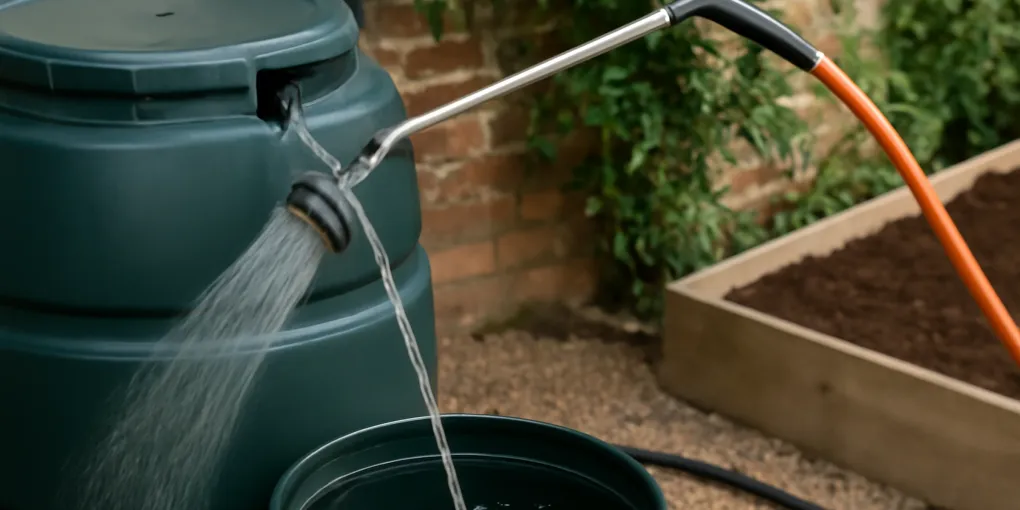
Buyer's GuideLow-flow shower watering wand with thumb shutoff
Best first pickUse Case: Gentle hand-watering from a raised barrel or short hose
Varies
Quick picks
| Product | Key Specs |
|---|---|
| See price on Amazon |
|
| See price on Amazon |
|
| See price on Amazon |
|
Product availability, certifications, and retailer details can change; check the current Amazon page before buying.
A rain barrel does not behave like a pressurized outdoor faucet. Even a barrel on a stand may deliver only a modest trickle once a hose, wand, and nozzle are attached. That is not a defect; it is the normal tradeoff of gravity storage. The right hand-watering setup keeps that low pressure useful instead of forcing it through a nozzle designed for municipal water.
If your only target is one elevated basket, start with how to water hanging baskets from a rain barrel before comparing a broader set of tools.
This guide is for gardeners who want to water containers, raised beds, seed trays, herbs, or a small vegetable patch from a rain barrel. If you need drip irrigation or a long hose run, start with rain barrel pump and drip irrigation setup. If you are still deciding how high the barrel should sit, read the rain barrel height and pressure guide. Here the job is simpler: pick a wand or nozzle that gives a gentle flow, closes cleanly, and does not turn low pressure into frustration.
Mini chooser: pick the least restrictive watering end
| CTA | Choose this when | Compatibility check |
|---|---|---|
| Search Amazon for low-flow watering wands | You water containers or seedlings from a short gravity-fed hose. | Prefer a broad shower head, simple thumb control, and removable screen for cleaning. |
| Search Amazon for hose shutoff and shower nozzles | You already like your wand but need a separate pause valve at the hose end. | Test the valve wide open; a narrow shutoff can choke barrel flow before the nozzle. |
| Search Amazon for water breaker roses | You want a gentle open-flow rose instead of a trigger sprayer. | Check hose or wand threads and avoid fine mist heads that need household pressure. |
Quick picks for barrel-fed hand watering
Use these as product categories and match them to your actual barrel height, hose length, and garden distance:
- Search Amazon for low-flow watering wands with thumb shutoff if you want one tool for containers and raised beds within a short walk of the barrel.
- Search Amazon for garden hose shutoff valves and soft shower nozzles when your current nozzle works but you waste water walking back to the spigot.
- Search Amazon for water breaker roses for low pressure for seedlings, loose potting mix, and recently transplanted starts that should not be blasted with a narrow jet.
What works differently on a rain barrel
Gravity pressure depends on vertical height. A full barrel sitting a few feet above the garden can feed a short hose; it cannot imitate a house spigot. Every restriction after the barrel matters: small hose diameter, long hose runs, kinked coils, quick-connect fittings, tiny spray holes, and decorative multi-pattern nozzles all reduce usable flow.
That is why the best barrel wand is usually boring. Look for a single gentle shower pattern, a face that can be cleaned, a comfortable handle, and a shutoff that actually stops flow. Avoid nozzles that advertise high-pressure jet, mist, fan, cone, or car-wash settings as the main selling point. Those patterns are designed around pressure you may not have.
A wand also changes how you use stored water. A soft shower lets you water soil without knocking mulch aside or exposing roots. A shutoff at the hand end lets you move between containers without losing the water sitting in the hose. A removable head matters because rain-barrel water can carry roof grit, pollen, and small screen bypass particles that clog fine openings.
Best first pick: low-flow shower wand with thumb shutoff
For most raised-barrel gardens, start with a simple shower wand that has a thumb or lever shutoff at the handle. The shutoff is not a convenience feature; it is a water-saving feature. If you pause at every pot, harvest bucket, or hose snag by walking back to the barrel spigot, you will waste water and patience.
A 16- to 24-inch wand is a good first range. It reaches into planters and across the front of a bed without becoming a lever that is hard to control. Extra-long wands are useful for wide beds, but they magnify every pressure loss and can feel clumsy when the flow is already slow.
Check the shower face before buying. Large, cleanable holes are better than a fixed fine mist plate. If the listing mentions a restrictor, make sure it is removable or at least not required for the nozzle to operate. Municipal-water nozzles sometimes include flow restrictors to save water at high pressure; on a rain barrel, that can make a usable trickle too slow.
Best control upgrade: a shutoff valve near the nozzle
If you already own a soft shower nozzle, the most useful upgrade may be a simple hose-end shutoff valve. Install it between the hose and the wand or nozzle. Open the barrel spigot, walk to the bed, and control starts and stops with one hand.
Choose a full-port valve if possible. A tiny internal opening can bottleneck the whole system. Brass valves are durable, but sturdy polymer valves can be easier on lightweight hoses and less likely to chew up soft threads. Keep spare rubber washers nearby; a slow drip at the hand end can empty a surprising amount of stored rainwater during a long session.
This setup is especially helpful for container clusters. You can give each pot a slow count, close the valve, step to the next pot, and reopen without dragging the hose back to the barrel. It also makes it easier to stop immediately if soil starts to float or run off the surface.
Gentlest option: water breaker rose
A water breaker rose spreads flow into many small streams. It is not the same as a mist nozzle. Mist patterns often need higher pressure and can drift in wind. A breaker rose should make a soft, rainlike shower that lands close to the plant.
Use this for seed trays, fresh transplants, shallow-rooted herbs, and potting mixes that crater under a narrow stream. The tradeoff is clogging. Roof-wash particles and organic debris can block small holes, so choose a head you can unscrew and rinse. If the barrel does not have an inlet screen, add one before blaming the wand.
Thread compatibility matters. Some roses are made for watering cans, some for professional greenhouse wands, and some for standard garden-hose threads. Check the connection before you buy, especially if you are mixing a consumer wand with a greenhouse-style breaker.
What to avoid
Skip pistol-grip nozzles where the best settings are jet, center, flat, mist, and cone. They are useful on a pressurized spigot, but many feel weak or uneven on a barrel. Also avoid very long expandable hoses for this job. They often need pressure to expand fully, and the smaller internal diameter can slow gravity flow.
Be cautious with quick-connect sets. They make tool changes easier but add small passages and extra leak points. If you use them, test the barrel with the exact hose, connector, and wand combination before planting season. A combination that looks fine on a house faucet may disappoint when attached to a half-full barrel.
Do not solve every slow-flow problem by buying another nozzle. If the hose is kinked, the barrel is almost empty, the stand is low, or the spigot screen is clogged, a new wand will not fix it. Raise the barrel safely, shorten the hose, clean the screen, or switch to a watering can for plants right beside the barrel.
How to test a wand before keeping it
Fill the barrel at least halfway and attach the exact hose you plan to use. Put the wand at the farthest plant you expect to water. Open the barrel spigot and the hand shutoff fully. You want a steady shower that wets soil without pulsing, sputtering, or falling apart into a single stream.
Then close the hand shutoff for 30 seconds. Check the handle, hose washer, and barrel spigot for drips. Reopen and see whether debris plugs the shower face. If the flow works only when the barrel is completely full, the setup may disappoint during dry spells when stored water is most valuable.
Finally, water a real container or one square foot of bed. Watch the soil, not just the nozzle. The best rain barrel wand is the one that lets water soak in where roots can use it.
How we judged the picks
| Criterion | Weight | What it means for a rain barrel wand |
|---|---|---|
| Research | 30% | Match the tool to gravity pressure, short hose runs, and gentle soil-level watering rather than faucet-pressure spray claims. |
| Evidence Quality | 25% | Trust a full-barrel and half-barrel flow test more than a listing that promises universal pressure performance. |
| Value | 20% | Buy the smallest upgrade that fixes the actual problem: shutoff control, softer shower, cleaner fitting, or shorter hose. |
| User Signals | 15% | Watch for soil cratering, slow container fill time, leaks at the handle, and clogging at the shower face. |
| Transparency | 10% | Prefer simple, cleanable parts with visible washers and threads over sealed multi-pattern heads that cannot be repaired. |
FAQ
Do watering wands work on a gravity-fed rain barrel?
Some do, but the best choices are simple low-flow wands, shower heads, or water breakers without pressure-compensating spray patterns. Multi-pattern nozzles often need more pressure than a barrel can provide.
Is a longer wand better for rain barrel watering?
Not always. A long wand helps reach the back of a bed, but it adds drag and can feel awkward when the barrel pressure is already low. A 16- to 24-inch wand is usually easier than an extra-long wand for small barrel-fed gardens.
Should I use a pump with a watering wand?
Use a pump only when you need sprinkler-like reach, long hose runs, or uphill watering. For containers and beds near a raised barrel, a simple shutoff valve and low-flow wand are usually cheaper and more reliable.
What fitting matters most at the wand end?
A dependable shutoff matters more than another spray pattern. It lets you pause between plants without walking back to the barrel and wasting stored rainwater.
Sources
- University of Georgia Extension, rainwater harvesting for homeowners: https://extension.uga.edu/publications/detail.html?number=B1372
- Rutgers New Jersey Agricultural Experiment Station, rain barrels and water conservation: https://njaes.rutgers.edu/fs1198/
- U.S. EPA WaterSense, outdoor water use and efficient watering: https://www.epa.gov/watersense/outdoors
- University of Minnesota Extension, watering vegetables: https://extension.umn.edu/water-wisely-start-your-own-backyard/watering-vegetable-garden