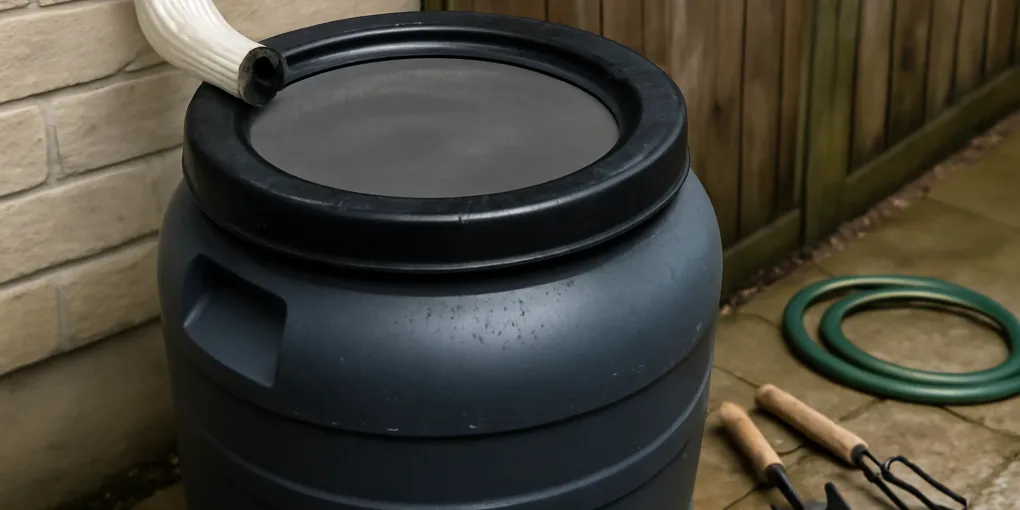
Universal rain barrel replacement lid
Best for missing coversUse Case: Covering an open barrel or replacing a cracked molded lid
$20-$60 typical
Quick picks
| Product | Key Specs |
|---|---|
| See price on Amazon |
|
| See price on Amazon |
|
| See price on Amazon |
|
| See price on Amazon |
|
Product availability, certifications, and retailer details can change; check the current Amazon page before buying.
A rain barrel lid does three jobs at once: it keeps people and animals out, blocks mosquitoes from standing water, and filters enough roof debris that the barrel does not become a leaf bin. The best replacement is not just the lid that looks closest in a product photo. It is the cover, screen, or basket that fits the barrel rim, accepts your downspout or diverter, and can be cleaned after a dirty storm.
If your current lid is cracked, missing, warped, or permanently clogged, fix that before upgrading pumps or drip kits. A barrel with an open top or torn mesh can turn routine roof runoff into algae, larvae risk, bad smells, and clogged spigots. CDC mosquito guidance is clear about reducing standing-water access around the home; a rain barrel should be a closed, screened water-storage system.
This guide focuses on lids, covers, inlet screens, and filter baskets. If your problem is debris entering before the lid, read the rain barrel leaf guard and gutter screen guide. If the barrel fills slowly even with a clean lid, recheck diverter height, hose slope, and gutter flow before replacing the cover.
Quick picks
Match the part to the failure you see first:
- Missing or cracked cover: Search Amazon for universal rain barrel replacement lids after measuring both the barrel rim and the needed downspout opening.
- Torn mosquito mesh: Search Amazon for rain barrel mesh screens if the lid frame is still sound but insects or roof grit can reach the water.
- Leaf-heavy downspout: Search Amazon for rain barrel inlet filter baskets when whole leaves, seeds, or shingle grit collect at the top after storms.
- Loose open-top drum: Search Amazon for rain barrel locking lid clamp parts when wind, pets, or children could lift the cover.
Do not buy a decorative cover unless it solves the measured fit, screen, and cleaning problem. Empty template space on the lid is less important than a reliable seal around the inlet and overflow.
What a good rain barrel lid must do
A useful lid keeps the barrel covered without blocking the water that should enter. That sounds obvious until the first maple seeds, pollen sheets, pine needles, and shingle granules arrive. A lid that is too open invites debris and mosquitoes. A lid that is too fine can clog during a storm and send water over the rim.
Look for four details: rim fit, screened inlet, removable cleaning access, and safe overflow clearance. The lid should sit securely on the barrel, not wobble on a curved rim. The inlet should keep debris out while letting roof runoff enter. The screen or basket should lift out for rinsing. The overflow should still operate when the barrel reaches full.
Rutgers and Penn State Extension rain-barrel guidance both emphasize covered barrels, screens, and maintenance. Treat the lid as part of the plumbing system, not as a cosmetic cap.
Replacement lids: best when the original cover is gone or cracked
A replacement lid is the right buy when the molded cover is broken, missing, warped, or too unsafe to repair. The hard part is fit. Many barrels are round, but their rim shapes differ: rolled plastic rims, threaded drum tops, decorative molded lips, and open-top converted food-grade drums all accept different covers.
Search Amazon for universal rain barrel replacement lids
Measure before ordering. Record the outside diameter, inside opening, rim thickness, and where the downspout or diverter hose has to enter. If the old lid used locking tabs or a clamp band, check whether the replacement can secure to the same rim. A lid that simply rests on top may blow off or shift during overflow.
Best for: barrels with damaged covers where the container itself is still sound. Watch for: vague dimensions, photos that do not show the underside, and lids that require a custom inlet cutout without leaving room for a screen.
Mesh screens: best for mosquito and fine-debris control
A mesh screen can repair a lid that is structurally fine but no longer blocks insects or roof grit. It is also useful for DIY barrels where the top opening needs a screened patch under a downspout. The screen should be fine enough to block mosquito access but strong enough to survive sun, cleaning, and water flow.
Search Amazon for rain barrel mesh mosquito screens
The cleaning method matters. If the mesh is glued or trapped under a heavy part, you may avoid mosquitoes but create a new clog point. Prefer a frame, clamp, or removable section that can be rinsed from below. Fine mesh catches pollen film; that is good for water quality but bad for flow if nobody cleans it.
Best for: torn screens, DIY openings, and barrels near mosquito-prone patios. Watch for: UV resistance, sagging mesh that touches standing water, and gaps around the edge where mosquitoes can still enter.
Inlet filter baskets: best when leaves reach the lid
A filter basket is a small removable debris catcher at the point where roof runoff enters. It is more serviceable than a flat screen because you can lift the basket, dump leaves, and rinse grit without disassembling the whole lid. It is especially useful under trees or near gutters that shed seeds and roof granules.
Search Amazon for rain barrel inlet filter baskets
Choose a basket that fits the lid cutout and still lets water bypass safely if the basket clogs. A deep basket can hold more leaves, but it may interfere with the water level, float gauge, or pump hose inside the barrel. A shallow basket is easier to clean but may overflow faster in leaf season.
Best for: visible debris loads and barrels that smell or clog because solids drop inside. Watch for: a handle you can reach, enough depth for the roof debris you actually see, and no sharp plastic edge that tears mesh.
Locking lids and clamp bands: best for open-top conversions
Converted drums and DIY barrels need extra attention. A loose lid on an open-top drum can become a safety problem, especially in a shared yard. A clamp band, locking lid, or secure fitted cover can keep the barrel closed while still allowing access for seasonal cleaning.
Search Amazon for rain barrel locking lid clamp band parts
Do not improvise with a heavy board, loose paver, or plastic sheet. Those can shift, trap water on top, invite mosquitoes, or make cleaning harder. The cover should be secure, smooth-edged, and compatible with the inlet and overflow plan.
Best for: open-top drums, barrels in windy yards, and installations where pets or children may reach the cover. Watch for: pinch points, rust-prone hardware, and parts that block overflow maintenance.
Fit checks before buying
Take photos and measurements before ordering. Measure the barrel rim, not just the barrel body. Check whether the inlet is centered, offset, or tied to a downspout diverter hose. Confirm the overflow location. If a gauge, pump cord, or linking hose already passes through the lid, include those holes in the plan.
Also decide how often you are willing to clean the part. A fine mesh screen in a pine-heavy yard may need weekly attention during pollen and seed drop. A coarser basket may fill with leaves but rinse quickly. A replacement lid with no removable inlet can look tidy and still be a bad maintenance choice.
If you are adding a new lid to solve smell or algae, clean the barrel first. The algae and smell cleaning protocol covers the inside work that a new cover cannot undo by itself.
Installation and first-storm test
Install the lid with the barrel empty or partly empty. Make sure the lid cannot slide into the barrel. Check that the inlet, screen, basket, and overflow all line up before the next storm. Then run a hose test at low flow and watch for water pooling on top, splashing around the opening, or leaking through an unintended gap.
After the first real rain, remove and inspect the screen or basket. If it is packed with leaves, move some filtration upstream with a gutter screen or downspout prefilter. If it is almost clean but the barrel stayed low, the lid may not be the cause; inspect diverter height, hose slope, and gutter flow.
A good lid is boring after installation. It stays in place, keeps the water covered, lets runoff enter, and reminds you to clean a small removable part instead of scooping debris from the bottom of the barrel.
FAQ
Can I use a rain barrel without a lid?
No for normal residential use. An open barrel collects leaves, algae-promoting debris, and mosquito access, and it creates an avoidable safety hazard. Use a fitted cover plus screened inlet and overflow openings.
What mesh size is best for a rain barrel screen?
Choose mesh fine enough to block mosquitoes and roof debris, but not so fine that every storm clogs it immediately. The practical test is whether water can enter during heavy rain after leaves and pollen land on the screen.
Will a universal rain barrel lid fit any barrel?
No. Diameter, rim shape, locking tabs, inlet location, and overflow clearance all matter. Measure the barrel rim and compare the product photos or dimensions before ordering.
Should the inlet screen be removable?
Yes. Screens and baskets collect grit, seed pods, and pollen film. If you cannot remove or rinse the screen, it can become the reason the barrel fills slowly.
Sources
- CDC, Mosquito prevention around standing water: https://www.cdc.gov/mosquitoes/prevention/index.html
- Rutgers Cooperative Extension, Rain Barrels: https://njaes.rutgers.edu/fs1118/
- Penn State Extension, Rain Barrels: https://extension.psu.edu/rain-barrels
- University of Georgia Extension, Rainwater Harvesting for Homeowners: https://extension.uga.edu/publications/detail.html?number=B1372
If you are comparing a fitted cover for a 275-gallon/1000L IBC tote rather than a round-barrel lid, use our IBC tote cover comparison to check stated dimensions, fabric labels, and access openings.