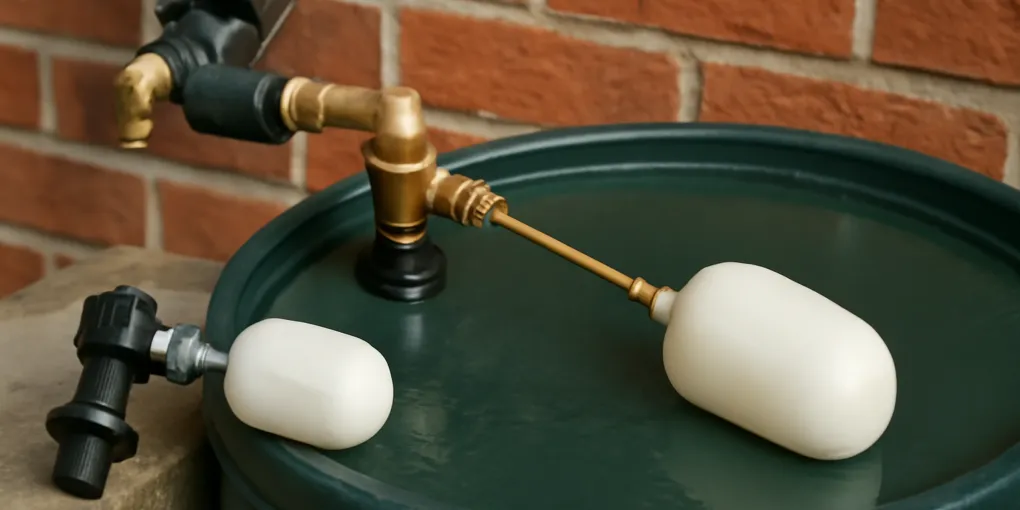
Best Rain Barrel Float Valves and Auto-Shutoff Kits for Overflow Control
Buyer's GuideRain barrel float valve kit
Best inside-barrel shutoffBest For: Covered barrels with a side inlet or feed line that can be stopped mechanically
$12-$35 typical
Quick picks
| Product | Key Specs |
|---|---|
| See price on Amazon |
|
| See price on Amazon |
|
| See price on Amazon |
|
Product availability, certifications, and retailer details can change; check the current Amazon page before buying.
A rain barrel float valve is a small part with a very specific job: stop or redirect incoming water when the barrel reaches a set level. It is not a substitute for a real overflow route. The best setup uses the float or diverter as the first control and a visible overflow hose or downspout bypass as the backup when debris, poor alignment, or a heavy storm overwhelms the valve.
For most homeowners, the choice is between an inside-barrel float valve, a downspout diverter that bypasses the barrel when it fills, and a larger overflow fitting that simply gives excess water a safe place to go. If your barrel sits near siding, a basement wall, a patio door, or a walkway, prioritize overflow capacity and cleanable parts over a tiny valve that looks tidy in product photos.
Quick picks
- Best inside-barrel control: Search Amazon for rain barrel float valves if your inlet hose can connect to a valve mounted through the barrel wall.
- Best downspout-side option: Search Amazon for auto-bypass downspout diverters when you want excess roof water to keep moving down the original downspout path.
- Best failure backup: Search Amazon for rain barrel overflow hose kits before relying on any float valve near a building.
If you are still designing the drainage path, pair this with our guides to overflow routing away from the foundation, downspout diverter kits, and rain barrel stand stability.
What matters most in a float-valve setup
Treat the valve as one controlled inlet part, not as the whole overflow plan. A useful kit should state the thread size, show the float arm or float-cup travel, include a gasketed bulkhead or clear mounting method, and leave enough room inside the barrel for the float to rise without hitting the wall, lid, screen, or downspout hose. Check whether the valve can be cleaned if roof grit, pollen, or seed pods reach it.
Skip any setup that implies a small shutoff valve replaces overflow drainage. A compact barrel still needs a screened inlet, a dependable overflow route away from the foundation, and access to inspect the valve after the first heavy storm.
What a float valve can and cannot do
A float valve works by lifting a buoyant arm or float as the water level rises. At the set height, the valve closes the inlet. That can work well when the incoming water is already filtered and enters through a controlled hose. It is less reliable when leaves, grit, asphalt granules, pollen, or seed pods ride directly from a roof into the valve body.
The valve also does not make roof runoff disappear. Once a barrel is full, the next storm gallon still needs a path. Rutgers Cooperative Extension and Penn State rain-barrel guidance both emphasize screened inlets, overflow planning, and safe discharge away from problem areas. Treat the float as a convenience control, then design the overflow path as if the float is stuck open.
Pick 1: rain barrel float valve kit
A float valve kit makes the most sense when your barrel is closed, the inlet is a small hose, and you can mount the valve at the water level you want. Look for a corrosion-resistant arm, a replaceable washer, a gasketed mounting point, and enough clearance that the float cannot scrape the barrel wall, lid, inlet basket, or pump hose.
Search Amazon for rain barrel float valve kits
Check the valve opening before buying. A valve designed for clean livestock trough water may not love roof debris. If your system catches water from a tree-covered roof, add a downspout pre-filter or inlet basket upstream so the valve sees cleaner water. A clogged open valve can still flood the barrel. A clogged closed valve can leave the barrel empty after a storm.
Pick 2: auto-bypass downspout diverter
A downspout diverter with automatic bypass is often cleaner than putting a float valve inside the barrel. In many designs, water flows into the barrel until it reaches the diverter hose height. When the barrel fills, water backs up to the diverter and continues down the downspout instead of pouring from the barrel lid.
Search Amazon for rain barrel downspout diverters with overflow bypass
This option depends on careful height alignment. The diverter, hose, and barrel inlet must match the manufacturer’s diagram. If the hose sags, the barrel inlet is too low, or the downspout outlet is blocked, water may not bypass cleanly. Before the first real storm, test with a hose and watch where water goes after the barrel reaches the overflow level.
Pick 3: bulkhead overflow hose kit
Even if you use a float valve or diverter, a separate overflow port is cheap insurance. A large-diameter bulkhead fitting near the top of the barrel lets excess water leave through a hose you can point toward a rain garden edge, splash block, swale, or safe downhill area.
Search Amazon for rain barrel bulkhead overflow hose kits
Bigger and simpler is usually better here. The overflow hose should slope continuously, avoid tight kinks, and stay visible enough that you can spot clogs. Do not run a flat hose across a walkway where it can hold water, freeze, or create a trip hazard. If the barrel is beside a foundation, this overflow path is building protection.
Fit checks before you buy
Measure the downspout, barrel wall thickness, inlet height, and the space inside the lid. Many float-valve complaints come from buying a valve that technically threads into a hole but leaves the float arm jammed against a curved barrel wall. Leave room for the lid, screen, pump hose, and any water-level gauge.
Decide whether the valve will ever need winter removal. Small valves and diverter hoses can trap water and crack in freezing conditions. If you live where barrels are winterized, favor parts that disconnect without cutting tubing and keep spare washers in a labeled bag.
Finally, think about maintenance access. A buried or hidden shutoff may look clean, but roof-water parts need inspection. You should be able to open the lid, lift the screen, clean the valve opening, and confirm the overflow route without disassembling the entire barrel.
When to skip the float valve
Skip the inside-barrel valve if the roof drops water through an open screened lid, the barrel wall is too curved for a flat gasket, or the float would sit directly under the inlet stream. In those cases, an auto-bypass diverter plus a large overflow hose is usually easier to clean and less likely to jam. A decorative barrel with a narrow top opening is another poor candidate because you may not be able to reach the valve seat after leaf grit collects around it.
Also skip the valve if you cannot test it at full flow. A garden-hose trickle proves the float moves, but it does not prove the downspout can bypass during a hard storm. Fill the barrel, keep water running, and watch the downspout, lid, overflow port, and discharge area for several minutes. If water appears at the lid seam or against siding before the backup route carries it away, the shutoff design is not ready.
Setup mistakes that cause overflow anyway
The first mistake is mounting the valve too high. Leave air space and a backup overflow below the lid so the barrel does not press water into seams, screen openings, or mosquito gaps. The second mistake is using a tiny drip-irrigation valve as a roof-water control. Drip parts are made for filtered irrigation water, not dirty gutter flow.
The third mistake is forgetting that a downspout can deliver more water than the valve can pass or stop during a heavy storm. EPA WaterSense notes that outdoor water use and rain capture depend on local climate and landscape conditions; the same practical point applies to overflow. A roof can fill a 50-gallon barrel quickly, and the rest of the storm still needs a drainage path.
FAQ
Do I need a float valve on every rain barrel?
No. Many rain barrels work better with a screened inlet, a correctly placed diverter, and a large overflow hose. A float valve is useful when the inlet is a controlled hose or when you need the barrel to stop filling at a specific level.
Can a float valve replace an overflow hose?
No. Use an overflow hose or downspout bypass anyway. Debris, misalignment, freezing damage, or a sticky valve can leave the valve open, and roof water still needs a safe route after the barrel is full.
Where should the float shut off the water?
Set it below the lid and below any screen gaps, with enough freeboard that wind, splashing, and a short surge do not push water out of the barrel. Keep the separate overflow port at or just below the practical full line recommended by the barrel design.
Will a livestock float valve work in a rain barrel?
Sometimes, but check the thread size, flow opening, float clearance, and debris tolerance. Roof runoff is dirtier than clean supply water, so a pre-filter or inlet screen matters more than it would in a trough.
What is the safest auto-shutoff setup near a foundation?
Use a downspout diverter that can bypass the full barrel, plus a visible overflow hose routed away from the foundation. Add a float valve only if it fits the inlet design and remains easy to inspect.
Sources
- Rutgers Cooperative Extension, Rain Barrels
- Penn State Extension, Rain Barrels
- EPA WaterSense, Outdoor Water Use in the United States