Quick picks
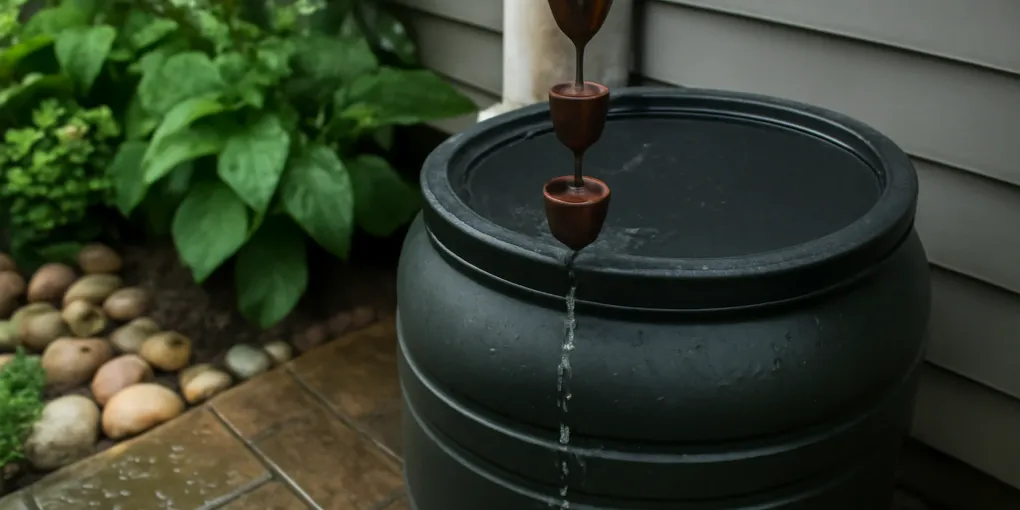
Rain chain basin with screened barrel inlet
★ Top pick Best controlled capture- Best for: Low eaves where the chain can end directly above a covered barrel or basin
- Check first: The inlet still needs a tight mosquito screen and a separate overflow route.
Rain barrel downspout diverter kit
Best reliable alternative- Best for: High roofs, windy corners, heavy storms, or locations close to the foundation
- Check first: A diverter is usually less decorative but captures water with less splash.
Decorative river rock splash basin
Best splash control- Best for: Softening water impact below a chain before it reaches a screened barrel opening
- Check first: Rock basins are not filters; keep sediment and leaves out of the stored water.
A rain chain can feed a rain barrel, but it is less forgiving than a downspout. A downspout keeps water inside a pipe until it reaches the diverter or inlet. A rain chain exposes the flow to wind, splash, and leaf debris. That means the setup has to control three things before it is useful: the chain must land above the barrel or a capture basin, the inlet must stay screened, and the overflow must still route water safely after the barrel is full.
The best use case is a low roof edge over a garden area where the chain hangs straight, the barrel can sit close to the drop point, and overflow can discharge away from the house. The worst use case is a tall, windy corner beside a basement wall. In that case, a normal downspout diverter is usually the safer and cleaner rain-barrel connection.
Quick picks
- Best decorative capture setup: Search Amazon for rain chain basins and screened rain barrel inlets when the chain can end directly above a covered barrel.
- Best reliable fallback: Search Amazon for rain barrel downspout diverter kits if wind, height, or foundation risk makes open-chain capture messy.
- Best splash control: Search Amazon for river rock rain chain splash basins when the chain needs a stable landing zone before water reaches the screen.
For nearby setup choices, compare our downspout diverter kit guide, downspout adapters for tight spaces, and overflow routing guide.
Setup buying checks
A rain chain can feed a barrel only when splash, overflow, and inlet coverage are controlled. Check:
- Roof volume: large roof areas or wind-exposed corners usually need a downspout diverter instead of a decorative chain.
- Inlet cover: the chain should land over a screened inlet, not inside an open barrel.
- Splash base: use stone, basin, or diverter parts that keep water away from siding and walking paths.
Step 1: decide whether the chain should feed the barrel at all
Use a rain chain only when you can watch and correct the first few storms. The chain should hang plumb, with the bottom close enough to the barrel inlet or basin that water does not blow sideways. If the chain is more than a few feet above the inlet, or if the corner catches strong wind, capture will be inconsistent.
A rain chain also needs room. The barrel cannot block a walkway, door swing, utility access, or downspout cleanout. A full 50-gallon barrel can weigh more than 400 pounds, so the base must be level and compacted before the chain is connected. If the only possible barrel location is tight against siding or a foundation, keep the downspout and use a diverter instead.
Step 2: keep the roof outlet and chain clean
A chain does not filter water. Leaves, roof grit, seeds, and bird droppings still move toward the barrel unless you stop them earlier. Clean the gutter section that feeds the chain, then add a gutter screen or outlet strainer if debris is visible after storms. The cleaner the roof outlet, the less sludge collects at the barrel inlet.
Search Amazon for gutter screens for rain chain outlets
Do not rely on a decorative cup chain to catch debris. Cups can slow flow and look tidy, but they can also hold leaves and organic matter. If the chain has cups, inspect them during leaf season and after pollen-heavy storms.
Step 3: land the chain over a covered, screened inlet
The safest barrel connection is a covered lid with a tight screen or recessed inlet basket. The chain should end just above that screened area, not inside open stored water. Keep a small air gap so the chain can move slightly without rubbing a hole in the mesh or transmitting weight to the lid.
Search Amazon for screened rain barrel inlet baskets
If the chain lands in a basin before the barrel, the basin should drain quickly into the screened inlet and should not hold stagnant water. Decorative stones can reduce splash, but they are not a substitute for a mosquito-tight screen. Any standing pocket around the basin needs drainage or regular emptying.
Step 4: control splash before it reaches siding or paths
Splash is the main rain-chain problem. A hard storm can make water bounce off the chain, stones, and barrel lid. Keep the landing zone away from wood siding, basement windows, doors, and slick walking paths. Use a wide basin, flat pavers, or river stone to break the fall, then watch the first storm from a safe spot.
Search Amazon for river rock rain chain splash basins
After the storm, look for muddy streaks, wet siding, washed-out mulch, or puddles beside the base. Those are signs that the chain is too high, too exposed to wind, or too close to the house. Fix the splash pattern before trusting the barrel during a larger rain.
Step 5: give the full barrel a separate overflow route
A rain chain only handles incoming water. It does not solve what happens after the barrel fills. Install an overflow hose or outlet near the top of the barrel and route it to daylight, a safe splash area, or a rain-garden edge. The overflow should not dump back under the chain where it can splash against the wall.
Search Amazon for rain barrel overflow hose kits
Test the overflow with a hose. Fill the barrel until water exits the overflow, then confirm that it moves away from the building without backing up through the inlet. If the barrel has a small overflow fitting, check whether it can handle the roof area. A decorative chain on a large roof can fill a barrel quickly.
When a downspout diverter is the better choice
Use a downspout diverter instead of a rain chain when the roof is high, the site is windy, the barrel sits near a foundation, or the gutter handles a large roof area. A diverter keeps the water enclosed, usually captures more flow, and makes it easier to send excess water down the original downspout or a planned overflow route.
Search Amazon for rain barrel downspout diverter kits
A diverter is also easier to winterize in many climates. You can disconnect the fill hose, cap the barrel inlet, and return flow to the downspout. A rain chain may still need seasonal removal or anchoring so ice and wind do not damage the gutter outlet.
First-storm checklist
Before the first real storm, fill the barrel partway with a hose and check for leaks at the inlet, spigot, and overflow. During the storm, confirm that most water follows the chain into the screen or basin. After the storm, inspect the wall, base, and path for splash. If anything is wet where it should be dry, adjust the chain height, move the barrel, or switch back to a diverter.
Keep a simple cleaning routine. Empty leaves from the gutter outlet, rinse the inlet screen, and remove sediment from the basin before it compacts. If the barrel water smells bad or the inlet screen clogs quickly, use our rain barrel algae and smell cleaning protocol before adding more parts.
FAQ
Will a rain chain fill a rain barrel as well as a downspout?
Usually no. A chain can work on a low, sheltered roof edge, but wind and splash reduce capture. A downspout diverter is more reliable when you need maximum water collection or cleaner routing near the house.
Should the rain chain go inside the barrel?
No. End the chain above a screened inlet or draining basin. Dropping the chain into stored water can damage the screen, add debris, and create gaps where mosquitoes can enter.
Can I use a rain chain with a mosquito-proof barrel?
Yes, if the lid, inlet, overflow, and hose openings stay screened or sealed. The chain itself does not stop mosquitoes. The barrel opening under the chain still needs tight mesh and regular cleaning.
What should I check after the first storm?
Look for water on siding, mud washed from the base, puddles beside the foundation, leaves packed on the inlet screen, and overflow that dumps too close to the house. Fix those issues before the next heavy rain.
Sources
- EPA WaterSense, Outdoor Water Use in the United States
- Rutgers Cooperative Extension, Rain Barrels
- Penn State Extension, Rain Barrels