Quick picks
Rain barrel downspout diverter kit for small roofs
★ Top pick Best controlled inlet- Best for: Sheds and garages with a standard gutter downspout and a covered barrel
- Check first: Match the diverter to downspout size and keep the barrel overflow route separate.
Rain barrel inlet screen and debris basket
Best open-inlet protection- Best for: Short shed gutters that discharge directly into the barrel lid
- Check first: Screens still need cleaning after pollen, roof grit, and leaf drop.
Rain barrel overflow hose kit
Best foundation protection- Best for: Routing excess shed-roof runoff to daylight, a rain garden edge, or a safe splash area
- Check first: The hose needs continuous fall and enough capacity for heavy storms.
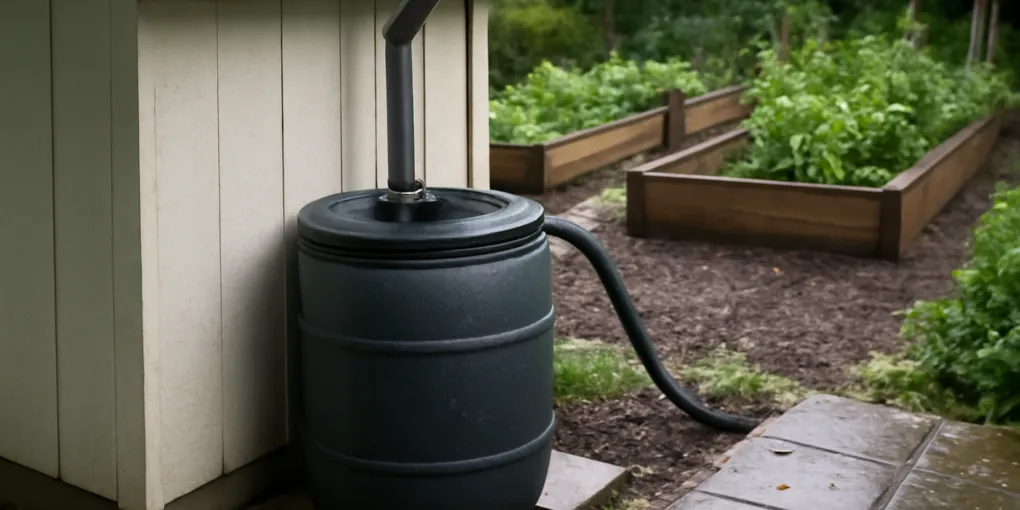
A shed or detached garage can be a good rain-barrel source because the roof is close to the garden and often easier to modify than the main house. The setup is still a small drainage system. You need a sound gutter, a screened inlet, a stable base, and an overflow route that handles the storm after the barrel is full.
The safest approach is to keep the barrel close to the shed, low enough to stay stable, and far enough from walls and paths that overflow and hose leaks are visible. Use the water for ornamentals, trees, and soil-level watering. Be more cautious with edible crops, especially leafy greens and anything eaten raw, because roof runoff can carry debris, bird droppings, metals, and shingle residue.
Quick picks
- Controlled fill from a downspout: Search Amazon for small-roof diverter kits when the shed has a standard downspout and a covered barrel.
- Open-lid debris control: Search Amazon for rain barrel inlet screens and baskets if a short gutter outlet drops directly into the barrel lid.
- Overflow routing: Search Amazon for rain barrel overflow hose kits before the first storm, not after you see water cutting a trench beside the shed.
For related parts, see our guides to downspout adapters for tight spaces, overflow routing away from foundations, and mosquito screens and dunks.
What matters most in a shed-roof setup
Small roofs can still fill a barrel quickly, so start with roof area, gutter size, and overflow route. The parts should match the downspout, include a cleanable screen or diverter, and give you enough hose or fittings to send excess water away from shed skids, garage slabs, doors, and walkways.
Durability matters because outbuildings often get less attention than the house. Choose weather-resistant hose fittings, a stable base, and a barrel position you can inspect after storms without crawling behind tools, bikes, or stored lumber.
Step 1: estimate whether the shed roof can fill the barrel
A small roof can fill a barrel faster than many owners expect. One inch of rain on 100 square feet of roof produces about 62 gallons before losses. A modest 8-by-10-foot shed has 80 square feet of plan area, so a full inch of rain can nearly fill a 50-gallon barrel. A garage bay or long lean-to can overflow even faster.
This estimate matters because it changes the design priority. If the roof is tiny, you may care most about capturing enough water. If the roof is larger than the barrel, the overflow route becomes the main safety feature. Do not connect a roof edge to a barrel unless you know where the water goes after the barrel is full.
Step 2: fix the gutter before adding the barrel
A rain barrel will not rescue a sagging gutter. Clean the shed gutter, tighten hangers, and confirm that water moves toward the outlet instead of pooling in the middle. A short test with a hose is enough: water should move to the outlet, enter the diverter or inlet, and leave no standing section full of leaves.
For a shed without gutters, add a simple gutter run before choosing the barrel. Letting roof water fall from a drip edge into an open barrel invites splash, missed capture, and mosquito-friendly debris. A controlled gutter also makes it easier to disconnect the system for winter.
Step 3: choose a diverter or screened open inlet
A downspout diverter is the cleaner option when the shed has a standard downspout. It sends water through a side hose into a covered barrel and can let excess water continue down the downspout when the barrel fills, depending on the design. Match the kit to the downspout size and place the barrel inlet at the height the diverter instructions require.
Search Amazon for rain barrel downspout diverter kits
A screened open inlet is simpler when the gutter outlet ends directly above the barrel lid. Use a tight screen or debris basket, keep the lid covered, and plan for cleaning. Shed roofs collect pollen, grit, seeds, and leaf fragments that can clog a spigot or drip kit if they enter the barrel.
Search Amazon for rain barrel inlet screens and debris baskets
Step 4: build a low, level base
Set the barrel on a compacted, level pad before connecting the gutter. A full barrel is too heavy to reposition casually. Pavers are usually better than bare soil because they spread the load and make settling easier to spot. If you need spigot clearance, use a low stand rather than a tall stack of blocks.
The base should be wider than the barrel or stand and should drain away from the shed wall. Check level in two directions. Then place the empty barrel, push gently from several sides, and correct any wobble before adding water.
For more detail on stable elevation, use our rain barrel stand-height and base guide.
Step 5: route overflow like the barrel is already full
Overflow is not optional on a shed roof. Once the barrel fills, the rest of the storm still lands on the roof. Route overflow to daylight, a rain garden edge, a splash block, or another safe drainage path where water will not undermine the shed, cross a walking path, or flow toward a basement wall.
Search Amazon for rain barrel overflow hose kits
Keep the overflow hose large enough, sloped, and clear. A long flat hose can hold water, clog with debris, or freeze. If the barrel sits beside a garage or finished shed, treat overflow as building protection, not a garden accessory.
Step 6: screen for mosquitoes and sediment
Every opening needs a screen. Mosquitoes can use tiny gaps, and shed systems often get opened repeatedly during setup. Check the lid, inlet, overflow port, and any unused knockouts. If your local guidance allows mosquito dunks for rain barrels, use them according to the label and still fix the gap that let insects in.
Sediment is the second problem. Roof grit settles at the bottom and can clog a hose, spigot washer, or drip emitter. Raise the outlet slightly above the barrel bottom, use a cleanable inlet basket, and flush the barrel when the bottom layer gets dirty.
Step 7: decide where the water is safe to use
Use shed-roof rainwater conservatively. It is useful for ornamentals, shrubs, trees, and soil-level watering. Avoid drinking it, washing produce with it, or spraying it onto edible leaves. Roof runoff can contain animal waste, asphalt shingle particles, metals from flashing, pollen, and other contaminants.
If you use it near vegetables, apply it to soil around non-leafy crops and wash produce with potable water. Do not use runoff from roofs treated with chemicals, fresh sealants, moss killers, or questionable coatings. Extension rain-barrel guidance generally treats roof runoff as non-potable water that needs careful placement, not as household water.
For a deeper garden-safety discussion, read our rain barrel vegetable garden setup guide.
Step 8: test before trusting a storm
Use a hose to test the system in stages. First, run water into the gutter and confirm that the diverter or inlet catches it. Second, fill the barrel halfway and inspect the base, spigot, and fittings. Third, fill to the overflow level and watch the overflow path for several minutes.
After the first real storm, inspect again. Look for washed-out soil near the shed, water stains on siding, a clogged inlet basket, mosquito access, and a barrel that shifted on the base. Fix those small failures before the next forecast, because the second storm usually arrives before the first setup mistake is forgotten.
FAQ
Is a shed roof big enough for a rain barrel?
Often, yes. One inch of rain on 100 square feet of roof can produce about 62 gallons before losses, so even a small shed can fill a standard barrel during a good storm. The limiting factor is usually overflow control, not capture volume.
Can I use rainwater from a shed roof on vegetables?
Use caution. Shed-roof runoff is not potable and can carry debris or contaminants from roofing materials and animals. If you use it near edibles, apply it to soil, avoid spraying leaves or harvestable parts, and wash produce with potable water.
Do I need a first-flush diverter on a shed rain barrel?
A first-flush diverter can help when the roof is dusty, under trees, or used for higher-risk garden areas, but it does not replace screening, cleaning, or safe water-use limits. For a very small ornamental-garden setup, a cleanable inlet screen and conservative use may be enough.
What should I do with the shed rain barrel in winter?
Disconnect it before hard freezes, drain the barrel and hoses, and leave the gutter outlet able to send water away from the shed. Small diverter hoses, sight tubes, and overflow lines are especially vulnerable to trapped water and cracking.
Sources
- EPA WaterSense, Outdoor Water Use in the United States
- Rutgers Cooperative Extension, Rain Barrels
- Penn State Extension, Rain Barrels