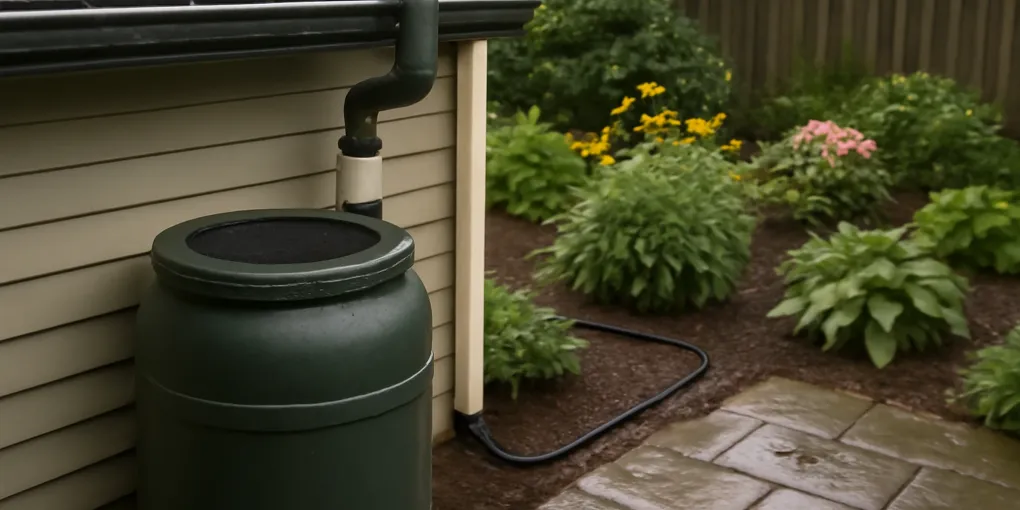
Asphalt Shingle Roof Rain Barrels: Safety Checks Before You Water the Garden
Evidence ExplainerQuick picks
First-flush diverter or downspout pre-filter
★ Top pick Best first upgrade- Use Case: Reducing the dirtiest early roof wash before it reaches the barrel
- Best For: Asphalt shingle roofs with trees, grit, pollen, or visible roof granules
- Watch For: Downspout size, cleanout access, winter drainability, and enough vertical room
Fine inlet screen and sealed lid kit
Best mosquito and debris control- Use Case: Keeping leaves, shingle grit, insects, and mosquito access out of stored water
- Best For: Open-top conversions, reused drums, and barrels under trees
- Watch For: Mesh support, secure lid fit, overflow screening, and easy cleaning after storms
Low-pressure drip kit for soil watering
Best safer-use layout- Use Case: Putting roof runoff on soil near plants instead of spraying edible leaves
- Best For: Ornamental beds, fruit trees, and vegetable beds where contact can be controlled
- Watch For: Filter access, emitter spacing, low-pressure rating, and zone shutoffs
Asphalt shingle roofs are common, which means many backyard rain barrels collect water from them. That does not make the stored water the same as tap water. It is roof runoff that may carry shingle granules, dust, pollen, bird droppings, leaf tannins, metals from flashing, and whatever washed through the gutter during the first few minutes of rain.
That does not mean an asphalt-roof rain barrel is useless. It means the setup and the use case matter. The safest fit is usually ornamental beds, trees, shrubs, and soil-level watering where runoff does not touch the edible part of the crop. The riskiest fit is spraying water from an old, dirty, open barrel onto lettuce, herbs, strawberries, or anything eaten raw.
If you are still deciding where the barrel belongs, start with our rain barrel location checklist and overflow routing guide. A safer water-use plan still needs a stable base, covered inlet, and overflow that moves water away from the house.
Quick picks
Use asphalt-shingle roof runoff as non-potable water. Keep the barrel covered, screen the inlet, clean the gutter path, send the first dirty wash away when practical, and water at soil level. Do not drink it. Do not connect it to household plumbing. Avoid spraying edible leaves and fruit. If a crop or person needs potable-quality water, use a potable source instead.
For most homeowners, the first purchases are practical rather than fancy:
- Search Amazon for rain barrel first-flush diverters if the roof sheds visible grit or the barrel catches heavy tree debris.
- Search Amazon for rain barrel inlet screens if leaves, mosquitoes, or shingle granules can reach stored water.
- Search Amazon for low-pressure gravity drip kits when you want soil-level watering instead of spray.
What asphalt shingles change
An asphalt shingle roof can shed mineral granules as it ages. Those granules often collect in gutters, downspouts, screens, and barrel bottoms. They are a maintenance issue because they clog spigots and filters, but they are also a reminder that roof runoff has touched building materials before it reaches the garden.
Roof age, shade, overhanging trees, nearby traffic dust, chimney deposits, moss treatments, and gutter condition all change the water. A newer roof with clean gutters under open sky is not the same as an old roof under maples with roof stains and piles of decomposing leaves. The barrel cannot tell those cases apart, so the setup should assume runoff needs screening, settling, and careful use.
Rutgers Cooperative Extension notes that rain barrel water is generally intended for non-potable outdoor use, while EPA rain-barrel guidance focuses on covered storage and safe overflow. Those are conservative guardrails, not technicalities. Treat the barrel as a garden water source, not a food-safety device.
The food-garden rule: control contact
The most important decision is not whether the roof is asphalt, metal, or tile. It is whether roof runoff contacts the edible part of the crop. Soil-level watering around tomatoes, peppers, fruit trees, flowers, shrubs, and ornamental beds is a more reasonable use than spraying leafy greens.
Use drip tubing, a short hose at the soil line, or a watering can aimed low. Keep stored water off lettuce, spinach, basil, strawberries, and anything eaten raw from the surface that gets wet. If you use roof runoff around vegetables, stop using it close to harvest when contact is hard to avoid, and wash produce with potable water.
A low-pressure drip layout helps because it makes the safer behavior automatic. It also uses barrel water more slowly than a spray nozzle. See our rain barrel raised bed watering layout if you are splitting water across multiple beds.
When a first-flush diverter is worth it
A first-flush diverter sends the first portion of a storm away from the barrel. That early wash often carries the most pollen, dust, bird droppings, roof grit, and gutter debris. A diverter is most useful when the downspout drains a large roof section, the gutter fills with leaves, the barrel sits under trees, or the barrel water often smells earthy after storms.
It is not a magic filter. It needs to be sized, cleaned, and drained. If the diverter fills with sludge and never empties, it becomes another dirty container in the system. Look for cleanout access, a drain that will not freeze shut, and a shape that fits your downspout without creating a leak at the house wall.
Search Amazon for first-flush diverters and downspout pre-filters
Best for: shingle grit, heavy pollen, dirty gutters, and barrels used near food gardens. Watch for: vertical clearance, downspout shape, cleanout caps, winter draining, and whether the first flush can discharge somewhere that will not erode soil or ice a walkway.
Screens, lids, and sediment matter more than labels
A covered barrel with a tight screen is a basic safety requirement. The screen catches leaves and roof grit before they sink. The lid keeps children, pets, wildlife, and mosquitoes out. The overflow opening also needs screening because mosquitoes can enter there even when the top looks sealed.
CDC mosquito guidance focuses on covering or removing standing water around homes. A rain barrel is intentionally stored standing water, so it needs better control than a bucket forgotten behind the shed. Inspect the inlet after storms. If the screen bows under wet leaves, add a stronger support ring or clean it more often.
Sediment will still collect at the bottom. Leave the lowest sludge layer alone when filling a watering can. If the barrel has a bottom drain, flush the dirty water away from edible crops. For cleaning tools and spigot access, see our rain barrel cleaning tools guide.
A practical asphalt-roof use ladder
Use this ladder to decide where stored runoff belongs.
- Best fit: ornamental beds, shrubs, shade plants, and trees watered at soil level.
- Usually reasonable with care: tomatoes, peppers, fruiting shrubs, and raised beds where drip tubing keeps water off edible surfaces.
- Use potable water instead: leafy greens, herbs, strawberries, microgreens, seedling trays, and anything eaten raw where water contacts the edible surface.
- Do not use barrel water: drinking, handwashing, pet bowls, indoor plumbing, pressure washers near people, or any use that needs potable water.
This is not about making the barrel scary. It is about matching water quality to the job. A barrel under asphalt shingles can still reduce hose use for trees and ornamentals while you reserve tap water for crops and cleaning.
Buying checklist for asphalt-shingle runoff
Choose parts that make maintenance easier, not parts that promise purified water.
- Screen: supported mesh that can be lifted and rinsed after storms.
- Lid: secure enough that a child or pet cannot open the barrel by accident.
- First flush: cleanout and drain access you can reach without disassembling the downspout.
- Filter: coarse enough to avoid constant clogging before drip tubing, but easy to open.
- Outlet height: above the sludge layer so grit does not leave first.
- Overflow: at least as large as the inlet path and routed away from the foundation.
If the product listing focuses only on gallons saved and not on cleaning access, keep looking. With asphalt shingle runoff, serviceability is the difference between a useful barrel and a smelly clogged one.
Source notes
- Rutgers Cooperative Extension: rain barrels
- EPA: Soak Up the Rain, rain barrels
- CDC: prevent mosquitoes around your home
Frequently Asked Questions
- Use it cautiously. Roof runoff is not drinking water, and asphalt shingles can add grit and other roof residues. If you use it near food crops, keep it on soil, avoid edible-leaf contact, wash produce well, and use municipal or tested well water when safety matters more than saving stored rain.
- No. It can send the dirtiest first roof wash away from the barrel, but it does not turn roof runoff into potable water. It works best as one layer with clean gutters, a screened inlet, a covered barrel, and careful use.
- Avoid spraying edible leaves, herbs, or fruit you will eat raw. Drip or soil-level watering is a better fit because it limits contact between roof runoff and harvestable plant parts.
- Start with a cleanable inlet screen and covered lid. Add a first-flush diverter if the roof sheds grit, pollen, seed pods, or tree debris. If the barrel feeds garden beds, choose low-pressure drip parts before ornamental nozzles or sprinklers.