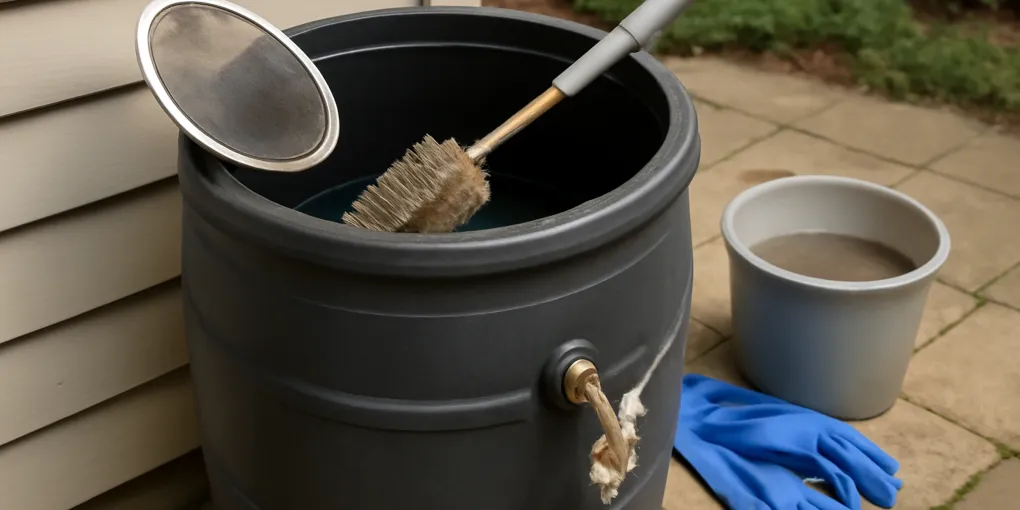
Long-handled soft barrel brush
Best for wall film and bottom sludgeUse Case: Scrubbing inside walls and the lower curve of an empty rain barrel
$12-$30 typical
Quick picks
| Product | Key Specs |
|---|---|
| See price on Amazon |
|
| See price on Amazon |
|
| See price on Amazon |
|
| See price on Amazon |
|
Product availability, certifications, and retailer details can change; check the current Amazon page before buying.
Rain barrel cleaning is easier when you use tools that match the actual mess. Most barrels collect three different problems: gritty sediment on the bottom, slick algae film on the walls, and small clogs in the spigot, inlet screen, or overflow fitting. A single stiff brush is rarely the best answer for all three.
The best cleaning kit is simple: a soft long-handled brush for the barrel wall, a wet-dry vacuum or scoop for sludge, small nylon brushes for fittings, and a replacement screen if the lid no longer seals. Avoid tools that scratch plastic, shove debris deeper into a spigot, or require you to tip a heavy wet barrel beside the house.
If your barrel smells bad or has green growth, use this guide with our algae and smell cleaning protocol. If the main symptom is weak flow, check the slow-fill and clog troubleshooting guide before replacing parts.
Quick picks
Buy around the mess you actually see after draining the barrel.
- Best all-around scrubber: Search Amazon for long barrel cleaning brushes when film is stuck to the wall or bottom curve.
- Best for heavy grit: Search Amazon for wet-dry vacs with crevice tools if roof granules and sludge stay behind after draining.
- Best for fittings: Search Amazon for small fitting brush sets for spigots, bulkheads, screen corners, and overflow ports.
- Best replacement part: Search Amazon for replacement inlet screens when the old screen is torn or sagging.
What to clean first
Start with the water path. A clean-looking barrel can still perform poorly if the spigot screen, bulkhead fitting, or inlet mesh is clogged. Drain the barrel through the normal spigot if possible, then open or remove the lid and look at the bottom. Roof grit often settles below the spigot line, so the last inch of water may stay muddy even after the barrel looks empty.
Work from top to bottom. Brush debris off the inlet screen first so it does not fall into a freshly cleaned barrel. Clear the overflow fitting next. Then scrub the inside wall and bottom. Finish with the spigot and hose connection so loose grit does not immediately re-clog a cleaned fitting.
Wear gloves and treat barrel water as non-potable. Rutgers and Penn State rain barrel guidance both emphasize covered barrels, screens, overflow, and regular maintenance. Cleaning tools should be dedicated to outdoor utility work, not kitchen or drinking-water tasks.
Long-handled soft barrel brush
A long-handled brush is the tool most rain barrel owners should own first. Choose soft synthetic bristles and a handle long enough to reach the bottom without putting your shoulder into the barrel. The brush should flex into the lower curve but not have a sharp scraper that can gouge plastic.
Search Amazon for long handled rain barrel cleaning brushes
Best for: algae film, pollen residue, light sludge, and seasonal cleaning before winter storage. Watch for: handle length, brush head width, bristle stiffness, and whether it fits through a small lid opening. If the barrel has a narrow top, measure the opening before buying a wide deck brush.
Do not use a wire grill brush inside a plastic barrel. Broken wires and scratched plastic are not worth the faster scrub.
Wet-dry vacuum or scoop for bottom sediment
The spigot usually sits above the bottom, which means sediment remains after draining. A wet-dry vacuum with a crevice tool can pull out that grit without tipping the barrel. This is useful for large barrels, tight patios, or setups where lifting the barrel would stress the stand.
Search Amazon for wet-dry vacs with crevice tools
Best for: roof granules, decomposed leaves, and sludge that sits below the outlet. Watch for: wet pickup rating, proper filter setup, GFCI-protected power, dry footing, and hose reach. Keep cords and plugs out of puddles, and follow the vacuum manual.
If you do not want a vacuum near the barrel, use a plastic scoop and bucket after draining. The key is removing grit rather than stirring it into suspension and sending it into drip tubing.
Small fitting brushes for spigots and bulkheads
Low flow often comes from small parts. A bottle brush set with several diameters can clean spigot threads, bulkhead fittings, overflow elbows, and screen grooves. Soft nylon is safer than stiff wire because many rain barrel fittings use plastic threads and rubber washers.
Search Amazon for small fitting brush sets
Best for: spigots that drip or clog, diverter hose ends, overflow fittings, and lid screen corners. Watch for: flexible stems, multiple brush diameters, and no exposed sharp tips. Remove the fitting when possible so you can push debris out rather than deeper into the valve.
After cleaning, run a gallon of water through the spigot into a bucket before reconnecting a hose or drip line. That flush catches grit before it reaches emitters.
Replacement screens when cleaning is not enough
A torn or sagging screen is not a cleaning problem. It is a replacement problem. If the mesh leaves a gap around the downspout, pulls away from the lid, or dips into standing water, mosquitoes and debris can enter even when the screen looks freshly washed.
Search Amazon for rain barrel replacement inlet screens
Best for: old lids, open-top barrels, mosquito complaints, and screens clogged with brittle sun-damaged mesh. Watch for: diameter, screw pattern, mesh tightness, gasket fit, and whether you can remove it for cleaning. For mosquito-specific setup details, compare rain barrel lids and replacement inlet screens and mosquito control options.
Cleaning schedule that keeps tools useful
Inspect the inlet screen after heavy storms. Brush the screen whenever leaves or roof grit collect. Check the spigot flow monthly during the watering season. Do a deeper drain-and-brush cleaning when the water smells, flow drops, sludge is visible, or the barrel is being winterized.
Match the tool to the season. Spring startup usually needs screen cleaning, washer checks, and a quick spigot flush. Mid-summer cleaning is more about film, mosquito gaps, and sediment that has collected below the outlet. Fall shutdown is the time for a full drain, bottom scrub, hose disconnect, and screen inspection before storage. If the barrel sits under trees, move the screen check earlier in the schedule because seed pods and leaf fragments can clog the inlet before the water looks dirty.
A good cleaning session should leave the barrel draining clearly, the screen tight, the overflow open, and the spigot flowing into a bucket without grit. If one of those checks fails, keep working before you reconnect the barrel to a soaker hose or drip kit. Recheck after the next storm so loose debris has not returned to the inlet or outlet before watering.
What not to buy for rain barrel cleaning
Skip abrasive metal tools unless the barrel manufacturer specifically allows them. A steel scraper, wire wheel, or aggressive pressure-washer tip can scratch plastic and create rough surfaces that hold more film later. Do not buy a brush so wide that it cannot reach the bottom curve or so stiff that it pushes against the barrel wall instead of flexing.
Also avoid scented household cleaning brushes that will later be used indoors. Rain barrel work involves roof runoff, algae film, insects, grit, and non-potable water. Keep outdoor cleaning tools separate, rinse them after use, and store them where they can dry. If a tool touches sludge or standing barrel water, it belongs with garden and utility supplies.
For pumps and electric vacuums, safety matters more than speed. Use wet-rated equipment only, keep plugs out of puddles, and work from stable ground. If the barrel is on a stand, do not climb or lean your weight on the stand to reach the bottom. Drain more water, remove the lid, and use a longer handle instead.
FAQ
What is the safest brush for cleaning inside a plastic rain barrel?
Use a soft nylon or polypropylene brush with a long handle. Avoid metal scrapers, stiff wire brushes, and pressure washer tips held close to the barrel wall because they can gouge plastic, loosen fittings, or damage liners.
Can I use bleach to clean a rain barrel?
Follow local extension guidance and the barrel manufacturer’s instructions. For routine sediment and algae film, draining, brushing, and rinsing is usually the first step. Do not mix cleaners, and do not discharge cleaner water where it can harm plants, pets, or waterways.
Is a wet-dry vacuum useful for rain barrel sludge?
Yes when the vacuum is rated for wet pickup and you can use it safely on a dry surface with GFCI protection. It is useful for grit that will not flow out of the spigot, but the barrel should be drained first.
When should I replace the inlet screen instead of cleaning it?
Replace the screen if it is torn, sun-brittle, sagging into the water, pulling away from the rim, or leaving gaps around the downspout. A clean but loose screen still lets mosquitoes and roof debris enter.
Sources
- Rutgers Cooperative Extension, Rain Barrels
- Penn State Extension, Rain Barrels
- CDC, Mosquito Bite Prevention Around Your Home