Rain Barrel Water for Seedlings: When to Filter, Warm, or Skip It
Evidence ExplainerQuick picks
| Product | Key Specs |
|---|---|
| See price on Amazon |
|
| See price on Amazon |
|
| See price on Amazon |
|
| See price on Amazon |
|
Product availability, certifications, and retailer details can change; check the current Amazon page before buying.
Seedlings are not just smaller garden plants. They have shallow roots, fragile stems, and tiny tray cells that can crust over or dry unevenly. Rain barrel water can help when you need chlorine-free stored water for outdoor starts, but it can also carry sediment, algae, roof debris, and temperature swings directly into a tray. The question is not whether rainwater is natural. The question is whether this barrel, this roof, and this watering method are gentle enough for young plants.
This guide focuses on seed trays, soil blocks, plugs, and small transplants. For mature edible beds, use the vegetable garden safety setup guide. For greenhouse bench plumbing, keep the same separation, filtration, and flushing checks before you automate a barrel-fed line.
The short answer
Use rain barrel water on seedlings only when the water is fresh enough, filtered enough, and applied to the potting mix instead of sprayed over edible leaves. Skip it when the water smells sour, the roof was recently treated, animals may have contaminated the catchment, or the seedlings are valuable enough that one bad watering would cost more than using clean tap water.
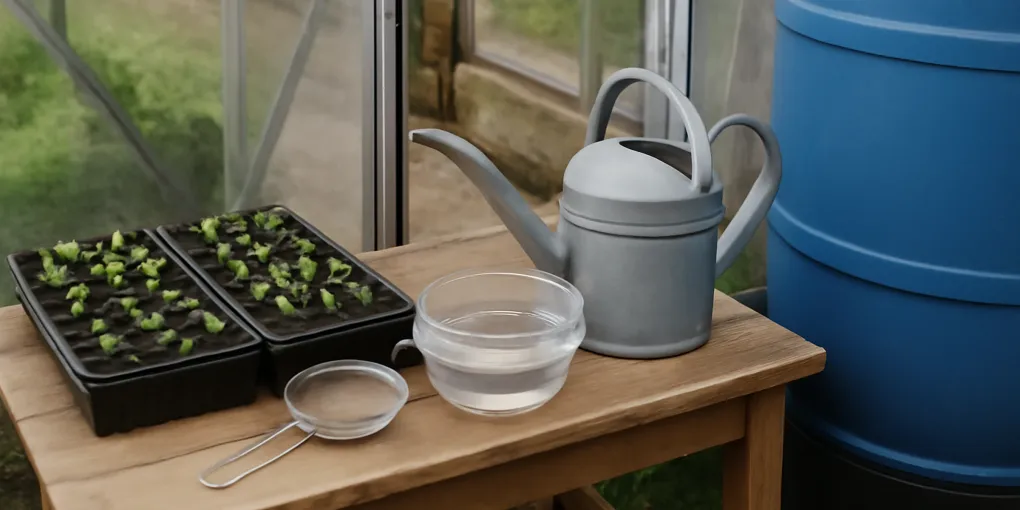
The safest practical setup is modest: fill a clean watering can from the barrel, run the water through a screen or filter, let very cold water warm toward greenhouse temperature, and water the media gently. Automation can wait until the barrel has proven clean and consistent.
Quick decision check
Use barrel water today if all of these are true:
- The barrel inlet is screened and the lid is tight.
- The first flush after the storm has been diverted or the barrel has been flushed clear.
- The water has no rotten odor, oil sheen, heavy algae mats, or unusual color.
- You can apply it to potting mix without splashing edible leaves.
- The seedlings are not being grown in a high-risk food-safety context.
Use potable water instead if any of those checks fail. A tray of seedlings is a poor place to test questionable stored water.
Why seedlings are more sensitive than established plants
A tomato plant in a raised bed has more root volume, more soil buffering, and more airflow than a plug in a 72-cell tray. Seedlings sit in a small amount of media, so a little sediment, salt, pH shift, or overwatering can show up quickly. Fine roots also need air. If a clogged watering head dumps water unevenly, one end of the tray can stay saturated while another end dries out.
UMass greenhouse water-quality guidance highlights pH and alkalinity because irrigation water affects nutrient availability and crop response. Rainwater often starts low in alkalinity, but barrel water is not pure rain once it has crossed a roof, gutter, screen, and storage tank. If seedlings yellow, stall, or show fertilizer problems, compare barrel water with tap water and check the growing media before making the barrel your only explanation.
Search Amazon for garden water pH test strips
Filter for delivery, not for drinking
A cleanable sediment filter is useful because seedling tools have small openings. Fine rose watering cans, pump sprayers, and micro tubing clog faster than a normal hose. Filtering grit and algae flakes makes watering gentler and more even.
That filter does not make barrel water potable. Treat it as a delivery filter, not a health guarantee. Keep the barrel covered, clean the inlet screen, and rinse the filter where runoff will not splash back into trays.
Search Amazon for cleanable inline hose sediment filters
Warm cold barrel water before it hits trays
Stored rainwater can be much colder than the greenhouse bench, especially after a cool storm or early spring night. Cold water does not usually kill seedlings by itself, but repeated cold shocks can slow growth and make overwatering problems worse.
For delicate trays, fill a clean can or bucket and let it sit in the greenhouse until it is closer to the air temperature. Do not leave open buckets where mosquitoes can breed or where children or pets can reach them. The goal is a short tempering step, not a second storage barrel.
Use a gentle tool, not a blasting hose
A standard hose nozzle can dislodge seeds, flatten stems, and splash potting mix onto leaves. Use a fine rose watering can or a dedicated pump sprayer that has never held chemicals. Label any sprayer used with barrel water so it is not confused with a fertilizer or pesticide sprayer.
Search Amazon for fine rose watering cans
Search Amazon for small garden pump sprayers
Water the media surface near the seedlings rather than misting edible leaves. Bottom watering can be cleaner for some trays, but do not let trays sit in stagnant barrel water. Empty standing water after the media has wicked up what it needs.
When to skip barrel water for seedlings
Skip stored rainwater when the roof or gutter has been exposed to fresh roof treatment, moss killer, pesticide drift, heavy smoke residue, or animal contamination. Also skip it when the barrel has gone anaerobic, smells rotten, or contains visible mosquito larvae. Follow the mosquito larvae cleanout protocol before using that water near trays.
For edible microgreens, baby greens, herbs harvested young, or seedlings grown for someone else, potable water is usually the better choice. These crops are harvested close to the stage when splash and handling matter most.
What about fertilizer and pH?
If you mix fertilizer with barrel water, test a small batch first. Rainwater can have low alkalinity, which may change how pH drifts after fertilizer is added. Tap water, barrel water, and fertilizer solution can behave differently in the same potting mix.
Do not chase exact numbers with cheap strips alone. Use strips as a troubleshooting clue, then look at the growing medium, fertilizer rate, and plant symptoms. If seedlings improve when you switch to clean water for two weeks, the barrel setup needs cleaning, testing, or a different use.
A safer weekly routine
Once a week during seed-starting season, inspect the barrel lid, inlet screen, overflow route, filter, and the first water drawn from the outlet. Flush a small amount into a clear bucket. If sediment settles quickly, use that water on ornamental landscape soil and keep flushing before watering trays. Rinse the watering can rose or sprayer nozzle before it clogs badly.
Do a deeper clean before the main seed-starting season and after heavy pollen or leaf drop. If the barrel has bottom sludge, use the rain barrel cleaning tools guide to choose brushes, drain fittings, and screens before the first trays go out.
Seedling water FAQ
Can rain barrel water cause damping off?
Damping off is linked to moisture, pathogens, airflow, sanitation, and growing conditions. Barrel water is not the only possible cause, but stale water, splash, and overwatering can make a bad tray environment worse. Improve airflow, avoid saturation, and switch to clean water while troubleshooting.
Is rainwater pH good for seedlings?
Rainwater is often slightly acidic and low in alkalinity, but stored barrel water can change after roof contact and storage. Seedling response depends on the potting mix and fertilizer too, so test and compare rather than assuming rainwater is always better.
Can I bottom-water seedlings with rain barrel water?
Yes for lower-risk trays when the water passes the freshness checks, but do not leave trays sitting in it. Let the media wick up moisture, then dump the remaining water away from the greenhouse bench.
What is the first product to buy?
Buy a gentle, cleanable delivery setup before automation: a fine rose can or dedicated sprayer, plus a cleanable filter if grit is present. A pump or timer should come later, after the water quality and watering pattern are predictable.
Sources
- Rutgers NJAES: Rain Barrels Part IV: Installation and Maintenance
- EPA: Soak Up the Rain: Rain Barrels
- UMass Extension: Water Quality: pH and Alkalinity
- Penn State Extension: Drip Irrigation for Vegetable Production