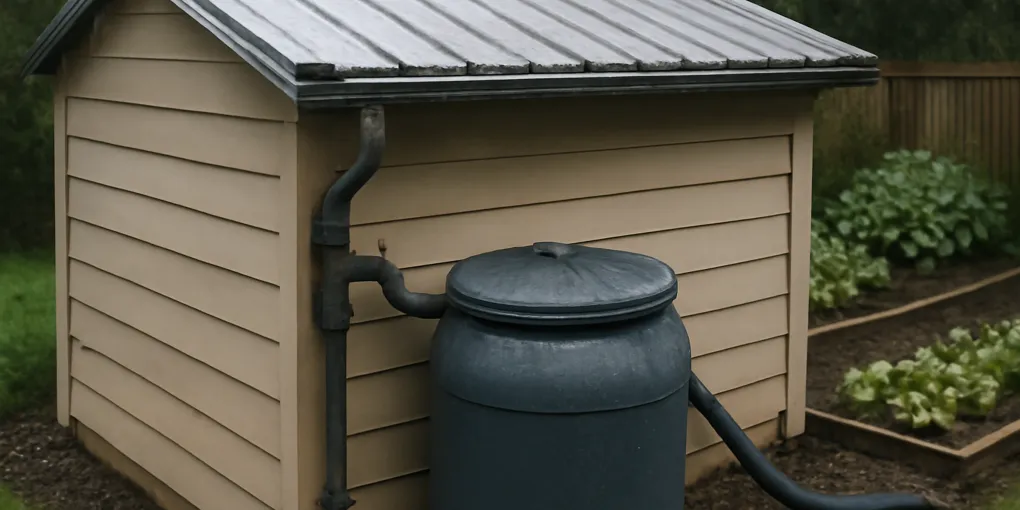
Can You Use a Rain Barrel Under a Metal Roof? Runoff, Coatings, and Setup Checks
Evidence ExplainerQuick picks
| Product | Key Specs |
|---|---|
| See price on Amazon |
|
| See price on Amazon |
|
| See price on Amazon |
|
Product availability, certifications, and retailer details can change; check the current Amazon page before buying.
A metal roof can be a good catchment surface for a non-potable rain barrel, but the safe answer is not simply “metal is fine.” The real question is what is on the roof, what the water will touch, and how the barrel is built. Painted metal panels, galvanized surfaces, old coatings, bird droppings, pollen, and nearby trees all change the first water that reaches the downspout.
For most residential garden setups, use metal-roof rain barrel water only for outdoor non-potable tasks unless local testing and guidance say otherwise. Favor soil-level watering for ornamentals, trees, and established beds. Do not drink it, do not connect it to household plumbing, and be cautious around edible leaves and fruit. A covered barrel, cleanable screen, first-flush diverter, and foundation-safe overflow matter more than the roof material alone.
Quick answer
Use this as a comparison between the main setup parts: the diverter handles the first dirty runoff, the pre-filter catches debris before storage, and the covered barrel controls light, insects, and overflow.
- A modern intact metal roof can feed a rain barrel for non-potable outdoor use if the barrel is screened, covered, and overflow is routed safely.
- Skip or test first when the roof has unknown old paint, peeling coatings, moss treatments, heavy bird activity, nearby industrial dust, or visible contamination.
- Use a Search Amazon for first-flush diverters and Search Amazon for cleanable downspout pre-filters when the roof collects pollen, grit, seed pods, or bird droppings.
- Store water in a Search Amazon for covered opaque rain barrels with a screened inlet and a visible overflow route.
If you are setting up a smaller outbuilding, pair this guide with our shed and garage roof rain barrel setup. For edible-garden questions, read our vegetable garden rain barrel safety guide before watering food crops.
What matters most in a metal-roof setup
Metal roofing can shed water quickly, so the setup has to handle fast inflow and visible debris instead of assuming roof water is clean. Identify the roof material and coating, then use screened collection, covered storage, and a cleanable first-flush or diverter point when the roof collects pollen, dust, bird droppings, or tree debris.
Overflow planning is the safety check. Route excess water away from siding, slabs, doors, and foundations, and keep the water for non-potable outdoor use unless your local rules and treatment system say otherwise.
What metal roofs do well
Compared with rougher roofing materials, smooth metal panels can shed water quickly and hold less loose grit. They do not contribute asphalt granules the way some shingle roofs can. That makes them attractive for garden rain-barrel collection, especially on sheds, garages, barns, and simple porch roofs with easy downspout access.
Fast runoff is not the same as clean runoff. The first minutes of a storm wash off dust, pollen, bird droppings, leaf fragments, and whatever has settled since the last rain. If the roof sits under trees or near a gravel drive, the barrel sees that material. A metal roof can also have paint systems, zinc or galvanized surfaces, or repairs that are not obvious from the ground.
The practical takeaway is simple: treat the roof as a catchment surface, not a filter. The barrel system should remove debris before storage, keep light and insects out of stored water, and give you a way to bypass or drain questionable water.
Coatings, paint, and galvanized surfaces
Modern painted metal roofing is usually designed for outdoor exposure, but a homeowner still needs to know what is installed. Newer factory finishes are different from old painted panels, patched seams, rust converters, or unknown coatings on a used shed. If paint is peeling, chalking heavily, or flaking into the gutter, do not collect that water for edible-garden use.
Galvanized metal and metal coatings can affect runoff chemistry, especially when water sits on surfaces or passes through corroded areas. That does not automatically make every galvanized roof unusable for ornamentals, but it does argue for caution. If the barrel will water vegetables, herbs, or children’s garden areas, local extension guidance and water testing are more appropriate than guesswork.
A good rule: collect only from a roof you can describe. If you cannot identify the roof material, age, coating condition, or recent treatments, keep the water away from edible crops until you have better information. If the roof was treated for moss, algae, pests, or paint repair, disconnect the barrel for the recommended interval and route that runoff away from storage.
First-flush diverters are useful on metal roofs
A first-flush diverter captures or bypasses the dirtiest initial runoff before cleaner stormwater reaches the barrel. It is especially useful on metal roofs because runoff starts quickly. The first water can carry concentrated pollen dust, bird droppings, and debris that accumulated during dry weather.
Search Amazon for first-flush diverters
Best for: roofs with visible dust, trees overhead, bird activity, or long dry periods between storms. Watch for: downspout size, cleanout access, winter removal, and where the diverted water drains. A diverter that empties against the foundation creates a new problem.
First-flush parts need maintenance. Empty and clean the diversion chamber, inspect screens, and make sure the bypass path has not clogged. If the diverter is hard to reach, it will not be cleaned often enough.
Screens and pre-filters still matter
Metal roofs often sit under trees, and smooth panels can send leaves and seed pods straight to the downspout. A cleanable pre-filter keeps debris out before it becomes sludge in the barrel. It also reduces the load on tiny outlet filters used for soaker hoses or drip lines.
Search Amazon for downspout pre-filters
Best for: leafy roofs, shed roofs under pines, gutters with roof grit from adjacent surfaces, and barrels feeding garden hoses. Watch for: screens that clog during heavy rain, bypass water that hits siding, and filters that require disassembly after every storm.
Do not choose the finest possible mesh at the roofline unless overflow is controlled. Too-fine screens can clog and send water over the gutter or down the wall. Use a pre-filter that is easy to rinse, then use a barrel screen and outlet filter as separate maintenance points.
Use covered opaque storage
Stored roof runoff should be covered, screened, and kept out of sunlight. This is not just a mosquito rule. Light encourages algae, open lids collect debris, and uncovered water invites pets, children, and wildlife. A metal roof does not change the storage requirement.
Search Amazon for covered rain barrels
Best for: any metal-roof collection where water will sit for more than a day or two. Watch for: a tight screened inlet, service access for cleaning, an overflow port large enough for storms, and opaque walls. Clear or translucent containers can turn green quickly in sun.
If your current barrel smells bad or grows algae, fix storage before blaming the roof. Our algae and odor cleaning protocol walks through cleaning, light control, debris prevention, and outlet filtration.
Where metal-roof water is most appropriate
The lowest-risk uses are soil-level watering for ornamentals, trees, shrubs, and non-edible landscaping. It can also be useful for rinsing garden tools, wetting compost, or watering established perennials where runoff does not contact food surfaces. Use a watering can or short hose that stays dedicated to outdoor non-potable water.
Be more cautious with leafy greens, herbs, berries, and root crops eaten raw. Roof runoff can carry bird droppings and airborne contaminants regardless of roof material. If you choose to water edible gardens, apply water to soil, avoid splashing edible parts, stop using questionable water close to harvest, and follow local extension guidance.
Do not use rain-barrel water from any roof for drinking, cooking, pet bowls, kiddie pools, indoor plumbing, or pressure-washing food-contact surfaces. A residential rain barrel is a stormwater storage tool, not a potable water system.
Red flags that should stop the setup
Do not connect the barrel if roof runoff smells chemical, leaves oily sheen, or carries visible paint flakes. Disconnect if the roof was recently treated with moss killer, pesticide, roof cleaner, or unknown wash products. Avoid collection from roofs with lead flashing concerns, deteriorated paint, or industrial contamination sources unless testing and local guidance support the use.
Also stop if the overflow cannot be routed away from the structure. A clean catchment still fails if the barrel overflows next to a basement, crawlspace, or neighbor’s property. Review foundation-safe overflow routing before the first storm.
Finally, inspect the stand. Metal roofs can deliver water quickly in a downpour, so the barrel may fill faster than expected. A full barrel on an unstable base is a bigger hazard than a missed watering opportunity.
Setup checklist before the first storm
Identify the roof material and coating condition. Clean the gutter and downspout. Add a screen or pre-filter where debris enters. Install a first-flush diverter if the roof collects dust, pollen, or bird droppings. Use a covered opaque barrel with a screened inlet. Route overflow to a safe discharge point. Label the hose or spigot as non-potable if visitors, children, or renters might use it.
After the first storm, inspect the water before using it. Look for sediment, smell, oily sheen, and debris in the inlet screen. Drain and clean if anything looks off. Recheck after a long dry spell, because the first rain after two hot weeks usually carries a heavier load than the third storm in a wet week.
FAQ
Is metal-roof rainwater cleaner than shingle-roof rainwater?
It can have less loose grit than some shingle runoff, but it is not automatically clean. Dust, pollen, bird droppings, coatings, and nearby contamination still matter. Treat it as non-potable roof runoff and use screens, covered storage, and first-flush control.
Can I water vegetables with rain barrel water from a metal roof?
Be cautious. Use local extension guidance, know the roof material, and avoid splashing edible leaves or fruit. If the roof coating is unknown, deteriorating, recently treated, or near contamination sources, use municipal or potable-quality water for edible crops instead.
Do I need a first-flush diverter on a small metal shed?
Not always, but it is helpful when the roof sits under trees, has bird activity, or goes through long dry periods. A small roof can still wash concentrated debris into a small barrel. If you skip a diverter, at least use a cleanable inlet screen and inspect the first stored water after storms.
Why did my metal-roof barrel turn green?
Green water usually means sunlight, nutrients, or stagnant storage reached the barrel. Check for a translucent container, loose lid, dirty gutter, debris in the screen, and water sitting unused in hot weather. Fix storage and cleaning before assuming the roof material is the only cause.
Sources
- EPA, Soak Up the Rain
- Rutgers Cooperative Extension, Rain Barrels
- Penn State Extension, Rain Barrels
- CDC, Mosquito prevention around water-holding containers