Best Rain Barrel Inlet Filters and Lid Screens for Cleaner Stored Water
Buyer's GuideReplacement rain barrel inlet screen basket
Best first fixUse Case: Replacing a cracked, missing, or undersized basket where water drops into the barrel lid
$10-$30 typical
Quick picks
| Product | Key Specs |
|---|---|
| See price on Amazon |
|
| See price on Amazon |
|
| See price on Amazon |
|
| See price on Amazon |
|
Product availability, certifications, and retailer details can change; check the current Amazon page before buying.
A rain barrel leaf guard belongs upstream at the gutter. This buyer guide is for the next problem: what to put at the barrel itself when leaves, seed husks, shingle grit, or mosquitoes still reach the lid, overflow, or hose outlet. If your gutter is packed with oak leaves, start with our rain barrel leaf guards and gutter screens guide. If the gutter path is already under control and the mess is at the barrel opening, choose one of the inlet filters below.
The best rain barrel inlet filter is not the finest screen on the shelf. It is the filter you can measure, remove, rinse, and reinstall before the next storm. A cracked factory screen, loose DIY mesh panel, or splashy downspout elbow can leave gaps large enough for mosquitoes and debris even when the gutter looks clean. Rutgers Cooperative Extension and Penn State Extension both emphasize covered barrels, screened openings, overflow control, and periodic cleaning. The CDC also recommends tight covers and screens around standing water to reduce mosquito breeding.
Quick picks for barrel-level filtration
- Best first fix: Search Amazon for rain barrel inlet screen baskets when the lid opening has a cracked, missing, or hard-to-clean basket.
- Best custom repair: Search Amazon for stainless screen mesh when the barrel has an odd-size lid, overflow vent, or homemade cutout.
- Best for direct downspout drops: Search Amazon for downspout outlet splash screens when water from a short elbow pounds through the lid screen or splashes debris across the top.
- Best after-storage protection: Search Amazon for hose sediment filters when grit reaches a pump, soaker hose, watering wand, or drip emitter.
For adjacent jobs, use the roofline guide above for gutter debris, our mosquito screens and dunks guide for insect control, and our rain barrel slow-fill troubleshooting guide if the barrel is not filling at all.
Replacement inlet screen basket: best first fix
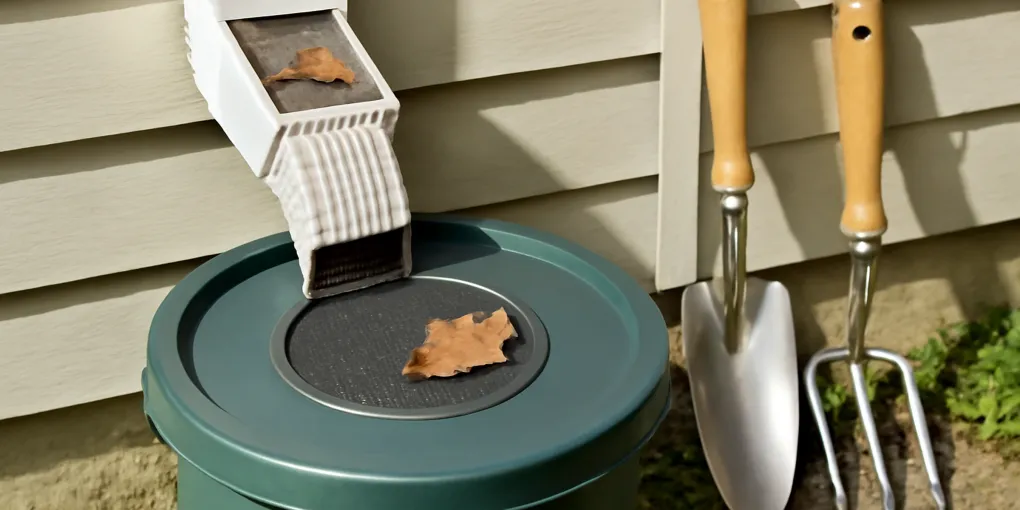
A replacement inlet basket is the cleanest fix when the rain barrel has a top opening but the original screen is warped, brittle, too shallow, or missing. Measure the opening before shopping. Decorative barrels often have molded lids, off-center holes, or proprietary rings, and a basket that looks close online may still leave a crescent-shaped mosquito gap.
Search Amazon for rain barrel inlet screen baskets
Look for three details. First, the rim should overlap the opening so water cannot carry debris around the edge. Second, the basket should sit above the stored water, not sag into it. Third, you should be able to lift it out without moving the downspout. If you need a screwdriver every time seed pods collect, the screen will not get cleaned often enough.
A basket is best when water falls directly through the lid or through a short diverter outlet into a recessed top. It is less useful when leaves are jamming the downspout before water ever reaches the barrel. That upstream problem belongs to a gutter guard, downspout leaf separator, or diverter cleanout, not a deeper lid basket.
Stainless mesh screen roll: best for custom lids and vents
A screen roll is useful when the barrel opening is not a standard circle. Converted food-grade drums, homemade wooden covers, overflow vents, and cracked factory inserts often need a cut-to-fit repair. Stainless mesh usually lasts longer than cheap window screen outdoors, but it still needs a rigid frame or support grid so wet leaves do not push it into the water.
Search Amazon for stainless steel mesh screen rolls
Do not just stretch mesh loosely across a hole and call it done. Fold or cover sharp cut edges, fasten the perimeter tightly, and check every corner for insect gaps. If the opening is large, support the center with a plastic grate, stainless hardware cloth, or a removable frame. The screen should shed water into the barrel and let debris sit on top where you can brush it away.
This is also the right material for overflow vents that need insect protection. A barrel can have a perfect inlet screen and still breed mosquitoes if the overflow port, lid seam, or hose hole is open. Treat every opening as part of the same screened envelope.
Downspout outlet splash screen: best for direct-drop barrels
Some barrels sit directly under a downspout elbow instead of using a sealed diverter hose. In that setup, the problem is not only leaf filtering. The water drop can blast through a fine screen, bounce grit across the lid, or push a lightweight basket out of place during a hard storm. A splash screen, diffuser, or short protected outlet helps spread the flow before it hits the lid mesh.
Search Amazon for rain barrel downspout outlet splash screens
Choose hardware that does not trap a hidden wad of leaves. The outlet should be visible from the ground and easy to lift or rinse. Avoid heavy metal pieces that can rust into the lid, and avoid deflectors that send water behind the barrel or toward siding when the screen clogs. Watch the first strong rain after installation. Water should enter the barrel opening, not sheet across the lid or run down the wall.
If the downspout itself is full of leaf pulp, this is not enough. Use a roofline or downspout strainer solution first, then use the lid-level outlet screen to manage splash and final debris.
Hose or pump-side sediment prefilter: best after storage
A hose filter does a different job from an inlet screen. It does not stop leaves from entering the barrel. It protects whatever comes after the spigot: watering wands, pump strainers, hose washers, drip irrigation emitters, or soaker hoses. Buy this only when the outlet side is the failure point.
Search Amazon for rain barrel hose sediment filters
Check thread size and flow requirements before buying. Some irrigation filters are designed for pressurized systems and can slow low-pressure barrel flow. A clear housing or easy cleanout helps because you can see sediment before the flow drops. Install it where you can unscrew and rinse it without draining the barrel.
If water is only going into a watering can, a hose filter is usually unnecessary. Spend the money on a better lid screen or overflow screen instead. If the barrel feeds drip irrigation, a downstream filter can save a lot of emitter cleaning, but it should be a second stage after the barrel is already covered and screened.
How to choose the right barrel-level filter
Start by locating the visible failure.
- Debris sits on the lid or falls through the opening: replace the inlet basket or repair the screen panel.
- Mosquitoes appear near the barrel: inspect the inlet, overflow, hose holes, and lid seam for gaps, then screen every opening.
- Water splashes over the top during storms: align the downspout outlet and add a splash screen or diffuser that keeps flow over the inlet.
- The barrel smells or has heavy bottom sludge: improve the inlet screen, consider first-flush diversion, and clean sediment rather than relying on a hose filter alone.
- Drip emitters or pumps clog: add a hose-side sediment filter after the spigot and keep the inlet screen in place.
This keeps the new page separate from a gutter-guard shopping decision. Gutter guards reduce roofline debris before it reaches the downspout. Barrel-level filters protect the storage opening, the overflow envelope, and the outlet after water arrives.
Cleaning schedule for lid screens and outlet filters
Check the inlet screen after the first spring storm, during pollen or seed drop, after windy weather, and any time water spills over the lid. Lift the basket, dump leaves away from the barrel, and rinse from the clean side outward so grit leaves the mesh instead of lodging deeper. Then confirm the overflow path is open because a clean inlet does not help if the full barrel sends water beside the foundation.
At least once a season, open the barrel and look for sediment depth, floating organic matter, and screen-edge gaps. Rinse hose-side sediment filters whenever flow slows, before connecting drip irrigation, and before storing the barrel for winter. Remove or drain parts that can freeze full of water.
Sources
- Rutgers Cooperative Extension: Rain Barrels: A Homeowner’s Guide
- Penn State Extension: Rain Barrels
- CDC: Mosquito prevention around standing water
Rain barrel inlet filter FAQ
Is this the same as a gutter leaf guard?
No. A gutter leaf guard solves debris before water reaches the downspout. This page solves debris, mosquitoes, splash, and sediment at the barrel lid, overflow, and outlet after the roofline path is already reasonable.
Should I use fine mesh everywhere?
No. Fine mesh at the barrel lid can block mosquitoes and small fragments, but very fine upstream screens clog quickly with pollen and roof grit. Use cleanable mesh at the barrel and keep larger roofline debris out before it gets there.
Where should a filter go if the diverter hose clogs?
If the diverter hose clogs before water reaches the barrel, use a downspout or diverter cleanout solution upstream. If the water reaches the lid but carries small debris into storage, use a barrel inlet basket or custom lid screen.
What should I avoid buying?
Avoid sealed inline filters you cannot open, loose screen scraps with mosquito gaps, baskets that sit in standing water, and outlet filters that choke low-pressure barrel flow. The filter should be visible, removable, and safe when it clogs.
Frequently Asked Questions
- No. This page focuses on filters at the barrel lid, downspout outlet, overflow opening, and hose outlet. Use a gutter leaf guard when leaves collect in the gutter before water reaches the barrel.
- Use mesh tight enough to block mosquitoes and small leaf fragments, but supported well enough that wet debris does not sag into the water. A removable, cleanable screen is better than ultra-fine mesh that clogs and gets ignored.
- Only if small grit reaches a pump, drip emitter, soaker hose, or spray wand. A lid screen catches roof debris before storage; a hose filter protects the device after storage.
- No. Screens reduce debris, insects, and clogs, but roof runoff can still contain microbes, metals, roofing residues, and animal waste. Use collected rainwater only for appropriate outdoor uses.