Can a Rain Barrel Run a Sprinkler? Pressure, Flow, and Better Options
Evidence ExplainerQuick picks
| Product | Key Specs |
|---|---|
| See price on Amazon |
|
| See price on Amazon |
|
| See price on Amazon |
|
Product availability, certifications, and retailer details can change; check the current Amazon page before buying.
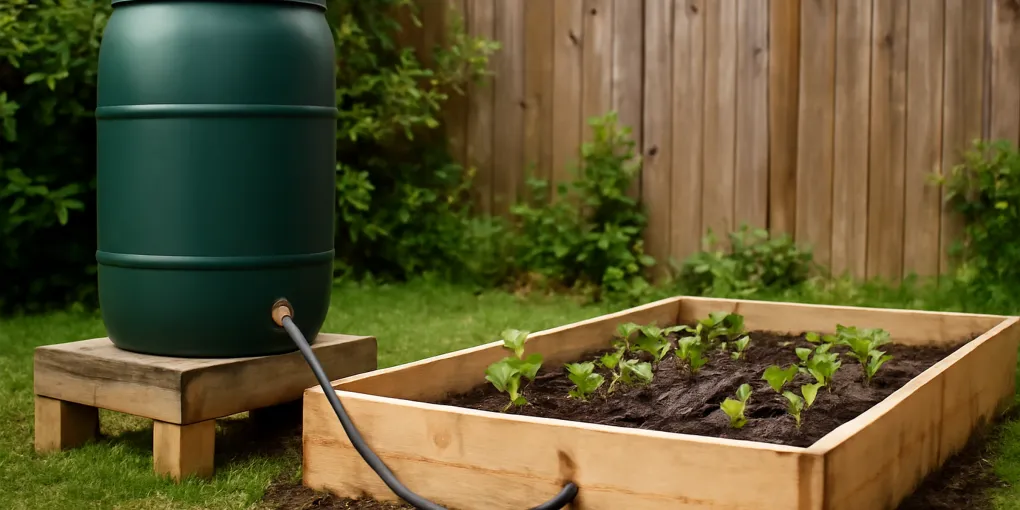
A rain barrel can feed a hose, but it usually cannot run a normal lawn sprinkler well without a pump. The reason is pressure. Most hose-end sprinklers are designed around household water pressure, while a gravity-fed barrel only has the pressure created by water height. If the barrel is a few feet above the ground, the sprinkler may spit, pulse unevenly, or water only a small circle near the hose.
That does not make the barrel useless for irrigation. It means the watering tool has to match the storage system. A low-pressure watering wand, short soaker run, or drip kit uses rainwater more predictably than a lawn sprinkler. A transfer pump can help when you need spray coverage, but it adds cost, noise, maintenance, and dry-run risk. Before buying parts, decide whether you need a sprinkler pattern or simply need to move stored water to plants.
For hose basics, start with our guide to attaching a hose to a rain barrel. If your goal is bed irrigation, the rain barrel to soaker hose setup guide is usually a better next step than chasing sprinkler pressure.
Quick answer: gravity is the limiter
Water pressure from a barrel depends mostly on height. A common rule of thumb is about 0.43 psi per vertical foot of water head. That means a spigot 3 feet below the water surface has roughly 1.3 psi before losses. A barrel raised 5 feet may still have only about 2.2 psi. Hoses, elbows, small spigots, filters, and partly clogged screens reduce usable flow further.
Many household sprinklers expect far more pressure to rotate, oscillate, or break water into an even pattern. Without that pressure, the sprinkler becomes a leaky outlet rather than a coverage tool. It may still move water, but the pattern will be small, uneven, and slow.
Product path: better tools than a standard sprinkler
Use the product card above as a decision path. If you can hand water near the barrel, a low-pressure wand is the simplest no-pump choice. If you want slow irrigation for beds, a rain-barrel-rated drip kit makes better use of gravity. If you truly need spray coverage, look at a transfer pump and treat the barrel as a limited water supply.
- Best no-pump option: Search Amazon for low-pressure watering wands when containers or raised beds are close to the barrel.
- Best set-and-slow option: Search Amazon for low-pressure drip kits for short bed zones that do not need sprinkler spray.
- Best powered option: Search Amazon for rain barrel transfer pumps if you need more pressure and can manage pump protection.
Why ordinary sprinklers disappoint
A typical sprinkler needs pressure for two jobs: pushing water through small openings and moving the sprinkler mechanism. Oscillating sprinklers need enough flow to sweep across the bar. Impact sprinklers need enough force to trip the arm. Rotary sprinklers need steady pressure to spin. Gravity barrels often cannot do those jobs after water passes through a small spigot and garden hose.
The second problem is barrel volume. A 50-gallon barrel sounds large until you compare it with sprinkler demand. Even a modest sprinkler can use many gallons in a short session. The barrel may empty before a lawn receives meaningful water. During a dry spell, our rain barrel dry-spell watering plan explains why stored water is usually best saved for vegetables, containers, and new plantings.
When a sprinkler might work without a pump
A sprinkler may work in a limited way if it is very close to the barrel, the barrel is raised safely, the hose is short and wide, and the sprinkler is designed for low flow. Even then, expect a small pattern. This can be acceptable for a tiny seed patch or a narrow bed, but it is not a good plan for watering a full lawn.
Do not raise a barrel beyond what the stand can safely support just to gain pressure. Water is heavy, and a full barrel on a tall unstable platform is a bigger hazard than a weak sprinkler pattern. If pressure is the goal, a pump is safer than an improvised high stand.
Also check the outlet. Many decorative barrels have small spigots that restrict flow. A larger bulkhead fitting can improve hose flow, but it will not turn gravity into household pressure. It only reduces one bottleneck.
Best no-pump alternative: a watering wand
A watering wand with a gentle shower head works because it does not need to throw water across a lawn. You bring the wand to the plant and let gravity feed a slower stream. This is ideal for patio containers, grow bags, seedlings, and raised beds near the barrel.
Search Amazon for low-pressure watering wands
Choose a wand with a large internal passage, a simple shutoff, and a pattern that still flows gently at low pressure. Avoid tiny mist settings that clog or starve. Keep the hose short, and drain it after watering so the next session does not start with stale warm water trapped in the line.
Best gravity layout: drip or short soaker zones
Drip irrigation and soaker hose layouts suit barrels because they ask for slow delivery rather than spray distance. The setup still has limits: runs should be short, filters should be easy to clean, and emitters must be rated for low pressure. A kit marketed for household spigots may not behave the same way on a barrel.
Search Amazon for rain barrel drip irrigation kits
Put the barrel as close as practical to the bed. Use a filter before small emitters. Start with one short zone instead of branching to every bed at once. If the far end stays dry, shorten the line, raise the barrel safely, or divide the layout into smaller zones. The goal is reliable watering, not maximum tubing length.
When to add a pump
A pump changes the system from gravity-fed storage to powered irrigation. That can make a small sprinkler, hose nozzle, or drip zone work better, but it also creates new responsibilities. The pump needs an inlet screen or filter so sediment does not damage it. It needs protection from running dry when the barrel empties. Outdoor electrical connections must stay protected from weather and puddles.
Search Amazon for rain barrel transfer pumps
Size the pump to the tool, not the dream. A high-flow pump can empty a 50-gallon barrel quickly and may overpower small drip fittings. A smaller transfer pump may be enough for hand watering or a compact sprinkler. Test with a timer and watch the water level the first few times so the pump does not keep running after the barrel is low.
Safety and water-use checks
Keep roof runoff use practical. Extension rain-barrel guides commonly frame stored runoff as outdoor, non-potable water. Use it for ornamental beds, containers, and soil-level watering where appropriate. For edible gardens, follow local extension guidance and avoid spraying harvested plant parts with untreated roof runoff.
Watch the overflow while experimenting with irrigation. A barrel connected to a hose or pump still needs an overflow route for the next storm. Do not leave a hose stretched across a walkway where it can trip someone, freeze, or send water back toward the foundation.
Finally, do the math before promising lawn coverage. A single barrel is a small reservoir. Use it where the saved water matters most: a row of tomatoes, a new shrub, a dry container cluster, or a short soaker zone. If a green lawn is the goal, the barrel is usually a supplement, not the main irrigation source.
FAQ
Will raising a rain barrel make a sprinkler work?
Raising the barrel helps a little, but not enough for most lawn sprinklers. Each foot of height adds only about 0.43 psi. A barrel raised 4 feet still provides only about 1.7 psi before hose and fitting losses.
What kind of sprinkler works best from a rain barrel?
Most conventional oscillating, impact, and rotating lawn sprinklers need more pressure than a gravity barrel can provide. A very small low-flow sprinkler may dribble close to the barrel, but a watering wand, soaker hose, or drip kit is usually more reliable.
Can I add a pump to run a sprinkler from a rain barrel?
Yes, if the pump is sized for the sprinkler and protected with an inlet screen or filter. The barrel can empty quickly, so use a short session, avoid running the pump dry, and keep outdoor electrical connections weather-safe.
Is rain barrel water good for lawn watering?
It can be useful for spot watering, new plantings, or a small dry patch. A typical 50- to 60-gallon barrel is small compared with lawn irrigation demand, so use stored water where it has the highest value instead of trying to replace a full sprinkler system.
Sources
- EPA WaterSense, Outdoor Water Use in the United States
- University of Minnesota Extension, Rain barrels
- Rutgers Cooperative Extension, Rain Barrels