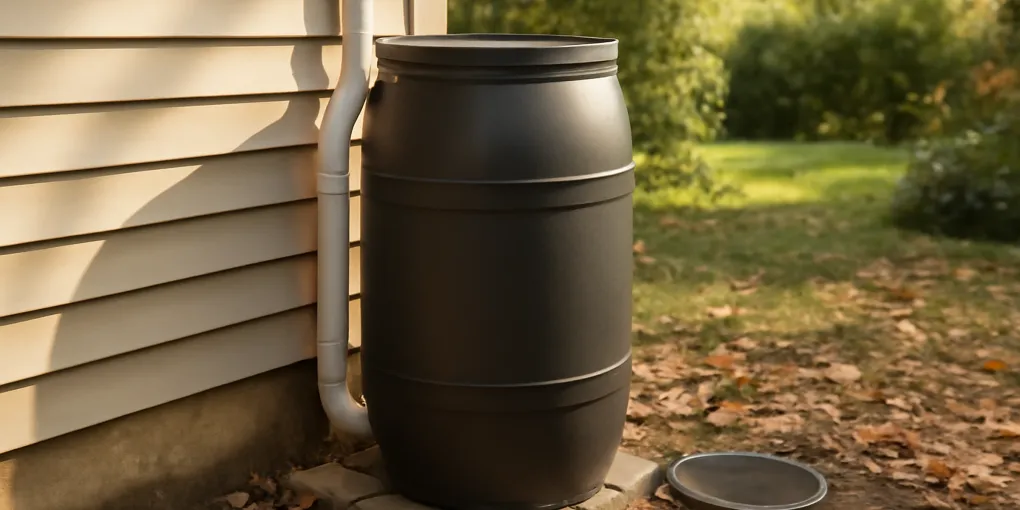
Rain Barrel Late-Summer Reset: Prepare the System for Leaf Season
ProtocolQuick picks
Rain barrel inlet screen filter basket
★ Top pick Replace a damaged inlet screen- Use Case: A lid or inlet whose mesh is torn, sagging, or no longer stays seated
- Best For: Preparing a compatible rain-barrel inlet before leaf drop begins
- Watch For: Measure the opening and confirm the mounting method; finer mesh can need more frequent cleaning
Late summer is the best time to reset a rain barrel before leaf season turns a minor screen problem into a missed fill or a messy overflow. This is not a full winter shutdown. It is a short inspection: clean the water-entry point, test where a full barrel sends water, and make sure the base and hose still work before frequent storms arrive.
The job is distinct from a spring startup or a freeze-season drain-down. You are preparing a working system for more debris, not taking it offline. If freezing weather is close in your area, use our winterizing guide for the final shutdown sequence.
Replace only a screen that cannot do its job
If the mesh is torn, sagging, brittle, or will not stay in its frame, see price on Amazon for compatible rain-barrel inlet screens and filter baskets. Measure the opening and mounting edge first. A replacement screen is for a failed barrier, not a substitute for cleaning a usable one; very fine mesh can collect pollen and leaf fragments faster.
Reset the inlet before leaves arrive
On a dry day, remove loose leaves and roof grit from the lid, screen, or diverter intake. Rinse a removable screen from the underside so trapped debris moves out instead of deeper into the mesh. Then make sure the downspout outlet still lands where it should. A shifted elbow can send water past a perfectly clean screen.
Do not leave the inlet uncovered to improve flow. CDC guidance recommends covering water-holding containers and repairing holes in screens. A fitted lid and screen help keep debris and insects out while the barrel is waiting for the next rain.
If the inlet plugs repeatedly, start upstream with the related choices in our leaf guard and gutter screen guide rather than cutting a larger opening in the barrel.
Test the overflow while you can watch it
The most useful late-summer test is a controlled overflow check. With the barrel partly full, add water slowly with a hose until the overflow path starts working. Watch the whole route: fitting, hose, discharge point, soil, and nearby hardscape. Stop if water starts moving toward the building or a walkway.
Repair a loose connection, straighten a kink, and clear mulch that blocks the outlet. Do not assume a splash of water beside the barrel is harmless just because the barrel is outdoors. The rain-barrel overflow routing guide is the right next read when the discharge point is too close to the house.
Check the load-bearing parts at low water
Use the reset to inspect the base, stand, pavers, and spigot at a lower water level. Look for settling soil, pavers that rock, soft wood, a leaning barrel, or a hose that pulls on the spigot. A full 50-gallon barrel weighs more than 400 pounds before the barrel and fittings, so a small tilt should be corrected before autumn storms keep refilling it.
Open the spigot briefly and check the threads and washer for a slow drip. If the hose has sat in sun all summer, check for cracking and store it so it does not drag through wet leaves. Our stand stability guide covers the base decision; the hose washer guide focuses on small outlet leaks.
Put two checks on the calendar
Do the reset once before regular leaf fall, then repeat only the screen and overflow inspection after the first storm that drops noticeable debris. That schedule is easier to keep than a vague promise to check the barrel “when needed.” It also separates a routine maintenance job from later cold-weather shutdown.
Keep a simple before-and-after note
Take one photo of the inlet and one of the overflow outlet after the reset, then write down what you changed: screen cleaned, elbow realigned, hose shortened, mulch cleared, or base leveled. The note is useful after the first fall storm because it separates a new gutter problem from a part that was already misaligned. It also gives the next household member a clear reference instead of a vague instruction to “watch the barrel.”
If the first debris-heavy storm sends water across the lid, do not wait for the next scheduled check. Clear the inlet, confirm the downspout position, and repeat the slow hose test. If the system is otherwise sound but leaf load stays high, move the filtering decision upstream rather than fitting a screen so fine that it needs daily attention.
Keep the screen, hose, and any removed caps together while you work. Reinstalling one missing fitting is harder once wet leaves cover the work area.
Sources
- U.S. EPA: Rain barrels
- CDC: Preventing mosquito bites and managing water-holding containers
- Virginia Cooperative Extension: Stormwater management for homeowners—rain barrels
Rain barrel late-summer maintenance FAQ
When should I clean a rain barrel before fall?
Reset it before regular leaf drop begins, then inspect the inlet and overflow after the first heavy debris storm.
Should I empty a rain barrel in late summer?
Not automatically. Use stored water for appropriate outdoor watering when suitable, then inspect the lower-water system. Time a full winter shutdown to local freezing conditions.
What is the most important fall rain-barrel check?
Test the full-barrel overflow path. A clean inlet matters, but water still needs a safe destination after the barrel fills.
Frequently Asked Questions
- Do a reset before regular leaf drop begins, then inspect the inlet and overflow after the first heavier storms. Trees, roof grit, and pollen can change how often your barrel needs attention.
- Not automatically. Use stored water for appropriate outdoor watering if the water is suitable and the garden needs it, then inspect the low-water barrel more easily. Full winter shutdown should follow your local freeze timing and the barrel manufacturer's guidance.
- Check the overflow route with the barrel partly full. A clean screen is valuable, but it does not help if a full barrel sends water beside a foundation, walkway, or neighboring property.