Rain Barrel After Wildfire Smoke or Roof Ash: Disconnect, Clean, and Restart Safely
ProtocolQuick picks
| Product | Key Specs |
|---|---|
| See price on Amazon |
|
| See price on Amazon |
|
| See price on Amazon |
|
Product availability, certifications, and retailer details can change; check the current Amazon page before buying.
Wildfire smoke can turn a normal rain barrel decision into a catchment decision. The problem is not only the smoke in the air. Ash, charred plant material, roof grit, and windblown debris can settle on shingles, metal roofing, gutters, screens, and the barrel lid. The next rain can wash that material straight into stored water.
A backyard rain barrel is not a treatment system. After visible ash fall, heavy smoke residue, or debris from a nearby fire, treat the first runoff as cleanup water, not garden storage. Bypass the barrel, rinse the catchment, clean the inlet, and restart only when the roof edge and gutter outlet look normal again.
This protocol is for small residential rain barrels used for outdoor watering. It does not cover household drinking-water systems, cisterns connected to plumbing, fire-damaged buildings, or sites with known chemical contamination. If the building, roof, or neighborhood was directly affected by fire, follow local public-health and stormwater guidance before using collected runoff.
For routine roof-material safety, start with asphalt shingle roof rain barrel checks. For normal seasonal cleaning, see the rain barrel seasonal maintenance schedule.
Fast protocol: what to do first
- Put the system in bypass before the next rain if ash is visible on the roof, gutter, lid, or screen.
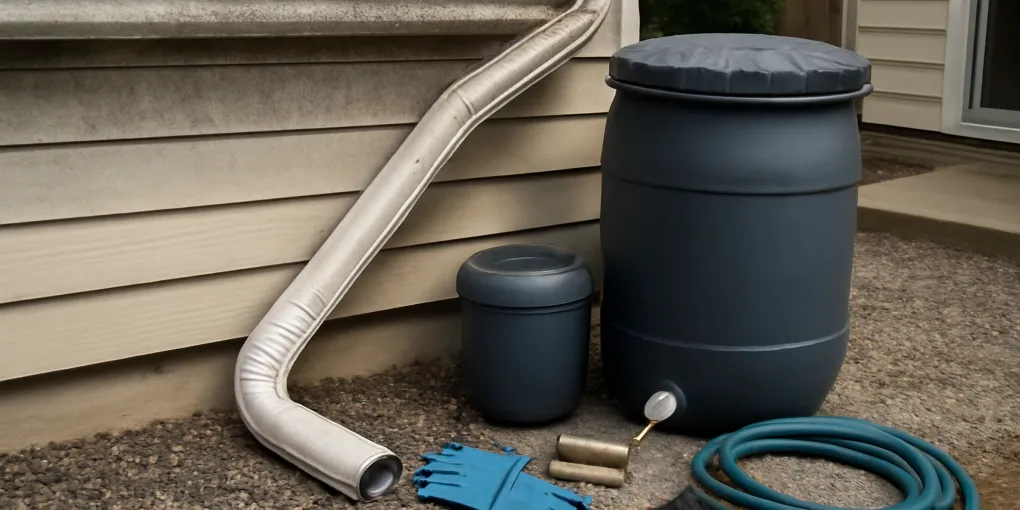
- Route the downspout or diverter to a safe discharge point away from the foundation and edible beds.
- Keep the barrel covered so more debris does not enter while it is offline.
- If the barrel already collected ash runoff, drain it to a safe non-erosive area and do not use it on vegetables.
- Wet-clean screens and sediment. Do not dry-sweep ash into the air.
- Reconnect only after the roof-edge runoff looks clear and the inlet screen stays clean during a hose or rain test.
Product starting points for ash cleanup
- Search Amazon for downspout bypass extensions when you need to send the first dirty roof rinse away from the barrel.
- Search Amazon for rain barrel screen and gutter brushes for wet-cleaning inlet screens, lid grooves, and accessible debris traps.
- Search Amazon for cleanup gloves and eye protection before handling wet ash residue or unknown sediment.
Step 1: Decide whether the barrel should be offline
Use visible conditions, not the calendar. Put the barrel offline when you can see gray ash on patio furniture, the barrel lid, the roof edge, or the gutter outlet. Also bypass when smoke was heavy for several days and the first rain after the event is still pending. Dry roofs can collect a surprising amount of fine material before the first rinse.
Bypass does not have to be fancy. A diverter can be switched to the closed or winter position, a downspout extension can route water past the barrel, or a temporary elbow can send runoff to a lawn area that can accept it. The discharge point still matters: do not send dirty first-flush water toward a basement wall, a neighbor’s yard, a pond, or a vegetable bed.
If the barrel was empty and stayed disconnected through the first rinse, you may be able to reconnect after the roof and gutter outlet look clean. If the barrel filled during ash fall or the first storm, assume the stored water needs to be drained.
Step 2: Drain questionable water before cleaning
Do not save ash-contaminated water for edible crops. Use the spigot or drain plug to empty the barrel slowly to a safe area where water will not erode soil or run into a neighbor’s property. If the water smells smoky, looks gray, has oily sheen, or leaves a visible sediment line, keep it away from food gardens and children’s play areas.
A small amount of roof sediment is normal in rain barrels. The difference after wildfire smoke is uncertainty: ash composition depends on what burned, how far the smoke traveled, and whether fire retardants, building materials, or treated wood were involved. That uncertainty is enough reason to discard the first dirty storage rather than trying to filter it for sensitive uses.
If local officials issued ash cleanup or water-use instructions, follow those first. Residential rain barrel advice should never override emergency guidance for a fire-affected area.
Step 3: Wet-clean the inlet, lid, and sediment zone
Ash cleanup guidance commonly warns against creating airborne dust during cleanup. Use water to dampen residue before brushing screens or wiping the lid. Wear gloves, protect your eyes from splashes, and wash hands after handling sediment.
Start at the top of the system. Remove the inlet screen, leaf basket, or lid insert if it is designed to come out. Rinse it from the clean side toward the dirty side so debris does not lodge deeper in the mesh. Use a soft brush for plastic mesh and a small bottle brush for tight inlet grooves. If a screen is torn, stretched, or permanently clogged with paste, replace it before reconnecting. A damaged screen is also a mosquito entry point.
Inside the barrel, remove settled sludge if you can do it safely from ground level. Do not climb into a barrel, and do not mix bleach or harsh cleaners with unknown residues. A garden hose rinse and soft brush are enough for most small systems. Leave the lid open only while cleaning, then cover the barrel again so wind does not add more debris.
Step 4: Rinse the roof path without storing the first flow
The roof, gutter, and downspout path need their own rinse. If rain is forecast, leave the barrel in bypass for the first part of the storm and inspect the discharge when it is safe. If you use a hose at ground level to rinse a low shed roof or accessible gutter outlet, keep ladder safety in mind and avoid pushing ash into a hidden downspout clog.
The goal is not to make the roof sterile. The goal is to remove visible ash and debris before they enter the barrel. Watch the first water leaving the downspout. If it is gray, smoky, gritty, or carrying visible flecks, keep bypassing. Reconnect after the water clears and the inlet screen no longer collects paste.
For barrels under trees, smoke ash can combine with pollen, seed pods, and leaves to make a mat on the screen. If screen overflow is the main failure, use the under-trees rain barrel protocol before trusting the system again.
Step 5: Restart with a smaller first use
When the barrel is clean and reconnected, treat the first refill as cautious outdoor water. Use it for ornamental beds, trees, or soil watering rather than spraying edible leaves or seedlings. Avoid misting or overhead spraying if the water still smells smoky or carries fine sediment.
Check the water after the first day. A thin sediment layer may be ordinary roof grit. A strong smoke smell, gray film, or recurring black flakes means the catchment is still shedding residue. Put the barrel back in bypass and repeat the cleanout rather than adding filters to hide the symptom.
If a pump, drip line, timer, or pressure regulator was connected during the dirty-water period, flush those parts too. Fine ash can lodge in emitters and small check valves. For pump systems, see rain barrel pump pressure setup before restarting the irrigation zone.
What not to buy after ash fall
Do not buy a small inline filter and assume it makes ash-contaminated water safe for vegetables. A filter may protect drip emitters from grit, but it does not answer what settled on the roof. Better purchases are boring: a bypass extension, a clean replacement screen if the old one is damaged, gloves for wet cleanup, and a storage habit that lets the roof rinse before the barrel collects again.
Practical score for restarting after roof ash
| Criterion | Weight | What it means after smoke or ash |
|---|---|---|
| Research | 30% | Follow local public-health and stormwater guidance first, especially near direct fire damage or known chemical contamination. |
| Evidence Quality | 25% | Trust visible ash, smoky odor, gray first runoff, and clogged screens more than a generic filter claim. |
| Value | 20% | Spend first on bypass routing and screen replacement, not on treatments that promise to rescue questionable water. |
| User Signals | 15% | Keep bypassing if the inlet screen forms paste, the water smells smoky, or sediment returns after one refill. |
| Transparency | 10% | Make the offline/reconnect state obvious so nobody waters vegetables from a barrel that is still in cleanup mode. |
Source notes
- CDC wildfire safety guidance covers cleanup caution and personal protection after wildfire exposure: https://www.cdc.gov/wildfires/safety/index.html
- EPA wildfire smoke and health resources explain that smoke and ash exposures vary by burned material and conditions: https://www.epa.gov/wildfire-smoke-course
- AirNow post-fire guidance explains why ash cleanup should avoid stirring dust and should follow local instructions: https://www.airnow.gov/wildfires/after-a-fire/
Wildfire ash rain barrel FAQ
Can I just add a finer screen after ash fall?
A finer screen can catch particles, but it does not make the first dirty roof rinse desirable storage. Bypass first, clean visible residue, then decide whether the screen itself needs replacement.
What if the fire damaged my roof?
Do not use runoff from a damaged roof until the building materials and drainage have been inspected. This protocol is for smoke or light ash on an otherwise intact residential catchment, not for burned structures.
Frequently Asked Questions
- Bypass the first runoff when visible ash or heavy smoke residue is present. Let the roof and gutters rinse to a safe discharge area before reconnecting the barrel.
- Skip edible crops until the barrel has been drained, cleaned, and refilled with cleaner roof runoff. Ash and firefighting residue can vary, so avoid using questionable water on food plants.
- Usually no. Drain, wet-clean sediment, scrub the inlet screen, rinse the inside, and restart only after the catchment looks clean. Avoid aerosolizing dry ash.
- Reconnect after visible ash is gone from the roof edge and gutter outlet, the inlet screen is clean, the barrel has been drained if it collected dirty runoff, and the overflow route is safe.