Rain Barrel Water for Houseplants: Safety Checks Before You Bring It Indoors
Evidence ExplainerQuick picks
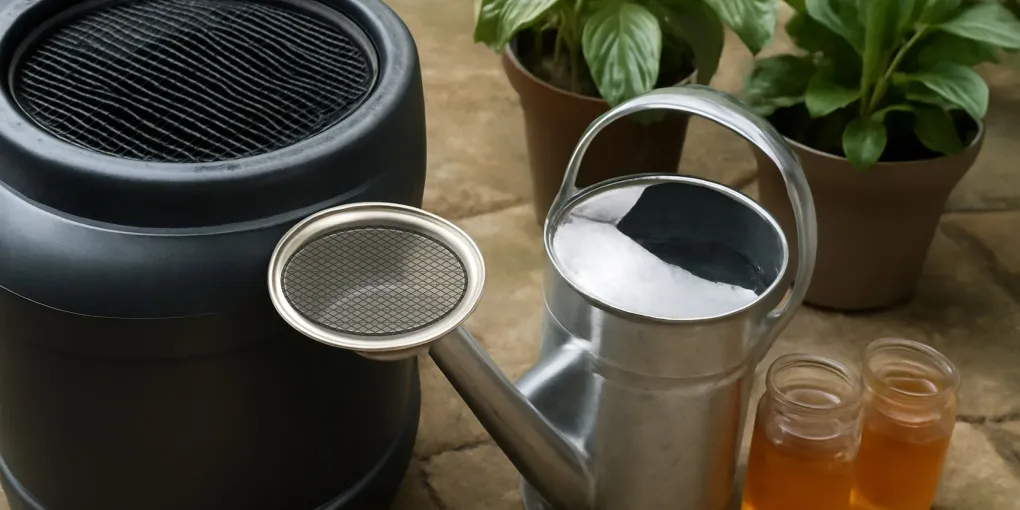
Fine mesh watering-can strainer
★ Top pick Best first check- Best for: Catching leaf bits and grit before rain barrel water reaches indoor pots
- Check first: A strainer improves debris control, not drinking-water safety.
Clear glass jar set for water inspection
Best smell and sediment test- Best for: Letting a small sample sit so sediment, oil sheen, odor, or discoloration is obvious
- Check first: A clear-looking jar does not prove the water is pathogen-free.
Indoor watering can with removable rose
Best controlled pour- Best for: Separating outdoor rain barrel handling from normal kitchen or bathroom containers
- Check first: Label it for non-potable water and keep it away from food prep areas.
Rain barrel water can be useful for patio pots, shrubs, and outdoor garden beds, but bringing it indoors for houseplants changes the risk calculation. Indoors, the same water may sit in a warm saucer, splash on a table, pass through a kitchen watering can, or become accessible to pets and children. That does not mean every houseplant must get tap water. It does mean rain barrel water should be treated as non-potable roof runoff, not as clean rain straight from the sky.
The safer approach is narrow and practical: use indoor rain barrel water only from a covered, screened, well-maintained barrel; inspect a small sample before carrying it inside; keep it away from edible plants and food-prep areas; and stop immediately if the water smells, looks oily, contains larvae, or comes from a questionable roof. If those checks feel like too much work, use the barrel outside and water indoor plants from the tap.
Quick picks for a cleaner indoor handoff
These items do not make rain barrel water drinkable. They simply make the non-potable handoff cleaner, more visible, and easier to control.
- Best debris screen: Search Amazon for fine mesh watering-can strainers to catch leaf fragments before water reaches indoor potting mix.
- Best inspection step: Search Amazon for clear jars for water checks so odor, sediment, and sheen are easier to spot before you bring water inside.
- Best dedicated container: Search Amazon for indoor watering cans with removable rose and label it for non-potable use.
If the barrel water is going to vegetables instead of houseplants, start with our vegetable garden rain barrel safety guide. If odor or algae is already present, fix the barrel first with the algae and smell cleaning protocol.
Why houseplants are a different use case
A backyard barrel is designed for irrigation water, not drinking water. Rutgers Cooperative Extension notes that collected roof water should not be used for drinking, and Penn State Extension emphasizes screening, overflow, and maintenance. Those cautions matter indoors because a houseplant routine can blur the line between irrigation water and household water.
Outdoor use naturally limits contact. You open a spigot, fill a can, and pour near soil. Indoors, the can may sit beside dishes, splash near a counter, or leave water in a saucer where a pet can drink it. The risk is still context-dependent, but the margin for sloppy handling is smaller.
The roof and barrel decide whether this is worth considering
Do not judge rain barrel water only by the weather. Judge the collection surface and storage conditions. Roof runoff can pick up dust, pollen, bird droppings, shingle granules, metal residues, leaf tannins, and gutter debris. A clean-looking barrel after a light rain is not the same as laboratory-tested water.
Skip indoor use if the roof is treated with moss chemicals, has fresh coatings, has unknown metal runoff, drains through dirty gutters, or sits under heavy bird traffic. Also skip indoor use if the barrel is open-topped, has a loose lid, has mosquito larvae, or has ever smelled septic, sulfurous, or rotten. Those are not houseplant water problems. They are barrel maintenance problems.
If the roof material itself is the concern, compare the specific risk in our asphalt shingle roof rain barrel guide and metal roof runoff setup checks.
A five-minute sample check before carrying water inside
Collect a small amount from the spigot into a clear jar before filling the indoor watering can. Let it sit for a few minutes in good light.
Look for four things:
- Sediment: a little settled grit is common, but heavy sludge means the barrel needs cleaning before indoor use.
- Surface sheen: rainbow film, oiliness, or floating scum is a stop sign.
- Odor: earthy is one thing; rotten, sulfur, sewage, chemical, or strong algae odor means dump the sample.
- Movement: larvae or visible insects mean the lid, screen, or mosquito control plan has failed.
A fine mesh strainer can catch particles as you pour into the can, but it is not a safety treatment. It will not reliably remove microbes or dissolved contaminants. If the sample fails any of the checks, do not try to rescue it with a kitchen filter.
Which indoor plants are better candidates
If you choose to use rain barrel water indoors, reserve it for non-edible ornamentals in stable pots: pothos, philodendron, spider plants, snake plants, rubber plants, and similar plants where water goes directly to potting mix and extra runoff is dumped. Keep the routine boring and separated from food prep.
Avoid edible herbs, microgreens, leafy greens, seed-starting trays, and any plant whose leaves will be eaten raw. Also avoid pots in children’s rooms, pet-accessible floor planters, and shared office or clinic settings where other people may touch the water or saucer. For those situations, the savings from a few quarts of barrel water are not worth the uncertainty.
Handling rules that prevent most indoor mistakes
Use a dedicated non-potable watering can. Do not use a kitchen pitcher, sink-side measuring cup, or bottle that someone might later use for drinking. Fill the can outdoors, strain debris there, and wipe the outside before bringing it in. Water the soil, not the leaves, and empty saucers after the pot drains.
Do not store rain barrel water indoors for later. Warm, stagnant water in a closed indoor container can get worse, not better. If you filled too much, use the extra outside on landscape plants or pour it into a safe outdoor area away from the foundation.
After watering, wash hands and keep the can out of the kitchen. That may sound strict for plant water, but it is the same basic separation used for any non-potable water task.
When tap water is the better answer
Use tap water when the plant is edible, the pot is handled by kids, a pet drinks from saucers, the barrel has odor or algae, or the roof source is uncertain. Also use tap water for new cuttings and seedlings if losing the plant would matter. Young roots and seed-starting media are less forgiving of dirty water and fungal growth.
Rain barrel water still has plenty of good uses outside. It can water ornamental beds, shrubs, containers, and non-edible landscaping when the barrel is screened and maintained. Indoors, the standard should be higher because the water enters living space.
Houseplant rain barrel water FAQ
Can I use rain barrel water on houseplants?
Sometimes, but treat it as non-potable outdoor water. Use it only when the barrel is covered, screened, odor-free, and collected from a suitable roof. Skip edible indoor herbs, seedlings, and plants handled by children or pets.
Does filtering rain barrel water make it safe indoors?
A mesh strainer or coffee filter can remove debris and sediment, but it does not reliably remove bacteria, metals, roofing residues, or chemical contamination. Do not treat filtered barrel water as drinking water.
Which houseplants should not get rain barrel water?
Avoid using it on edible herbs, microgreens, sensitive seedlings, plants in nurseries or hospitals, and any pot where pets may drink from the saucer. Use tap water or properly treated water for those cases.
What is the fastest reason to dump a sample?
Bad odor, oily sheen, mosquito larvae, green slime, heavy sediment, or water from a roof with questionable materials are all stop signs. Use that barrel for outdoor non-edible landscape watering only after correcting the source problem.
Sources
- Rutgers Cooperative Extension, Rain Barrels
- Penn State Extension, Rain Barrels
- EPA Soak Up the Rain, Rain Barrels
- University of Georgia Extension, Rainwater Harvesting for System Design
- University of Minnesota Extension, Rain barrels
Frequently Asked Questions
- Sometimes, but treat it as non-potable outdoor water. Use it only when the barrel is covered, screened, odor-free, and collected from a suitable roof, and skip edible indoor herbs, seedlings, and plants handled by children or pets.
- A mesh strainer or coffee filter can remove debris and sediment, but it does not reliably remove bacteria, metals, roofing residues, or chemical contamination. Do not treat filtered barrel water as drinking water.
- Avoid using it on edible herbs, microgreens, sensitive seedlings, plants in nurseries or hospitals, and any pot where pets may drink from the saucer. Use tap water or properly treated water for those cases.
- Bad odor, oily sheen, mosquito larvae, green slime, heavy sediment, or water from a roof with questionable materials are all stop signs. Use that barrel for outdoor non-edible landscape watering only after correcting the source problem.