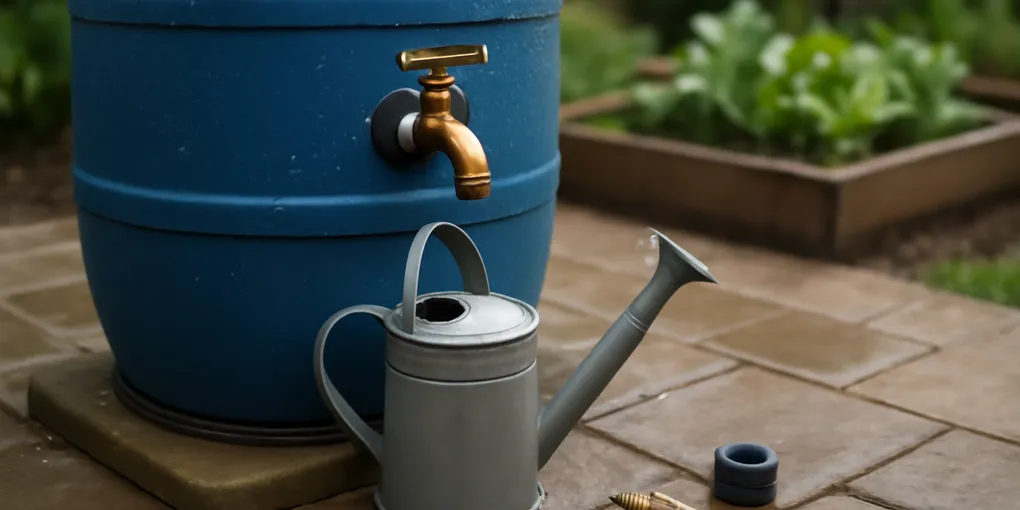
Quick picks
Rain barrel bulkhead spigot kit
★ Top pick Best clean retrofit- Best for: Adding a leak-resistant lower outlet to a DIY barrel or replacing a weak factory tap
- Check first: Match the fitting to the barrel wall thickness and drill the exact hole size the gasket requires.
Step drill bit or hole saw set
Best drilling helper- Best for: Making a round, controlled opening for a bulkhead fitting in plastic barrels
- Check first: Practice on scrap plastic if you have not drilled thin barrel walls before.
Short garden hose and watering-can fill setup
Best usability check- Best for: Confirming the spigot height works for the way you actually water
- Check first: A spigot that is convenient for a watering can may still need a raised stand for hose flow.
A rain barrel spigot looks like a small detail until the first time a watering can will not fit under it, a hose trickles too slowly, or brown sediment plugs the washer. The best spigot height is not the very bottom of the barrel. It is a working compromise: low enough to use most of the stored water, high enough to stay above sludge, and positioned so the fitting can be sealed and reached without tipping the barrel.
For most backyard barrels, start with a lower outlet about 3 to 6 inches above the inside bottom. Then adjust for the barrel shape, stand height, and the way you water. A barrel used mainly with a watering can may need more clearance below the spigot. A barrel feeding a short hose may need a taller stand more than a lower hole.
Quick picks
- Best retrofit part: Search Amazon for rain barrel bulkhead spigot kits if your barrel needs a gasketed outlet instead of a thin threaded tap.
- Best drilling helper: Search Amazon for step drill bits and plastic-barrel hole saws when the fitting instructions specify a round hole size.
- Best before-drilling test: Search Amazon for short garden hoses and watering cans so you can confirm clearance before cutting.
If you are still deciding how high to raise the whole barrel, pair this with our rain barrel stand height guide and height and pressure explainer.
The practical target: above sediment, below wasted water
A lower spigot uses more stored water, but it also sits closer to the grit that settles inside the barrel. Roof runoff can carry shingle granules, pollen, leaf fragments, dust, and gutter debris. Extension rain-barrel guides from Rutgers and Penn State both emphasize screened inlets and basic maintenance because stored roof water is not clean tap water. Even with a good inlet screen, some sediment reaches the bottom.
That is why the outlet should sit above the sediment zone. On a typical 55-gallon barrel, 3 to 6 inches of clearance usually leaves enough dead space for grit without wasting too much water. If your barrel has a molded sump, raised center, or curved bottom, measure from the lowest inside point, not from the outside rim.
Step 1: choose the use case before you mark the hole
Do not drill first and solve usability later. Decide what the outlet must do.
- Watering can filling: hold the can under the planned tap and make sure the handle clears the spigot. If the barrel sits on a low base, a slightly higher spigot can be easier than rebuilding the stand.
- Short hose watering: keep the spigot low enough to access stored water, then raise the barrel for better gravity flow. A lower hole does not create pressure by itself.
- Draining and cleaning: a lower spigot helps empty most of the barrel, but a separate cleanout or seasonal tip-and-rinse routine may still be needed.
- Pump feed: check the pump instructions. Some small transfer pumps do better with a dedicated hose connection and a screened intake rather than pulling from a tiny spigot.
If the barrel is already installed, temporarily tape the spigot or a cardboard cutout at the planned height. Then try your can, hose bend, and hand access before cutting.
Step 2: stay out of the curved bottom and molded seams
The easiest leak to prevent is the hole you do not drill in the wrong place. Avoid strongly curved surfaces, raised molded letters, vertical seams, and thin corners. A bulkhead gasket seals best on a flat area where the nut can tighten evenly from inside the barrel.
Most retrofit spigot kits require a specific hole diameter. Use the product instructions, not a guessed size from the threaded pipe. A step bit or hole saw can make a cleaner opening in plastic than forcing a large twist bit through the wall. Drill slowly, support the surface, and remove plastic burrs so the gasket sits flat.
Search Amazon for rain barrel bulkhead spigot kits
Step 3: protect the fitting from sediment and clogging
A low outlet can pull the dirtiest water first after every storm. Leave space below it, keep the inlet screen clean, and flush sediment during maintenance. If the barrel feeds drip tubing or a soaker hose, add a washable filter before the small emitters. Our filter and clogged-emitter guide covers that downstream problem.
For a barrel that smells bad, has visible sludge, or clogs repeatedly, do not just drill a higher hole and ignore the cause. Clean the barrel, check the gutter intake, and inspect the lid. A spigot height can reduce sediment pickup, but it cannot fix an open, dirty inlet.
Step 4: leak-test before reconnecting the downspout
Install the fitting, close the spigot, and fill the barrel with a hose to a few inches above the outlet. Dry the outside wall and watch the gasket for several minutes. Then open and close the tap under load. A slow weep at the nut usually means the gasket is twisted, the hole is rough, or the fitting was over-tightened against a curved wall.
Only reconnect the downspout or diverter after the spigot passes this small test. It is much easier to drain and adjust a partly filled barrel than a full 400-pound one.
When a second higher spigot makes sense
Some barrels work better with two outlets. A lower fitting handles draining, hose connection, or seasonal emptying. A higher fitting sits at a comfortable watering-can height and avoids the dirtiest bottom water. This is useful on tall barrels or stands where bending under the lower tap is awkward.
Do not add extra holes casually. Each fitting is another leak point, and both outlets need winterizing in freezing climates. If you only need better can clearance, raising the barrel on a stable stand may be simpler than drilling a second tap.
Spigot-height mistakes to avoid
- Too low: pulls grit, clogs washers, and can be hard to seal on a curved bottom.
- Too high: leaves several gallons trapped below the outlet after every use.
- Too close to a seam: increases leak risk and can deform when tightened.
- Too little clearance below: makes watering-can filling frustrating even if the tap itself works.
- No overflow plan: a good spigot does not replace a safe overflow route away from the foundation.
For overflow planning after the outlet is installed, use our foundation overflow routing guide.
Rain barrel spigot height FAQ
How high should a rain barrel spigot be from the bottom?
For most 40- to 60-gallon barrels, place the spigot roughly 3 to 6 inches above the inside bottom. That keeps the outlet above the sediment layer while leaving most stored water usable.
Can I drill a second spigot higher on the barrel?
Yes. A higher spigot can make watering-can filling easier or keep the cleanest water for small containers. Keep the lower outlet for draining if the barrel design allows it, and leak-test both fittings.
Should the spigot be at the absolute lowest point?
No. A bottom-level spigot pulls sediment, clogs washers, and is harder to seal. Use a purpose-built drain plug only if the barrel includes one.
Does raising the barrel matter more than spigot height?
Often yes for hose use. Spigot placement controls usable storage and sediment pickup, while stand height controls gravity pressure and clearance under the tap.
Sources
- Rutgers Cooperative Extension, Rain Barrels
- Penn State Extension, Rain Barrels
- University of Minnesota Extension, Rain barrels
Frequently Asked Questions
- For most 40- to 60-gallon barrels, place the spigot roughly 3 to 6 inches above the inside bottom. That keeps the outlet above the sediment layer while leaving enough stored water usable.
- Yes. A higher spigot can make watering-can filling easier or feed a short hose while the lower fitting stays available for draining. Keep both fittings gasketed and leak-tested.
- No. A bottom-level spigot pulls sediment, clogs washers, and is harder to seal. Use a lower drain plug only if the barrel design supports one.
- Often yes for hose use. Spigot placement controls usable storage and sediment pickup, while stand height controls gravity pressure and clearance under the tap.