Best Rain Barrel Leak Repair Tape, Sealant, and Patch Kits for Small Drips
Buyer's GuidePTFE thread seal tape for rain barrel fittings
Best first fix for threaded dripsUse Case: Re-sealing threaded spigots, hose adapters, and bulkhead fittings
$4-$12 typical
Quick picks
| Product | Key Specs |
|---|---|
| See price on Amazon |
|
| See price on Amazon |
|
| See price on Amazon |
|
| See price on Amazon |
|
Product availability, certifications, and retailer details can change; check the current Amazon page before buying.
A small rain barrel leak is not just a nuisance drip. If it runs down the wall, soaks the stand, or keeps the soil wet beside the foundation, it can turn an otherwise useful barrel into a maintenance problem. The best rain barrel leak repair kit depends on where the water is escaping: threads need thread tape or a new washer, gasket edges need a clean flexible seal, hairline cracks need a temporary patch or barrel replacement decision, and a damaged spigot opening usually needs a new bulkhead fitting.
Start by finding the leak with the barrel only partly filled. Dry the area, mark the first wet spot with painter’s tape, and watch whether water comes from the spigot threads, the washer face, the barrel wall, or the overflow path. Do not smear sealant over everything. A targeted repair is stronger, easier to inspect, and less likely to hide a crack that should make you retire the barrel.
Quick picks
Use the quick picks as the product comparison: match the part to the failure you see first, then check the fit notes before buying.
- Best first fix for threaded drips: Search Amazon for PTFE thread seal tape if the leak appears where a spigot, hose adapter, or plug screws into another fitting.
- Best flexible edge seal: Search Amazon for food-safe silicone sealant for a clean, dry, non-pressurized seam or gasket edge that needs a flexible bead.
- Best temporary crack control: Search Amazon for waterproof rubber repair tape when you need to contain a small hairline leak until you can drain the barrel and inspect it properly.
- Best durable outlet repair: Search Amazon for replacement bulkhead fitting repair kits when washers are cracked, the spigot wobbles, or the outlet hole no longer clamps flat.
If the barrel is leaking near the stand or downspout connection, also review our rain barrel spigot and bulkhead fitting guide, stand stability guide, and foundation-safe overflow routing guide. A repair that keeps the barrel full is only useful if overflow still leaves the house safely.
What matters most in a leak repair option
Match the repair to the leak you can actually see. Thread drips usually need tape, washers, or a reseated fitting; wall cracks need material-compatible patching; bulkhead leaks usually need gasket access and a flatter sealing surface. The product should list compatible materials, cure or installation steps, and whether the repair can stay wet or needs a fully dry barrel.
Skip mystery sealants and miracle-patch claims that do not explain the surface prep or inspection step. If the barrel wall is split, brittle, bulging, or unstable on its stand, replacement is safer than trying to keep a failing tank in service.
First, identify the leak type
A threaded drip usually beads around the spiral threads of a spigot, hose adapter, or cap. It may stop when the fitting is reseated with fresh thread tape and hand-tightened correctly. A washer-face leak appears as a ring of water between the barrel wall and the nut or flange. It often means the washer is cracked, unevenly compressed, or installed on a curved surface that cannot seal.
A barrel-wall crack is different. It may show as a vertical line, white stress mark, or damp path away from any fitting. Cracks near the bottom are more serious because they hold the full water weight. A lid or inlet leak may be ordinary splash, but it still matters if water runs down siding or pools under the stand.
Do this diagnosis with only enough water to reveal the leak. A full 55-gallon barrel can weigh more than 450 pounds. Do not push, tip, or remove fittings from a full barrel. If the leak is below the waterline, drain the barrel to a safe location before disassembly.
PTFE thread tape: best for threaded drips
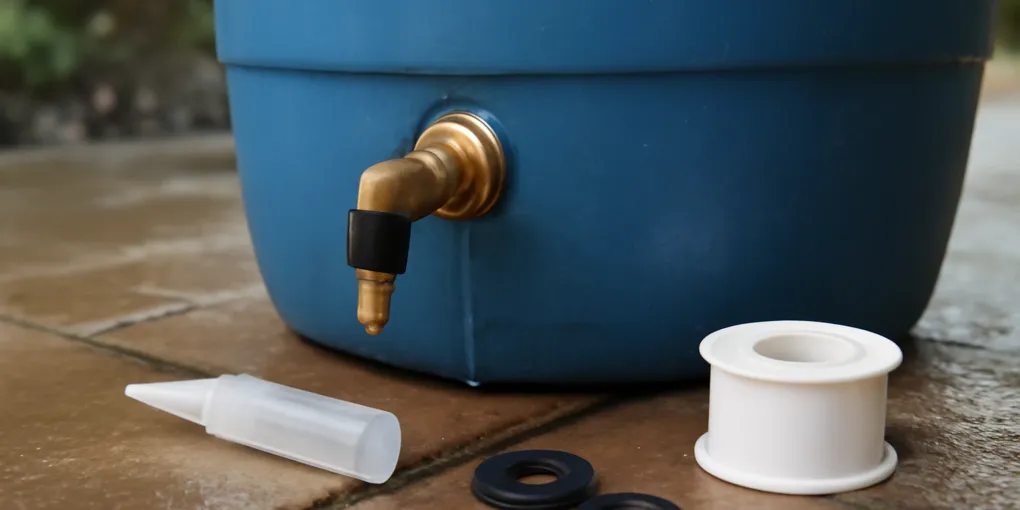
Thread tape is the cheapest good first fix when water beads from a threaded connection. Remove the fitting, clean old tape from the threads, wrap new PTFE tape in the direction the fitting tightens, and reinstall without forcing plastic parts. The goal is to fill tiny gaps in the thread path, not to use the tape as a structural brace.
Search Amazon for PTFE thread seal tape
Best for: spigots, plugs, hose adapters, and small threaded fittings that are not cracked. Watch for: wrong thread sizes, cross-threading, and over-tightening. If the fitting wobbles after tape is added, the problem is probably not the threads alone.
Thread tape will not seal a flat washer face, a split barrel wall, or a hole that was drilled too large. If the leak returns at the same outlet after a careful reinstall, move to washer inspection or a replacement bulkhead fitting instead of adding more tape.
Silicone sealant: useful only on clean, dry edges
A small bead of compatible silicone can help at lid edges, gasket perimeters, or non-pressurized seams where the surfaces are stable. It is not a magic fix for a wet dirty barrel. Silicone needs surface prep and cure time. Apply it after draining, cleaning, and drying the area, then keep the barrel empty until the product label says it is cured.
Search Amazon for food-safe silicone sealant
Best for: flexible edge sealing around service openings, screen frames, or minor seepage above the main water load. Watch for: labels that match your intended water use, UV exposure, and cure conditions. If you collect water for edible-garden soil watering, choose materials conservatively and avoid unknown industrial sealants.
Do not seal shut parts that must be opened for cleaning. A barrel still needs screen access, overflow capacity, and seasonal maintenance. If sealant would block inspection, replace the damaged lid or fitting instead.
Waterproof repair tape: temporary help for hairline cracks
Butyl or rubberized waterproof tape can slow a small leak when applied to a clean, dry, lightly scuffed surface. It is most useful as a short-term containment tool while you plan a better repair or replacement. Curved plastic barrels are hard on tape: the surface flexes, the patch edge lifts, and sunlight can weaken adhesives.
Search Amazon for waterproof rubber repair tape
Best for: minor hairline seepage away from structural stress points. Watch for: cracks near the bottom, cracks spreading from a drilled outlet, and patches hidden behind stands or landscaping. Mark the crack ends with a permanent marker after drying. If the line grows after refilling, retire the barrel or replace the damaged section rather than layering more tape.
Never patch a crack and then raise the barrel higher to get more pressure. The added stress and water weight make a marginal wall less trustworthy. If you need better flow, solve that with a shorter hose, low-pressure irrigation parts, or a pump designed for the job.
Replacement bulkhead fittings: best for recurring outlet leaks
The spigot opening is one of the most common leak points because it combines a drilled hole, a heavy attached hose, twisting force, and standing water. If the washer is brittle, the nut is stripped, or the hole edge has warped, a replacement bulkhead fitting is usually more reliable than tape or sealant.
Search Amazon for bulkhead fitting repair kits
Best for: outlet leaks that return after reseating the spigot. Watch for: exact hole diameter, whether you can reach inside the barrel, washer placement, and thread compatibility with your hose. A good repair clamps flat against the barrel wall without crushing the plastic.
Support the hose after the repair. A full hose hanging from the spigot can lever the fitting loose, especially on thin-wall barrels. Use a short leader hose, a gentle bend, and a shutoff valve that does not require twisting the spigot body every time you water.
When to replace the barrel instead of repairing it
Replace the barrel when a crack is long, spreading, near the bottom, or connected to a stressed outlet hole. Replace it if the plastic is brittle, chalky, or deformed around the stand. Also replace it if the previous contents are unknown and the barrel is used near edible plants. Repair parts are inexpensive, but they should not keep an unsafe container in service.
A repair is reasonable when the leak is small, the barrel wall is otherwise sound, and the fix remains visible for inspection. Refill in stages: one-quarter, one-half, then to the overflow line. Check the repair, the stand, and the ground after each stage. If water starts running toward the house, stop the test and route discharge away before leaving the barrel connected to a storm.
FAQ
Can I use duct tape on a rain barrel leak?
Duct tape is usually a short-lived outdoor patch. It may slow a drip for a day on a dry surface, but it does not handle wet curved plastic, sunlight, and barrel flex reliably. Use waterproof repair tape for temporary control and replace the damaged fitting or barrel when the crack is structural.
Why does my rain barrel spigot leak after I tighten it?
Over-tightening can deform washers, cross-thread plastic, or widen the outlet hole. Drain below the spigot, remove the fitting, inspect the washer and threads, then reinstall with the right seal method. If the flange no longer clamps flat, use a replacement bulkhead fitting.
Is silicone safe inside a rain barrel?
Only use a sealant whose label fits your intended water use and cure conditions. Let it cure fully before refilling and avoid applying it where it will contact edible plant leaves or food surfaces. For routine garden barrels, physical repair with washers and compatible fittings is often cleaner than smearing sealant inside the tank.
Should I repair a cracked rain barrel bottom?
Usually no. Bottom cracks carry the highest water load and are hard to inspect once the barrel is full. A temporary patch may help you drain the barrel safely, but a spreading bottom crack is a replacement signal.
Sources
- EPA, Soak Up the Rain
- Rutgers Cooperative Extension, Rain Barrels
- Penn State Extension, Rain Barrels