Rain Barrel Backflow Prevention: How to Keep Stored Rainwater Separate From Drinking Water
ProtocolQuick picks
Hose bib vacuum breaker
★ Top pick For potable hose bib protection- Use Case: Reducing backsiphonage risk on outdoor faucets used with hoses
- Best For: Hose bibs where a hose could sit in a bucket, barrel, or puddle
- Watch For: Local code, thread size, anti-removal screw, and annual replacement needs
Dedicated non-potable rain barrel hose
For separation discipline- Use Case: Keeping barrel watering equipment separate from drinking-water tasks
- Best For: Vegetable beds, potting benches, and homes with kids using outdoor faucets
- Watch For: Clear color coding, storage hook, and never using it for filling water bottles
Rain barrel backflow prevention is mostly about one simple rule: stored roof runoff should never have a plumbing path back into drinking water. A backyard barrel can be useful for watering soil, containers, shrubs, and ornamental beds, but it is not potable water. It can contain roof debris, bird droppings, pollen, metals from old surfaces, algae, mosquito-control residue, and sediment from the barrel itself.
The risk is not only what is inside the barrel. The risk is the connection you create. A hose left underwater in a barrel, a pump tied into a house line, or a cross-connected irrigation setup can turn a small garden project into a plumbing safety problem. Keep the rain barrel physically separate from hose bibs, wells, indoor plumbing, and any wash station used for food.
This protocol is for small residential rain barrels, not whole-house rainwater systems designed by a licensed plumber. If you want rainwater connected to toilets, laundry, indoor fixtures, or a pressurized irrigation manifold tied to potable supply, stop here and get local code guidance. Backyard barrel hardware is not a substitute for approved cross-connection control.
Quick picks
Use these parts only to support separation. They do not make stored roof runoff potable.
- Protect the house faucet: Search Amazon for hose bib vacuum breakers for outdoor faucets where a hose could be left in a bucket, barrel, or puddle.
- Separate the barrel side: Search Amazon for dedicated rain barrel hoses if your barrel hose might otherwise be confused with a drinking-water or produce-washing hose.
The safe default: air gap and separation
The safest rain barrel layout is separated by air and habit. The downspout fills the barrel through a screened opening or diverter. The barrel outlet feeds a dedicated non-potable hose, watering can, soaker hose, or drip zone. Nothing from the barrel connects to a potable hose bib, well pressure tank, indoor plumbing line, or kitchen wash area.
An air gap means there is open space between a potable water outlet and the non-potable water below it. If you ever top off a barrel with a hose, do not push the hose end below the barrel waterline. Hold or secure the hose so water falls through open air into the barrel, and use a hose bib with proper backflow protection. Better yet, design the system so roof runoff is the only fill source.
Use visual separation too. Keep the barrel hose on its own hook, in its own color, or with a tag that tells family members it is for garden watering only. Do not use the same hose for drinking-water tasks, pet bowls, filling coolers, or rinsing harvested vegetables.
What can go wrong with hoses
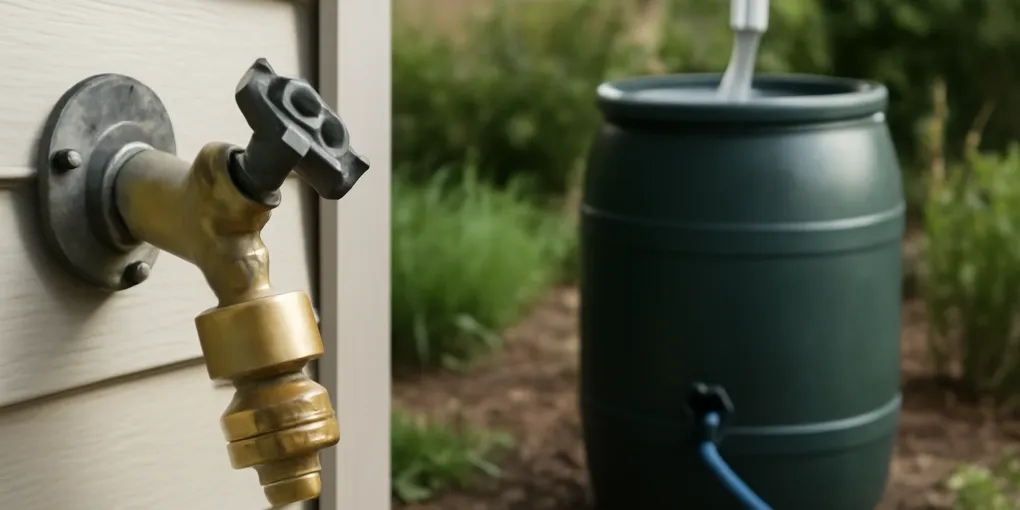
Hoses create many cross-connection risks because they are easy to move. A hose connected to a potable faucet can end up submerged in a barrel, bucket, kiddie pool, pond, or muddy low spot. If pressure drops in the supply line, that submerged hose end can become a backsiphonage hazard. A hose bib vacuum breaker is designed to reduce that kind of risk on outdoor faucets.
Search Amazon for hose bib vacuum breakers
Best for: outdoor faucets used with garden hoses, especially where the hose might be left in containers. Watch for: local code requirements, thread compatibility, anti-removal screws, winter removal instructions, and replacement after freeze damage. A small brass device is not a license to make unsafe submerged connections; it is a protection layer for normal hose use.
Do not connect a hose from a rain barrel outlet back to a hose bib, even if it seems convenient for pressure or routing. That creates confusion and possible cross-connection. Barrel water should move away from potable plumbing, not toward it.
Pumped rain barrel systems need extra caution
A small pump can make rain barrel irrigation more useful, but it also makes mistakes more serious. A pump can pressurize non-potable water and push it through hoses, filters, or improvised manifolds. Keep that pumped water in a clearly non-potable irrigation line. Do not tee it into a household sprinkler zone that also has municipal or well water unless the entire system is designed and approved for that arrangement.
If you use a pump, plug it into a GFCI-protected outdoor outlet according to the pump manual and keep electrical connections out of puddles. Add a filter before tiny drip emitters, and avoid overpressurizing low-pressure tubing. For garden layout details, see our guides to rain barrel pumps for drip irrigation and adding a rain barrel pump without overpressuring the system.
A pump should not hide the water source from the user. If someone can open a valve and assume the water is potable because it comes out with pressure, the system needs clearer separation, labeling, and routing.
Dedicated non-potable hose setup
A dedicated rain barrel hose is cheap compared with the confusion it prevents. Choose a hose color or length you will not use elsewhere, store it beside the barrel, and keep it off the ground when not in use. If children, guests, or renters use the yard, add a simple non-potable tag near the barrel outlet.
Search Amazon for dedicated rain barrel hoses
Best for: barrel-fed watering, potting bench cleanup, and keeping roof runoff tools separate from drinking-water tools. Watch for: clear color coding, a storage hook, kink resistance at low pressure, and a nozzle that does not invite drinking or play.
The dedicated hose should water soil, mulch, containers, or ornamentals. For edible gardens, keep runoff water close to the soil and avoid spraying the edible portion of leafy greens, herbs, and fruit. Use potable water for washing hands, harvest baskets, and produce after picking.
Vegetable gardens and wash stations
Rain barrel water can be useful in a vegetable garden when it is applied carefully to soil, but it should not become part of your food-washing routine. Rutgers and Penn State rain-barrel guidance both stress covered barrels, screens, maintenance, and thoughtful use of stored roof runoff. Treat barrel water as irrigation water, not kitchen water.
Do not put a rain barrel spigot beside a sink-style wash station without clear separation. A visitor may not know which water is potable. If you rinse lettuce, tomatoes, herbs, tools, or cutting boards, use potable water. Keep the barrel outlet aimed at soil watering, not produce washing.
If your roof is old, treated, freshly coated, moss-treated, or near heavy contamination, be more conservative. Use the water for ornamentals rather than edible crops, or collect from a cleaner roof surface. For more detail, read rain barrel vegetable garden safety and food-grade rain barrel materials.
Backflow-prevention checklist before you leave it installed
Walk the system from the house outward.
- Outdoor faucet: confirm the potable hose bib has appropriate backflow protection for hose use and that it is not connected to the barrel outlet.
- Fill path: confirm any potable top-off hose uses an air gap and is never submerged in barrel water.
- Barrel outlet: confirm the hose, pump, or drip tubing only carries non-potable water away from the barrel.
- Hose storage: keep the rain barrel hose separate from drinking-water, pet-water, and produce-washing tasks.
- Pump routing: make sure pumped barrel water cannot enter a household irrigation manifold, well line, or indoor plumbing.
- Labels: add a non-potable reminder if anyone besides you may use the system.
- Overflow: route overflow away from the foundation so backflow safety does not distract from water-damage prevention.
This check pairs with overflow routing away from the foundation and where to put a rain barrel. A safe barrel is separated from drinking water and also placed where leaks and overflow cannot damage the house.
When to call a plumber or local authority
Call a qualified plumber or local water authority before tying rainwater into anything permanent, pressurized, buried, or shared with potable plumbing. That includes irrigation manifolds connected to municipal water, well systems, indoor fixtures, automatic makeup water, and any setup that could feed multiple buildings or tenants. Local rules vary, and a small above-ground barrel used with a dedicated hose is much simpler than a plumbed system.
FAQ
Can rain barrel water backflow into my house plumbing?
It should not if the system is physically separated, but unsafe hose arrangements can create cross-connection risk. Never connect a rain barrel outlet to household plumbing, a potable hose bib, or a well line. Keep stored rainwater on the non-potable side of the system.
Do I need a vacuum breaker on every outdoor faucet?
Many plumbing codes require hose bib backflow protection, and it is especially important where hoses may be submerged in buckets, barrels, pools, or puddles. Follow local code and use a plumber for permanent plumbing questions.
Can I top off a rain barrel with a garden hose?
Avoid putting the hose end below the waterline. If you must add water, keep an air gap between the hose outlet and the barrel water, and use a protected hose bib. Do not create a sealed connection between potable water and stored roof runoff.
Is rain barrel water safe for washing vegetables?
Do not use stored roof runoff as a final wash for food. Use potable water for washing produce, hands, cutting boards, and tools that touch harvested food.
Sources
- EPA, Protect Your Home’s Water
- CDC, Drinking Water Safety
- Rutgers Cooperative Extension, Rain Barrels
- Penn State Extension, Rain Barrels